
AfriLabs Annual Gathering 2024 Welcomes RLabs, Ethiopian Airlines, and Southern Sun Hotels as Key Partners

AfriLabs Annual Gathering 2024 Welcomes RLabs, Ethiopian Airlines, and Southern Sun Hotels as Key Partners The AfriLabs Annual Gathering 2024, set to take place from November 6th to 8th at the Cape Town International Convention Centre (CTICC), is thrilled to announce key sponsorships and partnerships with RLabs, Ethiopian Airlines, and Southern Sun Hotels. This year’s event, themed “Uniting Innovation,” will bring together innovators, entrepreneurs, and thought leaders from across the continent and beyond for an unparalleled experience of collaboration and inspiration. We are thrilled to announce that RLabs is not only one of our sponsors but also our Host Hub for this year’s event. With a remarkable history of fostering entrepreneurial spirit and technological advancement, RLabs brings a wealth of experience and expertise to the gathering. Their involvement will greatly enhance the impact of the event and the engagement of the South African Ecosystem. We are delighted to have them on board. Ethiopian Airlines is proudly offering a 12% discount on flights to Cape Town for attendees of the AfriLabs Annual Gathering 2024. As the official airline partner for the AfriLabs Annual Gathering over the past years, Ethiopian Airlines has ensured that travel to and from this pivotal event is more accessible for participants coming from across Africa and beyond. Southern Sun Hotels, a leading name in hospitality, is offering attendees up to 30% off on room rates during the AfriLabs Annual Gathering. With its premium accommodation options and exceptional service, Southern Sun Hotels is committed to providing a comfortable and convenient stay for all guests. We look forward to a transformative event as we come together under the theme “Uniting Innovation” to drive progress and foster meaningful connections within Africa’s vibrant innovation ecosystem. With the support of RLabs, Ethiopian Airlines, and Southern Sun Hotels, the AfriLabs Annual Gathering 2024 promises to be an impactful experience for all participants. As we prepare for this landmark event, we invite additional sponsors to join us in making the AfriLabs Annual Gathering 2024 a resounding success. Sponsors will enjoy a range of exclusive benefits, including: A keynote address slot and the opportunity to own a panel or give a presentation. Hosting side events such as workshops, masterclasses, parallel panels, and meet-and-greet sessions. Branding opportunities at the AfriLabs General Meeting Soiree, dedicated to AfriLabs Hub Members, and throughout the conference. Extensive media exposure in associated PR coverage, both pre and post-event. A prominent feature in the AfriLabs Annual Magazine, distributed to hubs and ecosystem partners across Africa (subject to a separate sponsorship package). Recognition in all conference materials and communication channels, including the agenda, gift bags, backdrops, roll-up banners, newsletters, social media, press releases, and websites. Join us in showcasing your commitment to the development of the African technology and innovation ecosystem by becoming a sponsor of the AfriLabs Annual Gathering 2024. For more details on sponsorship opportunities, please visit our website at www.afrilabsgathering.com. Register today at AfriLabs Annual Gathering & secure your tickets here. About AfriLabs AfriLabs is the largest network of technology and innovation hubs across Africa, driving the growth of Africa’s innovation ecosystem. With a mission to support the development of the African technology and innovation ecosystem, AfriLabs connects hubs and other stakeholders to facilitate collaboration, resource sharing, and knowledge transfer. For more information about the AfriLabs Annual Gathering 2024 and AfriLabs, visit www.afrilabsgathering.com and www.afrilabs.com. For media inquiries, please contact pr@afrilabs.com & comms@afrilabs.com
Unlocking Youth-Centric Innovation for Youth Empowerment: The Role of an AUC Innovation Lab
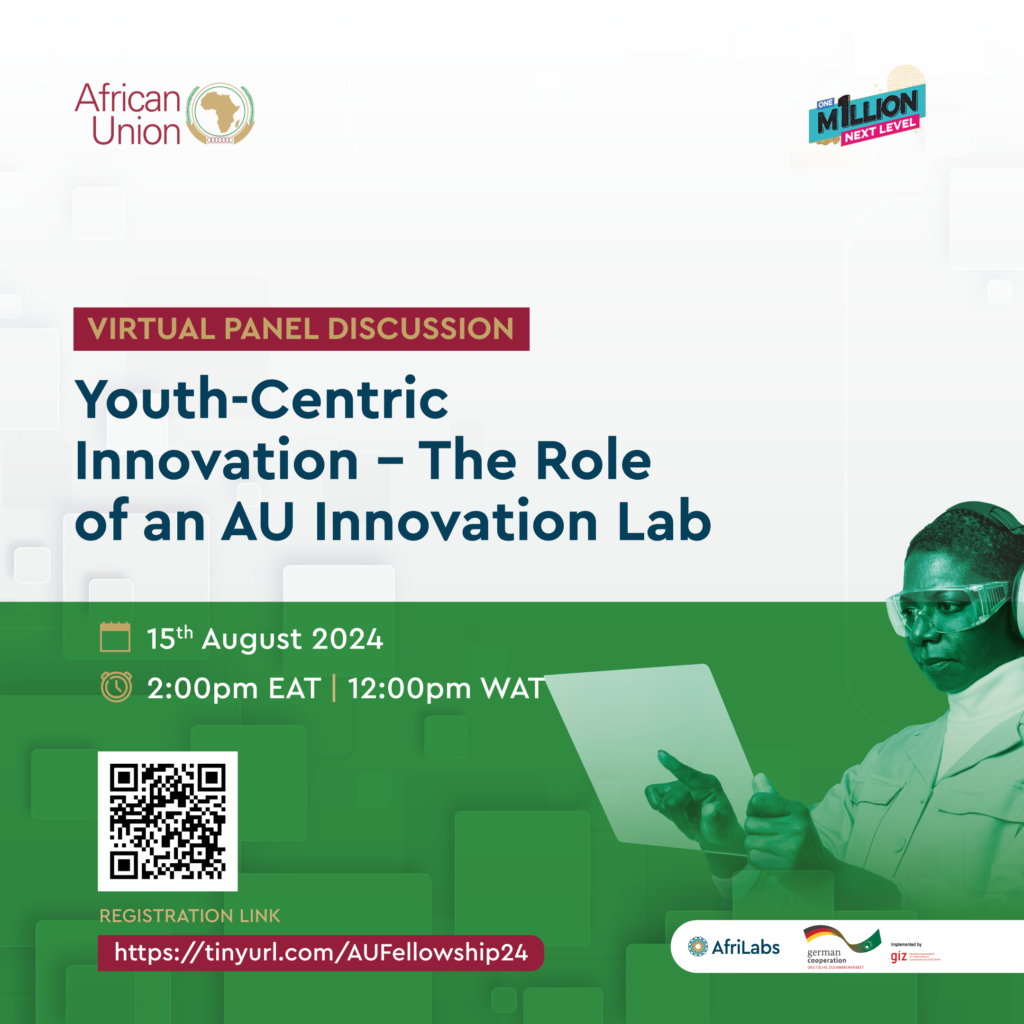
Unlocking Youth-Centric Innovation for Youth Empowerment: The Role of an AUC Innovation Lab Africa stands at the cusp of a transformative era, driven by the boundless potential of its youthful population and the burgeoning innovation ecosystem. As we look towards the future, the African Union Commission (AUC) is taking bold steps to harness this potential through the establishment of an AU Innovation Lab. Anchored in the 1 Million Next Level Initiative’s Youth-centric innovation principle, this initiative aims to propel the continent into a new age of technological advancement, sustainable development, and socio-economic growth. The AU Innovation Lab: A Vision for Africa’s Future Implemented by the AUC’s Women, Gender and Youth Directorate, and scheduled to be discussed in-depth during a virtual panel on 15th August 2024, the AU Innovation Lab represents a significant milestone in Africa’s journey towards self-reliance and global competitiveness. This virtual panel, themed “Youth-centric Innovation – the Role of an AU Innovation Lab,” will bring together a diverse group of young innovators, thought leaders, and stakeholders from across the continent to explore the Lab’s potential in shaping Africa’s innovation landscape. Empowering Africa’s Youth with 1 Million Next Level One of the key focuses of the AU Innovation Lab is youth empowerment and development, particularly through the “1 Million Next Level” initiative. This initiative is designed to provide opportunities for 300 million young Africans in areas such as education, employment, entrepreneurship, and engagement. Africa’s youth, who make up a significant portion of the continent’s population, are seen as the driving force behind its innovation and development. The Lab aims to provide these young minds with the tools, resources, and platforms they need to turn their ideas into impactful solutions. By fostering a culture of innovation and entrepreneurship, the AU Innovation Lab seeks to address some of the most pressing challenges faced by African societies, including unemployment, healthcare, education, and environmental sustainability. A Collaborative Approach The success of the AU Innovation Lab hinges on collaboration. By bringing together stakeholders from various sectors, including government, private industry, academia, and civil society, the Lab aims to create a holistic and inclusive innovation ecosystem. This collaborative approach will ensure that the solutions developed are not only innovative but also scalable and sustainable. The virtual panel discussion will highlight the importance of such partnerships and explore ways to strengthen them further. Aligning with the AU’s Agenda 2063 The establishment of the AU Innovation Lab aligns seamlessly with the African Union’s Agenda 2063 – a strategic framework for the socio-economic transformation of the continent over the next 50 years. Agenda 2063 envisions an integrated, prosperous, and peaceful Africa, driven by its own citizens and representing a dynamic force in the global arena. The Innovation Lab is a key component in achieving this vision, as it seeks to harness the power of technology and innovation to drive development across various sectors. Join the Conversation The upcoming virtual panel discussion promises to be a pivotal moment in Africa’s innovation journey. By participating, stakeholders will have the opportunity to share their insights, experiences, and aspirations for the AU Innovation Lab. The online event will not only shed light on the Lab’s objectives and strategies but also inspire a collective commitment to fostering a culture of innovation across the continent.We invite all innovators, entrepreneurs, policymakers, and enthusiasts to join us on 5th August 2024 for this groundbreaking event. Let us come together to unlock Africa’s potential and pave the way for a brighter, more innovative future. Register Now To be a part of this transformative conversation, register for the virtual panel discussion on “Youth-centric Innovation – the Role of an AU Innovation Lab” by clicking here. Together, we can shape the future of Africa through innovation and collaboration. Register Now!
Celebrating from Clicks to Progress with the world’s digital-first youth population – Happy International Youth Day
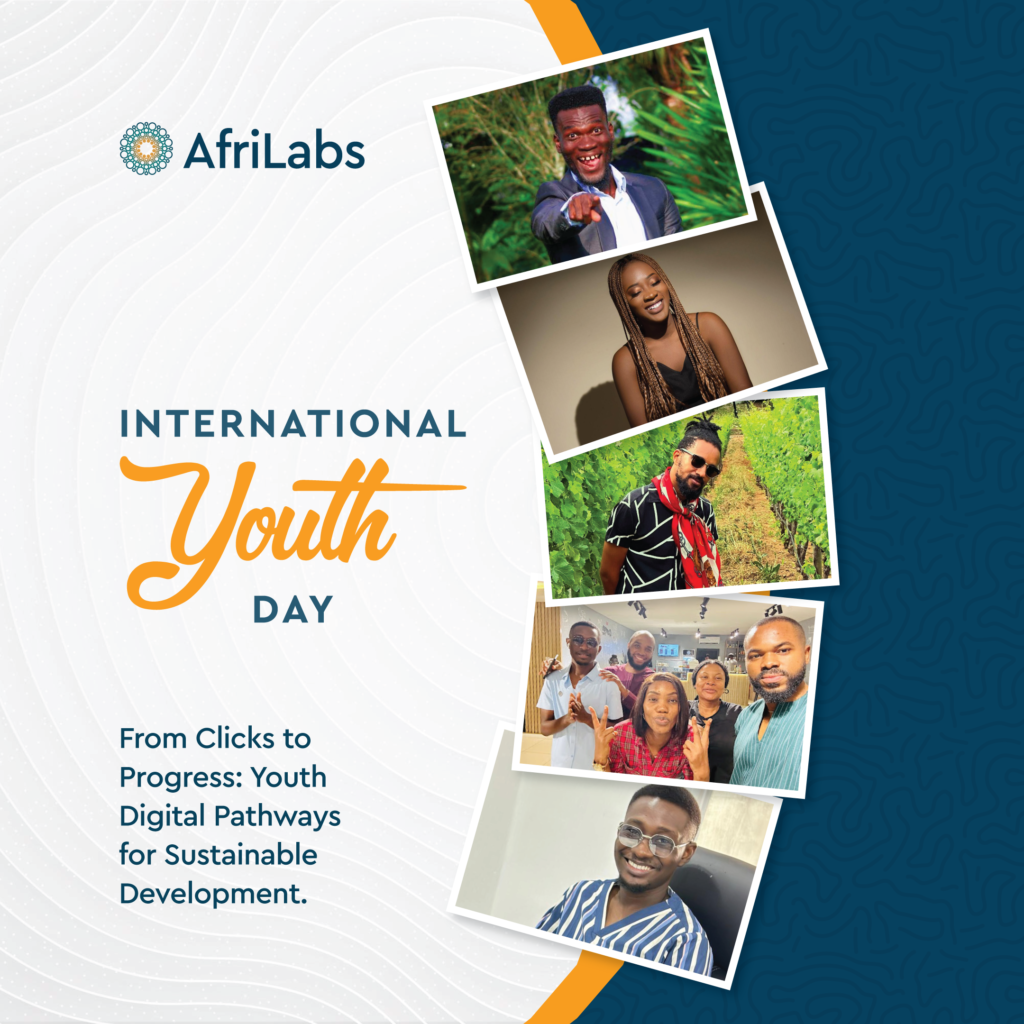
Celebrating from Clicks to Progress with the world’s digital-first youth population – Happy International Youth Day On this International Youth Day, AfriLabs is proud to amplify the voices of our dedicated team as they reflect on the theme “From Clicks to Progress.” Across Africa and the diaspora, young people are not just embracing the digital age—they’re redefining it. Through their energy, innovation, and commitment, they are turning online engagement into tangible progress that is transforming communities and industries. Our team members share their thoughts on the power of youth and how their work at AfriLabs aligns with this year’s theme, highlighting the pivotal role that digital connections and actions play in shaping a better future. Paul Chioba -Nigeria International Youth Day is a vibrant celebration of the incredible potential and contributions of young people worldwide, recognizing their energy, creativity, and passion in driving positive change. This year’s theme, “From Clicks to Greatness,” captures the essence of our digital age, where our connections form powerful networks of like-minded individuals who inspire us. In the people management team, we focus on enhancing productivity, engagement, and inclusion within digital teams, while cultivating a positive work culture to achieve our organization’s goals through the power of our clicks. Let’s harness our collective energy and creativity to turn our clicks into impactful actions. Youth Day represents a celebration of the energy, innovation, and potential of young people. It’s a day to acknowledge the challenges they face and to empower them to shape a better future.” The theme “From Clicks to Progress” resonates deeply with me because it highlights the journey from digital engagement to real-world impact. In my work and experience, this theme reflects the transition from online interactions like supporting and engaging communities to tangible outcomes, such as fostering collaboration, driving social impact, leadership and building sustainable initiatives that leads to meaningful progress. Miguel Nyamedi – Ivory Coast Miguel Nyamedi – Ivory Coast Youth Day represents a celebration of the energy, innovation, and potential of young people. It’s a day to acknowledge the challenges they face and to empower them to shape a better future.” The theme “From Clicks to Progress” resonates deeply with me because it highlights the journey from digital engagement to real-world impact. In my work and experience, this theme reflects the transition from online interactions like supporting and engaging communities to tangible outcomes, such as fostering collaboration, driving social impact, leadership and building sustainable initiatives that leads to meaningful progress. Ruth M’kala – Zambia To me, Youth Day is a reminder and a moment of reflection on what ‘Clicks’ (decisions and actions) I’m making today that will will ‘Progress” not only my future, but the future of the world. As the saying goes, “Young people are the leaders of tomorrow.” This day prompts me to consider how I’m branding and positioning myself to become the leader that tomorrow both needs and deserves. I have intentionally chosen to align myself with AfriLabs because, who better to partner with in building the Africa we aspire to than a Pan-African organization committed to that very vision? Youth to me is more so a state of mind than a slice in time. It is the disposition to colour outside of the lines, and to stump on puddles even if you’re wearing a suit. I guess it’s about allowing your imagination space to play, and I couldn’t imagine any other way to be. For me, from Click to Progress represents a change of power from the pen to the computer. If books like the Eastern sutras and Plato’s Dialogue defined the first age of knowledge, then the next will be defined by the aggregate of all our daily clicks. So far, I think it’s clicking in the right direction. William Moore -Nigeria William Moore -Nigeria Youth to me is more so a state of mind than a slice in time. It is the disposition to colour outside of the lines, and to stump on puddles even if you’re wearing a suit. I guess it’s about allowing your imagination space to play, and I couldn’t imagine any other way to be. For me, from Click to Progress represents a change of power from the pen to the computer. If books like the Eastern sutras and Plato’s Dialogue defined the first age of knowledge, then the next will be defined by the aggregate of all our daily clicks. So far, I think it’s clicking in the right direction. Kolawole Oladejo – Nigeria As vital contributors to the world’s future, we bear immense significance. The well-being of current and upcoming generations rests upon us. Embracing digital technologies has positively influenced my work, enhancing productivity and effectiveness. The theme deeply resonates with my role at AfriLabs, where we drive innovation across Africa’s tech and innovation ecosystem, impacting millions of youth through programs focused on climate change (such as the “climate adaptation and innovations” that supports startups in expanding their footprint on the continent), the green economy, fellowships, and internships, etc. Our commitment remains steadfast, and I hope this celebration inspires young people to embrace leadership and take ownership across all sectors and regions. Celebrating the international Youth day “from clicks to progress” . Recognizing Our Potential As young people, we’re often dismissed or overlooked. But International Youth Day is a reminder that we have so much to offer. We’re innovative, passionate, and ready to make a difference. On this day celebrates our boundless potential and encourages us to keep striving to make a real impact in our world today. My reflection on the theme, click to progress. Think about it- every time we click “submit’’ or “post”, we’re not making a personal choice, but contributing to the ever- evolving tapestry of human innovation and achievement. From the entrepreneur launching a new business venture to the student exploring educational resources, the power of click is universal, bridging the gap between our ambitions and their realization. Isaac Belombo – Cameroon Isaac Belombo – Cameroon Celebrating the international
The Green and Blue Economy in Africa: Navigating the Path to Sustainable Industrialization

The Green and Blue Economy in Africa: Navigating the Path to Sustainable Industrialization The Dual Challenge: Clean Energy Transition vs. Industrialization Africa stands at a crucial juncture in its development trajectory, grappling with the dual challenge of transitioning to clean energy to mitigate environmental impacts while simultaneously ramping up energy production to fuel much-needed industrialization. This tension arises from the continent’s pressing need for economic growth and development, which requires reliable and affordable energy, juxtaposed with the global imperative to combat climate change by reducing greenhouse gas emissions. Contribution to Global Emissions Historically and currently, Africa’s contribution to global greenhouse gas emissions has been minimal. Despite accounting for approximately 17% of the world’s population, the continent contributes less than 5% of global emissions. This is in stark contrast to major industrialized nations, which have historically been the largest emitters and continue to dominate current emissions levels. However, Africa’s role as a major oil producer complicates this narrative. Countries like Nigeria, Angola, and Algeria are key players in the global oil market, generating significant revenue from fossil fuel exports. This reliance on fossil fuels creates a dilemma: while Africa’s per capita emissions are low, its economic dependence on fossil fuels poses challenges for transitioning to greener alternatives. The Cost of Transitioning to Green Energy Transitioning to a green and blue economy is an expensive proposition, particularly for African countries. The technologies required for this transition, such as nuclear plants, windmills, and solar panels, are predominantly produced in post-industrial economies. The cost of importing these technologies, combined with the infrastructure investments needed, presents a significant financial burden. Moreover, many African nations face fiscal constraints, limiting their capacity to invest in new technologies and infrastructure without jeopardizing other critical areas like healthcare, education, and poverty alleviation. Africa’s Responsibility and Global Support There is a growing discourse on the responsibilities of different regions in addressing climate change. Given Africa’s minimal historical contribution to global emissions, many argue that the continent should not bear the same burden as more industrialized regions in reducing emissions. Instead, there is a call for a more equitable global strategy that acknowledges the different levels of responsibility and capacity. One proposed solution is for wealthier nations to financially support Africa’s transition to green energy. This could involve direct investment in renewable energy projects, technology transfer, and capacity-building initiatives. Another innovative idea is the concept of “buying out” Africa’s fossil fuel reserves. This would involve wealthier countries purchasing these reserves to keep them untapped, effectively compensating African nations for the lost revenue while encouraging a shift towards greener alternatives. A Call for a Global Strategy To ensure Africa can industrialize without sacrificing environmental sustainability, a comprehensive global strategy is essential. Such a strategy should include: 1. Financial Support: Developed countries should provide financial assistance to help African nations invest in green technologies and infrastructure. This could be through grants, concessional loans, or other financial instruments that reduce the burden on African economies. 2. Technology Transfer: There should be increased efforts to transfer green technologies to Africa. This includes not only the hardware but also the knowledge and expertise needed to implement and maintain these technologies. 3. Capacity Building: Developing local expertise in renewable energy and sustainable practices is crucial. This can be achieved through education, training, and partnerships with global institutions. 4. Policy and Regulatory Frameworks: Supporting the development of robust policy and regulatory frameworks in African countries can encourage private sector investment in green projects and ensure that these initiatives are sustainable and effective. 5. Debt Relief and Restructuring: For heavily indebted African countries, debt relief or restructuring could free up resources for investment in green and sustainable development. Conclusion Africa’s journey towards a green and blue economy must be supported by a global partnership that recognizes the unique challenges and opportunities the continent faces. By working together, the international community can help Africa industrialize sustainably, ensuring that economic growth does not come at the expense of environmental health. This approach not only benefits Africa but the entire planet, as we collectively strive to combat climate change and create a more sustainable future.
AfriLabs Joins International Telecommunication Union (ITU) as an ITU-D Sector Member
AfriLabs Joins International Telecommunication Union (ITU) as an ITU-D Sector Member AfriLabs is pleased to announce its official admission as an ITU Development (ITU-D) Sector Member. The International Telecommunication Union (ITU) Council, during its 2024 session held from June 4-14, 2024, welcomed AfriLabs into the ITU family. The ITU is a specialized agency of the United Nations responsible for issues related to information and communication technologies. The ITU-D Sector is dedicated to fostering international cooperation and promoting equitable access to telecommunication and information technologies. AfriLabs’ membership to ITU-D represents a major turning point in its mission to support innovation, entrepreneurship, and technology development across Africa. This partnership will enable AfriLabs to contribute to global conversations and initiatives aimed at driving digital transformation and sustainable development in Africa. Anna Ekeledo, Executive Director of AfriLabs, expressed her enthusiasm for this new partnership, stating “We are thrilled to join the ITU as an ITU-D Sector Member. This membership not only validates the efforts of AfriLabs in fostering innovation and technology growth in Africa but also provides us with a unique opportunity to collaborate on a global scale. We look forward to leveraging ITU’s vast resources and network to further our mission of empowering African tech hubs and startups, ultimately driving socio-economic development across the continent.” “I am pleased to welcome AfriLabs as a new ITU-D Sector Member,” said Dr Cosmas Luckyson Zavazava, Director of the ITU Telecommunication Development Bureau. “The AfriLabs’ vast network of technology and innovation hubs is aligned with ITU-D’s efforts in building capabilities in innovation and entrepreneurship for its members and will support the development of the African technology and innovation ecosystem.” The inclusion of AfriLabs in the ITU-D Sector underscores the importance of supporting technology and innovation ecosystems in emerging markets. AfriLabs’ extensive network, comprising over 450 innovation centers across 53 African countries, will bring valuable insights and perspectives to ITU’s initiatives and programs. About AfriLabs AfriLabs is the largest network of technology and innovation hubs across Africa, driving the growth of Africa’s innovation ecosystem. With a mission to support the development of the African technology and innovation ecosystem, AfriLabs connects hubs and other stakeholders to facilitate collaboration, resource sharing, and knowledge transfer. About International Telecommunication Union The International Telecommunication Union (ITU) is the United Nations specialized agency for information and communication technologies (ICTs), driving innovation in ICTs together with 193 Member States and a membership of over 1,000 companies, universities, and international and regional organizations.
Small and Medium-Sized enterprises (SMEs) as Key drivers of Climate Adaptation and Innovation in Africa
Small and Medium-Sized enterprises (SMEs) as Key drivers of Climate Adaptation and Innovation in Africa On June 27th, 2024, YouthADAPT hosted a transformative webinar, spotlighting Small and Medium-sized Enterprises (SMEs) as pivotal drivers of climate adaptation and innovation across Africa. This event, supported by esteemed partners including the Global Center on Adaptation (GCA), Climate Investment Funds (CIF), Africa Development Bank (AfDB), and African Technology Innovation Hubs Initiative (AfriLabs) underscored the critical role of SMEs in shaping sustainable development amidst escalating climate challenges. Coinciding with World SME Day, the webinar emphasized the significant contributions of SMEs to economic growth and how they contribute to building climate resilient communities and celebrating their essential role in adapting to climate impacts. The session commenced with a welcome address from the moderator – Venan Sondo, Chief Stewardship Officer at Chaint Afrique, emphasizing the urgent need to bolster support for SMEs in combating climate change. Serah Nderitu, Senior Program Officer at the Global Center of Adaptation (GCA) highlighted that SMEs constitute 90% of businesses on the continent, generating 80% of employment and contributing 60% to Africa’s GDP. The resilience and agility of SMEs uniquely position them to swiftly address climate impacts in underserved communities. Emmanuel Kouadio, Climate Resilience Programs Lead at Climate Investment Funds (CIF), highlighted the important role SMEs play in influencing change and accelerating Africa’s progress towards reaching the goal of net zero emissions and encouraging sustainability. He also reiterated the deep connections SMEs have with their local communities and the impact they have on accelerating growth and development. Through initiatives like the YouthADAPT Challenge Program – a key component of the Youth Empowerment for Entrepreneurship and Job Creation in Climate Adaptation and Resilience Pillar under the African Acceleration Adaptation Programme (AAAP). So far, YouthADAPT has supported over 41 entrepreneurs across 21 African countries with grants to the tune of $5.4 million since 2021. The keynote speaker, Dr. Youssef Brouziyne of the International Water Management Institute outlined key strategies for supporting SMEs, including enhancing access to finance and fostering innovation through incubation programs. Challenges like knowledge gaps and complex institutional setups were acknowledged, suggesting a need for tailored support frameworks to nurture sustainable entrepreneurial growth. Insightful panel discussions were facilitated by experts in the African innovation and entrepreneurship space. Panelists included Chidera Ejiofor, Kris Senanu and Irene Boghdadi; as well as previous winners of the YouthADAPT challenge – Rita Idehai founder of Ecobarter, Nigeria and Kaveto Tjatjara founder of Flushh, Namibia. The panelists highlighted the pivotal role of digital transformation in enhancing SME efficiency and market competitiveness. Several discussants emphasized the importance of digital solutions “from fintech applications to operational software” to optimize internal processes and expand market reach. The consensus pointed towards capacity-building programs and governmental support for Research & Development (R&D) centers as critical enablers for digital adoption by SMEs. Furthermore, alternative finance models such as African venture funds and crowd-sourcing were proposed, while the importance of capacity-building and government-supported R&D centers were equally highlighted. These initiatives aim to diversify funding streams and enhance SME resilience against financial uncertainties. Another key point was the need for larger, established corporations to support SMEs by including them in their supply chains. Toyin Omasan Oyeniyi, Programmes Manager at AfriLabs, concluded the webinar by highlighting the importance of sustained collaboration and innovation in supporting SMEs. She highlighted the role of AfriLabs in nurturing a conducive ecosystem for SMEs to thrive, reinforcing the organization’s commitment to empowering youth-led initiatives for a more sustainable Africa. The Youth Adaption Solutions Challenge webinar on “Small and Medium-Sized enterprises (SMEs) as Key drivers of Climate Adaptation and Innovation” in Africa not only shed light on the pivotal role of SMEs in climate adaptation and some of the challenges hindering growth such as limited access to finance and policy barriers, but also galvanized stakeholders towards actionable solutions. Investment in adaptation SMEs was emphasized as crucial due to their direct impact on vulnerable communities and rapid market growth potential. With steadfast support from the Global Center on Adaptation (GCA), African Development Bank (AfDB), Climate Investment Funds (CIF) and AfriLabs, SMEs are poised to lead Africa’s transformation towards a greener, more resilient future. As challenges persist, the collective resolve to empower SMEs through financial support, digital innovation, and strategic partnerships remains steadfast – a testament to the continent’s entrepreneurial spirit and commitment to sustainability.
The Imperative of AI Infrastructure Investment for Africa’s Digital Future
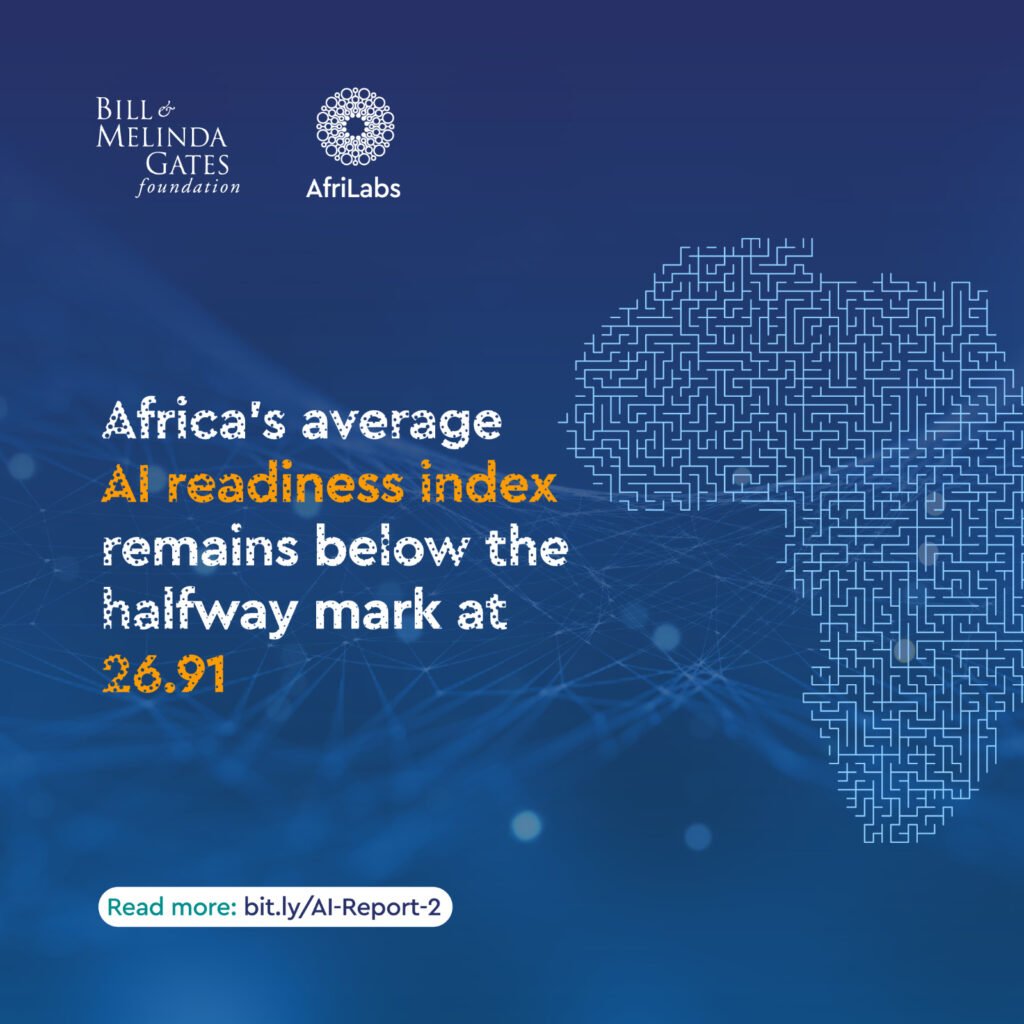
The Imperative of AI Infrastructure Investment for Africa’s Digital Future As we approach a new era powered by artificial intelligence (AI), the need for strong internet infrastructure in Africa has never been more important. The AI Startups Mapping in Africa report by AfriLabs, funded by the Gates Foundation provides a sobering but positive assessment of the continent’s AI readiness, with an average index of 26.91. This figure, which is far below the halfway point, emphasizes the vital need for further efforts and expenditures to boost AI activity across the continent. Bridging the AI Readiness Gap Despite Egypt, Kenya, South Africa, and Tunisia leading with index values above 40, none have achieved 50. This suggests that even the most advanced African countries are still in the early phases of AI development. Without substantial improvements in digital infrastructure, Africa risks falling further behind in the global AI race. The surge in AI applications necessitates an increase in high-performance computing (HPC) capabilities, such as GPUs and TPUs. These components are essential for developing and deploying complex AI models that rely on massive datasets and intricate computations. Over the past decade, global investments in digital infrastructure have soared, driven by factors like smartphone penetration and the rise of cloud computing. However, Africa must ramp up these investments to meet the evolving demands of AI. The Role of Digital Infrastructure Effective AI infrastructure is multifaceted, encompassing hardware and software elements that provide a broad range of capabilities. From data storage and cloud computing to robust communication networks and secure power connections, each component is crucial for unlocking AI’s full potential. For Africa, building this infrastructure is not just about technology; it’s about creating a foundation for innovation and socioeconomic development. Several initiatives are already underway, African countries are adopting digital strategies aimed at fostering an environment conducive to digitalization. Tech giants such as Amazon, Google, and Microsoft are investing in African data centers, rapidly expanding the continent’s hosting capacity. For instance, the establishment of the Tanzania National Internet Data Center (NIDC) exemplifies how government and private sector collaboration can enhance AI capabilities. By providing scalable storage and AI services, the NIDC is helping Tanzanian entities to leverage AI without the need to develop services from scratch. Specialization in AI Subfields African AI startups are showing remarkable focus in various AI subfields, which is crucial for addressing the continent’s unique challenges. The report highlights that 30% of AI startups in Africa specialize in Machine Learning, followed by Deep Learning (17%), Natural Language Processing (15%), Computer Vision (12%), Generative AI (10%), Reinforcement Learning (9%), and Robotics (7%). This specialization is pivotal for driving innovation in sectors like healthcare, finance, and agriculture, where AI can significantly improve outcomes. However, the growth in AI subfields also brings to light the urgent need for better infrastructure. As AI algorithms become more complex, the demand for computational power increases. Without the necessary digital backbone, these startups may struggle to scale their solutions and achieve their full potential. The Path Forward Africa’s digital infrastructure development requires a concerted effort to enhance digital infrastructure. This means investing in state-of-the-art data centers, expanding cloud computing capabilities, and ensuring reliable and fast communication networks. For instance, Tanzania’s licensing of public data centers from the private sector reflects a positive trend, but it must be scaled up to meet the high computing demands brought by AI. Governments across Africa must prioritize creating a safe and secure foundation for AI development. This involves not only building the physical infrastructure but also implementing policies that promote innovation, protect data privacy, and ensure cybersecurity. By doing so, Africa can create an ecosystem where AI can thrive, driving socioeconomic development and positioning the continent as a significant player in the global AI landscape. The future of AI in Africa holds immense promise, but realizing this potential hinges on the continent’s ability to build and sustain robust digital infrastructure. The AI Startups Mapping in Africa report serves as a clarion call for action. By addressing the current gaps and investing strategically in AI infrastructure, Africa can unlock unparalleled opportunities for innovation and development, ensuring that it does not just participate in the AI revolution but leads it. In the words of many experts, the time to act is now. The benefits of AI are too significant to be overlooked, and the costs of inaction are too high. Africa’s digital future depends on the steps we take today to build a foundation that can support the technologies of tomorrow. 📖 Read more in our report: bit.ly/AI-Report-2
New AI Insights: AfriLabs Publishes Two Groundbreaking Reports Funded by the Gates Foundation
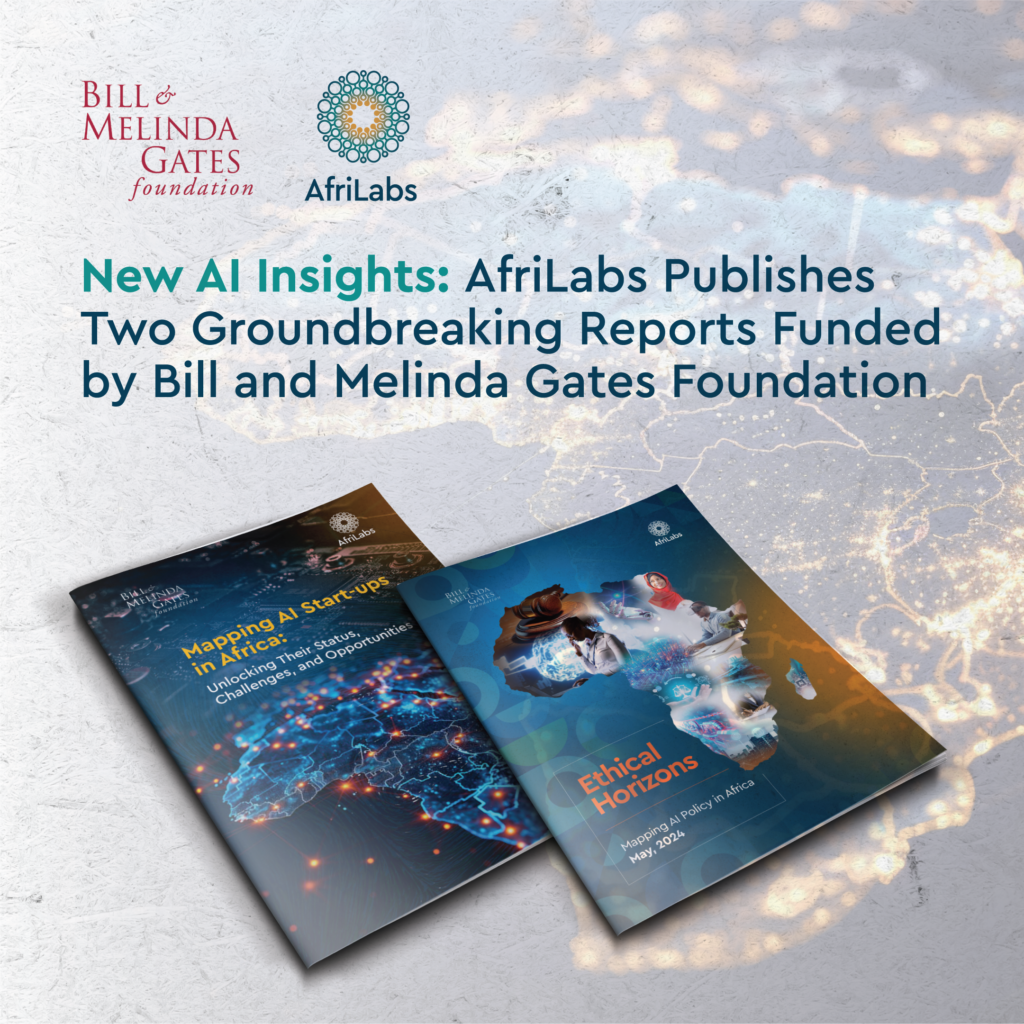
New AI Insights: AfriLabs Publishes Two Groundbreaking Reports Funded by the Gates Foundation AfriLabs, the largest pan-African network of technology and innovation hubs, is thrilled to announce the release of two pivotal studies on Artificial Intelligence (AI) in Africa. Funded by the Bill and Melinda Gates Foundation (BMGF), these studies offer unprecedented insights into the AI startup ecosystem and the ethical implications of AI policies on the continent. The first study, Landscape Analysis of AI Startups in Africa, provides a detailed mapping of AI startups across Africa. It categorizes startups by their areas of focus, stages of development, and geographical distribution, presenting a clear picture of the current AI landscape. The study also delves into the unique challenges and opportunities these startups face within Africa’s socio-economic environment. The second study, Implication of AI Ethical Policies on Africa Innovators and Entrepreneurs, examines how various ethical frameworks and policies influence AI development and deployment across different African countries. It highlights both the positive implications and potential drawbacks, offering strategic recommendations for policymakers to ensure that AI practices are not only ethical and aligned with Africa’s broader development goals but also enabled. Both reports fill critical gaps in existing knowledge and have far-reaching implications for practitioners, policymakers, and researchers working within the field of AI in Africa. These studies are expected to drive informed decision-making and foster a more supportive environment for AI innovation on the continent. Nanko Madu, Director of Programmes at AfriLabs, emphasized the importance of these studies, stating “The insights from these reports are invaluable for understanding the dynamic AI landscape in Africa and the ethical considerations that must guide our innovation efforts. We are grateful to the Bill and Melinda Gates Foundation for their support and are confident that these studies will serve as crucial resources for stakeholders across the continent.” The full reports are available for download at the following links: Ethical Horizons: Mapping AI Policy in Africa- https://bit.ly/AI-Report-one & AI Startups Mapping in Africa – bit.ly/AI-Report-2. About AfriLabs AfriLabs is the largest network of technology and innovation hubs across Africa, driving the growth of Africa’s innovation ecosystem. With a mission to support the development of the African technology and innovation ecosystem, AfriLabs connects hubs and other stakeholders to facilitate collaboration, resource sharing, and knowledge transfer. For media inquiries, please contact pr@afrilabs.com & comms@afrilabs.com. For more information about AfriLabs and its programs, please visit www.afrilabs.com.
AfriLabs Announces Participation in the 4th India-Africa Entrepreneurship and Investment Summit
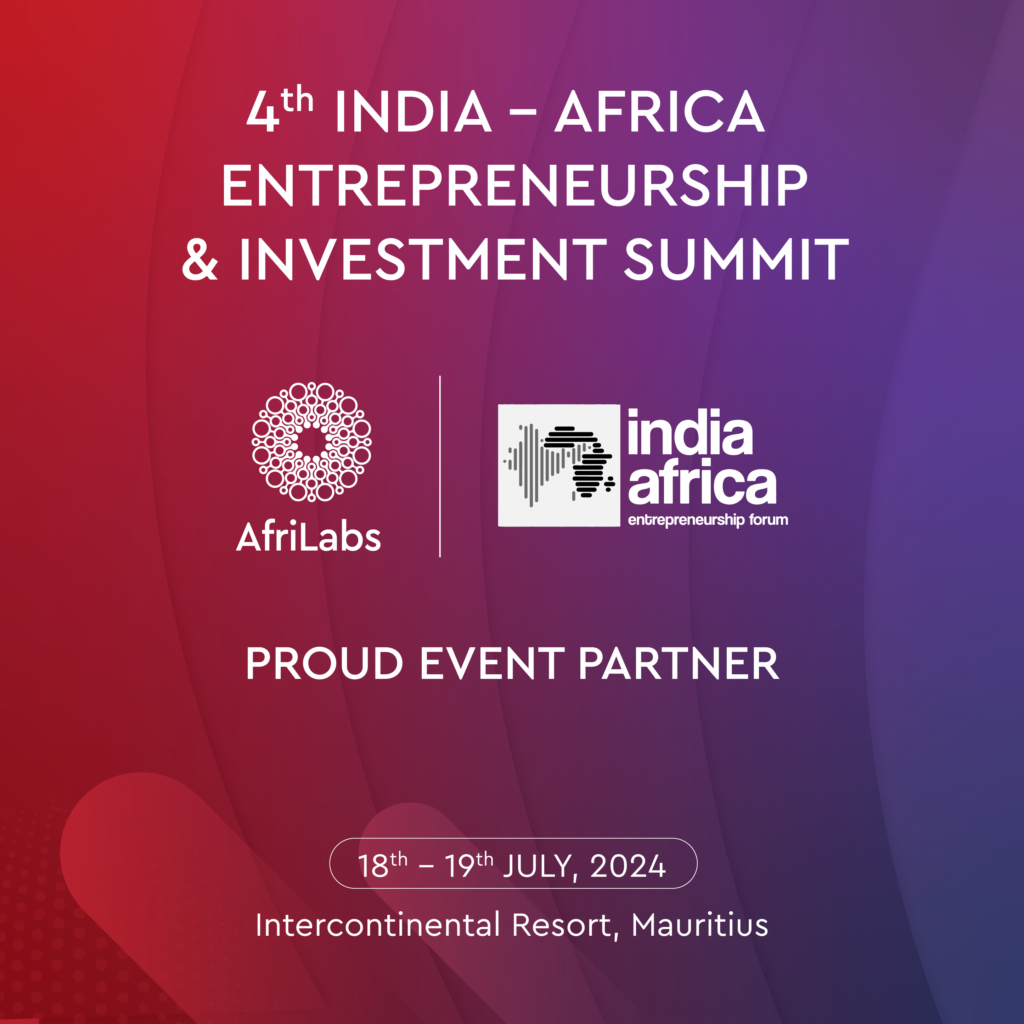
AfriLabs Announces Participation in the 4th India-Africa Entrepreneurship and Investment Summit AfriLabs is excited to announce its participation in the 4th Annual India-Africa Entrepreneurship and Investment Summit, set to take place from July 18-19, 2024, at the Intercontinental Resorts Balaclava Fort, Mauritius. This premier event, organized by AfriLabs, the Economic Development Board Mauritius, Indian Angels Network and Africa Business Angels Network aims to foster collaboration and drive economic growth between the two regions. The summit will bring together eminent entrepreneurs, thought leaders, policymakers, and investors from both India and Africa, featuring a series of workshops, panels, and networking opportunities designed to explore and enhance mutual growth. Africa’s fifty-four states produced a combined GDP in excess of US$3.2 trillion—almost the same as India. The continent’s economic growth, estimated to be 3.2 percent in 2024, includes six of the world’s fastest growing economies. India and Africa can collaborate at various levels to co-create opportunities for mutual benefit, this event will facilitate this as an endeavor. The Fourth India-Africa Summit intends to provide opportunities for established Indian corporates to acquire/make strategic investments into African ventures for market access and expansion. Additionally, the event aims to connect African entrepreneurs with their Indian counterparts to create AfricaFirst startups, leveraging their experience in emerging markets. The summit will also advocate for African DFIs to invest in Africa drawing upon the experience of Indian DFIs such as SIDBI and others. Furthermore, the event seeks to connect entrepreneurial ecosystem players between India and Africa for knowledge sharing and capacity building. Anna Ekeledo, Executive Director of AfriLabs, expressed her enthusiasm about the upcoming summit, stating, “We are pleased to announce our partnership with the 4th Annual India-Africa Entrepreneurship & Investment Summit. This event is a vital convergence of ideas and initiatives, bringing together key players from both continents to foster innovation and economic progress. We look forward to engaging in insightful discussions, workshops, and networking sessions that will undoubtedly drive transformative change.” Building on the remarkable success of its three previous editions, the organizers are inviting preeminent entrepreneurs, thought leaders, policymakers, and investors from both Africa and India to participate in this exceptional event. Don’t miss the opportunity to be part of this vibrant exchange of ideas and opportunities. Interested participants are encouraged to register early to secure their place! Register at: https://africa-india.org/ About AfriLabs AfriLabs is the largest network of technology and innovation hubs across Africa, driving the growth of Africa’s innovation ecosystem. With a mission to support the development of the African technology and innovation ecosystem, AfriLabs connects hubs and other stakeholders to facilitate collaboration, resource sharing, and knowledge transfer. About the India Africa Entrepreneurship Forum The India Africa Entrepreneurship Forum is dedicated to enhancing the entrepreneurial ecosystem and fostering investment opportunities between India and Africa. Through various initiatives and events, the forum aims to create a robust platform for sustainable economic development and collaboration. For media inquiries, please contact pr@afrilabs.com & comms@afrilabs.com. For more information about AfriLabs and its programs, please visit www.afrilabs.com.
GCA YouthADAPT Webinar: SMEs as a Key Driver for Climate Adaptation & Innovation in Africa

GCA YouthADAPT Webinar: SMEs as a Key Driver for Climate Adaptation & Innovation in Africa As part of the GCA Youth Adapt Challenge, AfriLabs is pleased to announce an upcoming webinar titled “SMEs as a Key Driver for Climate Adaptation & Innovation in Africa,” scheduled for June 27th, 2024, at 2 pm WAT. The webinar aims to underscore the critical role of Small and Medium-sized Enterprises (SMEs) in driving economic growth, fostering innovation, and addressing climate-related challenges across the African continent. By showcasing initiatives such as the GCA YouthAdapt Challenge, the event seeks to highlight how SMEs, particularly those led by young entrepreneurs, are becoming pivotal agents of change in climate adaptation and innovation. The African Adaptation Acceleration Program (AAAP) YouthADAPT pillar, launched to prepare a new generation of African youth for green and climate-resilient development, has been instrumental in promoting entrepreneurship and innovation for climate adaptation and resilience in Africa. The AAAP YouthADAPT Challenge, an annual competition jointly organized by the Global Center on Adaptation, African Development Bank, and Climate Investment Funds, aims to scale up transformative youth innovations for climate action. In its mission to strengthen inclusive growth and broaden investment opportunities for African youth, the YouthADAPT Challenge has awarded grants of up to $100,000 to each winner, providing them with a platform to scale up their businesses and create decent jobs. The program has garnered significant attention, with winners announced at high-profile events such as COP27 and COP28. SMEs are recognized as crucial drivers of economic growth and innovation across Africa, particularly in the face of increasing climate-related challenges. Their locally-driven solutions and deep understanding of local contexts enable them to develop targeted and culturally appropriate adaptation strategies. Moreover, SMEs’ adaptability and quick innovation make them effective responders to emerging climate threats. With SMEs generating a significant portion of formal job positions in emerging markets, their role in achieving Sustainable Development Goals 8 and 9 cannot be overstated. The upcoming World SME Day on June 27th serves as a timely reminder to recognize and celebrate the resilience and impact of SMEs worldwide. The webinar aims to achieve several key objectives; highlight the significance of SMEs in contributing to economic growth, climate adaptation, and innovation in Africa, emphasize the growing importance of SMEs in addressing climate-related challenges on the continent, showcase initiatives like the African Youth Adaptation Solutions Challenge as examples of leveraging young entrepreneurs’ creativity for climate resilience, examine the potential of SMEs as agents of change in climate adaptation and innovation in Africa, and explore the role of SMEs in fostering climate resilience and adaptation strategies across various sectors in Africa. Nanko Madu, Director of Programmes at AfriLabs, stated, ‘SMEs are the backbone of Africa’s economy and hold immense potential in driving climate adaptation and innovation. By empowering young entrepreneurs and investing in their capacity, we can unlock transformative solutions that address pressing environmental challenges while fostering economic growth and resilience across the continent.’” Register now and join us on June 27th for this insightful webinar using this link: https://tinyurl.com/YAChallenge2022. About AfriLabs: AfriLabs is the largest network of technology and innovation hubs across Africa, driving the growth of Africa’s innovation ecosystem. With a mission to support the development of the African technology and innovation ecosystem, AfriLabs connects hubs and other stakeholders to facilitate collaboration, resource sharing, and knowledge transfer. To learn more about the webinar contact Lisa on Lisa@afrilabs.com. For general information about AfriLabs visit www.afrilabs.com. For media inquiries, please contact pr@afrilabs.com & comms@afrilabs.com