AfriLabs and AGX Consultant Studio Partner to Expand the AfriLabs Connect Deal Room Across North Africa and the GCC

AfriLabs Partners with AGX Consultant Studio to Expand AfriLabs Connect Deal Room Across North Africa, GCC AfriLabs has signed a Memorandum of Understanding (MOU) with AGX Consultant Studio, an Egypt-based accelerator and venture studio to support the expansion and adoption of the AfriLabs Connect Deal Room (ACDR) across Egypt, North Africa, and the Gulf Cooperation Council (GCC) region. As Africa’s largest network of innovation and technology hubs, AfriLabs continues to develop platforms and initiatives that enable entrepreneurs, startups, investors, corporates, development partners, and ecosystem enablers to connect, collaborate, and grow. The AfriLabs Connect Deal Room (ACDR) is one such initiative, designed to facilitate meaningful engagement between key ecosystem stakeholders by providing a structured platform for deal sourcing, investment facilitation, partnership development, and ecosystem collaboration. Through this strategic partnership, AGX Consultant Studio will support the introduction and promotion of ACDR within its extensive network of entrepreneurs, investors, venture builders, corporations, innovation support organizations, and ecosystem stakeholders across Egypt, North Africa, and the GCC. The collaboration is expected to create new pathways for startups and innovation actors to access opportunities beyond their immediate markets while strengthening regional connectivity between African and Middle Eastern innovation ecosystems. By combining AGX’s regional reach and venture-building experience with AfriLabs’ pan-African innovation network and digital ecosystem infrastructure, both organizations aim to create greater value for founders, investors, and ecosystem stakeholders operating across multiple markets. A central component of the partnership will be the expansion of the AfriLabs Connect Deal Room as a platform for facilitating investment readiness, deal flow generation, strategic partnerships, and business opportunities. The collaboration will also explore white-label deployment opportunities that enable accelerators, venture studios, innovation hubs, corporate innovation programs, and ecosystem builders to leverage customized versions of the platform to serve their communities and stakeholders. Commenting on the partnership, AfriLabs noted that expanding the reach of ACDR beyond Sub-Saharan Africa aligns with its broader vision of building an interconnected innovation ecosystem where entrepreneurs and innovators can access opportunities regardless of geography. Similarly, the collaboration reflects AGX Consultant Studio’s commitment to supporting innovation-driven growth and creating stronger connections between founders, investors, and ecosystem stakeholders across emerging markets. By leveraging the combined strengths of AfriLabs and AGX Consultant Studio, the AfriLabs Connect Deal Room is positioned to become an even more powerful gateway for investment, collaboration, and ecosystem engagement across Africa, North Africa, and the GCC. About AfriLabs AfriLabs is the largest pan-African network of innovation and technology hubs, dedicated to supporting innovation and entrepreneurship across the continent. Through its community, programs, and digital platforms, AfriLabs works to empower entrepreneurs, strengthen innovation ecosystems, and facilitate collaboration among stakeholders driving Africa’s digital transformation. About AGX Consultant Studio AGX Consultant Studio is an Egypt-based accelerator, venture studio, and early-stage venture capital platform that brings together talent, strategic resources, venture-building expertise, and financing to nurture and develop innovative ventures. Through its ecosystem and regional network, AGX supports founders, startups, and innovation-driven businesses across Egypt, North Africa, and the GCC.
When Legal Expertise Enters the Room: ACDR and Babalakin & Co. to Raise the Bar for African Startups with Strategic Partnership

When Legal Expertise Enters the Room: ACDR and Babalakin & Co. to Raise the Bar for African Startups with Strategic Partnership Africa’s innovation economy is entering a decisive structural phase—one defined less by the novelty of startup formation and more by the maturity of ecosystem infrastructure required to sustain scalable, investable, and resilient enterprises. Over the past decade, the continent has experienced rapid growth in entrepreneurial activity, venture capital participation, and technology-driven business models across multiple sectors. However, as the ecosystem matures, the determinants of startup success are becoming significantly more sophisticated. Access to capital, while still essential, is no longer the primary constraint. Increasingly, outcomes are shaped by the quality of governance structures, legal and regulatory preparedness, institutional readiness, execution discipline, and the availability of credible professional support systems that enable startups to transition from early traction to institutional-grade businesses. It is within this context that AfriLabs Connect Deal Room (ACDR) announces a strategic partnership with Babalakin & Co., one of Nigeria’s most established and highly regarded full-service law firms, with decades of experience advising on complex corporate, commercial, infrastructure, regulatory, and dispute resolution matters. The partnership represents a deliberate alignment between ecosystem infrastructure and institutional legal expertise, designed to improve how startups are structured, how investors deploy capital, and how ecosystem stakeholders collaborate to build scalable enterprises across Africa. A Shift From Startup Support to Ecosystem Infrastructure The nature of startup support in Africa is evolving. Earlier ecosystem models were primarily focused on incubation, early-stage funding access, and founder education. While these remain important, they are no longer sufficient for the current stage of ecosystem maturity. Today, the emphasis is shifting toward ecosystem infrastructure—the underlying systems that determine whether startups are truly investable, scalable, and globally competitive. These include legal structuring and corporate governance frameworks, regulatory compliance and sector-specific advisory, investment readiness and due diligence preparedness, transaction structuring and capital formation support, intellectual property protection, and cross-border expansion capability. When these elements are weak or fragmented, they introduce friction into investment processes, slow capital deployment, and constrain scale potential. This partnership directly addresses that structural gap. Institutional Legal Expertise Meets Ecosystem Execution Infrastructure Babalakin & Co. brings to this collaboration a long-standing institutional reputation as one of Nigeria’s premier law firms, with extensive experience advising sovereign entities, multinational corporations, financial institutions, and high-value commercial transactions. The firm operates across corporate and commercial law, infrastructure and project finance, energy, telecommunications, regulatory advisory, dispute resolution, and complex multi-jurisdictional transactions. Through its integration into AfriLabs Connect Deal Room’s Business Support Organization (BSO) network, Babalakin & Co. will extend this institutional expertise into the innovation ecosystem in a structured and intentional manner. ACDR operates as a deal room and ecosystem infrastructure platform connecting founders, investors, and ecosystem enablers—facilitating capital access, strategic introductions, and structured engagement between innovation-driven businesses and institutional stakeholders. Together, both organizations are building a more integrated support architecture where legal, strategic, and capital-related capabilities are not fragmented, but coordinated. What This Unlocks for Founders For founders and high-growth startups within the ecosystem, this partnership unlocks a more institutionally aligned support environment that directly strengthens business quality and scale readiness. It enables: Earlier access to structured legal advisory for company formation, governance, and fundraising Stronger compliance and governance frameworks aligned with investor expectations Improved readiness for institutional due diligence and capital raises Enhanced regulatory navigation across sectors and jurisdictions Stronger commercial contracting and partnership structuring capability Increased visibility within investor and institutional networks This represents a shift from reactive legal support to embedded ecosystem readiness—ensuring founders are structurally prepared for capital, partnerships, and scale from earlier stages. What This Unlocks for Investors and Capital Providers For venture capital firms, private equity investors, angel networks, development finance institutions, and corporate investors, the partnership unlocks a more efficient, transparent, and investable pipeline. Investors can expect: Higher-quality deal flow with stronger governance and legal structuring Reduced friction during due diligence and transaction execution Improved clarity in corporate documentation and compliance standards Stronger founder readiness for institutional capital engagement More predictable post-investment operational alignment Enhanced confidence in scalability and execution discipline This improves capital deployment efficiency while reducing execution risk across the investment lifecycle. What This Unlocks for Ecosystem Stakeholders For accelerators, incubators, innovation hubs, and ecosystem development organizations, this partnership unlocks a more coordinated and capability-rich support environment. It strengthens: Alignment between legal institutions and innovation platforms Portfolio support capabilities across ecosystem programs Consistency in founder readiness standards The increasing participation of established professional service institutions in startup ecosystems reflects a broader structural evolution in Africa’s innovation landscape. Sustainable innovation systems require more than capital inflows; they require institutional depth, legal clarity, governance discipline, and structured advisory ecosystems that support companies from formation through scale. By embedding a leading legal institution into the ecosystem architecture, ACDR and Babalakin & Co. are strengthening the foundational systems upon which investable companies are built. Stakeholder Insight: Ecosystem Leadership Perspective Speaking on the significance of the partnership, Ajibola Odukoya, COO of AfriLabs , emphasized the shift toward deeper institutional integration: “This partnership between AfriLabs Connect Deal Room and Babalakin & Co. reflects exactly what Africa’s innovation ecosystem now requires—deep institutional integration that moves beyond connectivity into execution infrastructure. As ecosystems mature, the differentiator is no longer access alone, but the quality of legal, governance, and investment readiness support available to founders. Bringing a firm of Babalakin & Co.’s calibre into the ecosystem strengthens not only startups, but the entire investment pipeline and the credibility of African innovation in global markets.” — Ajibola Odukoya, COO, AfriLabs What This Partnership Represents at a Structural Level Beyond immediate operational benefits, the partnership signals a broader shift in Africa’s innovation economy. It reflects the transition from fragmented ecosystem support models to integrated institutional ecosystems where legal, financial, and innovation actors collaborate in a structured manner. It also reinforces the growing recognition that law firms and professional service institutions are not peripheral to innovation ecosystems—they
Bridging the Gap: AfriLabs at the DCO General Assembly on Africa’s AI and Digital Future
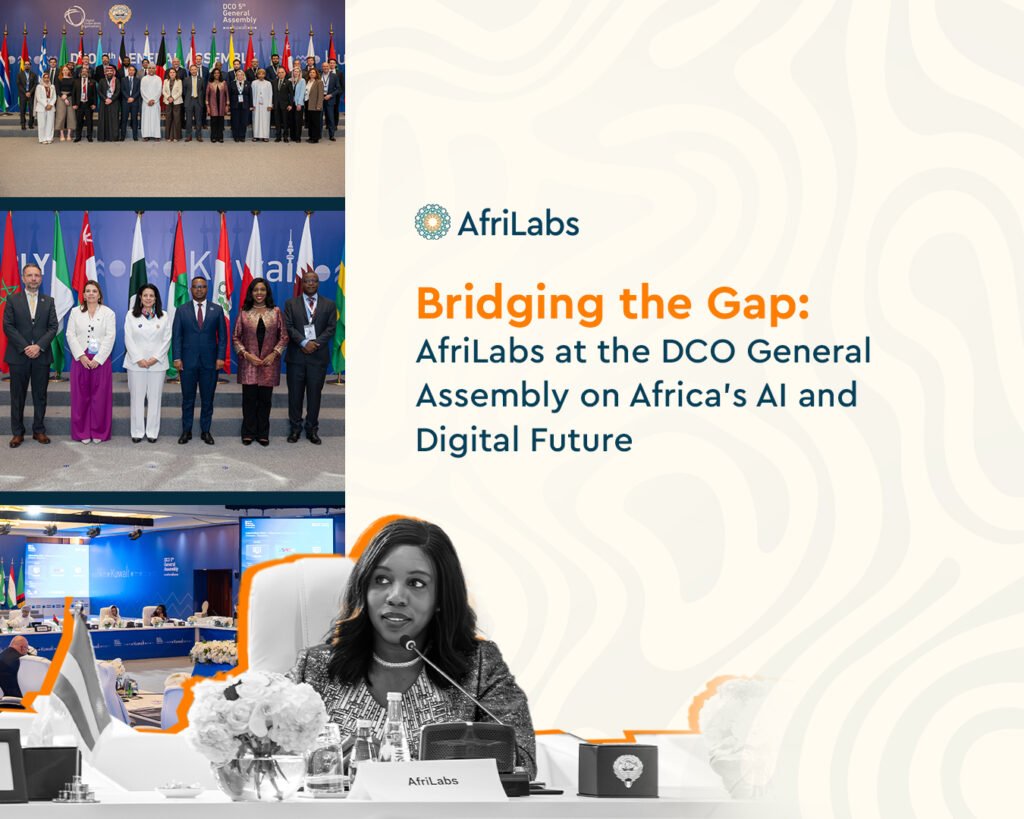
Bridging the Gap: AfriLabs at the DCO General Assembly on Africa’s AI and Digital Future Across Africa and the Arab world, national AI strategies are being written, ministerial portfolios are being restructured, and digital cooperation frameworks are being signed. Inside the continent’s universities, the picture is more complicated. The question is no longer whether AI matters for the continent’s economic future. It is whether the institutions responsible for producing that future’s workforce are equipped to keep pace. At the 5th DCO General Assembly in Kuwait, AfriLabs joined a high-level side-event co-hosted with the Kingdom of Morocco on “Strengthening African-Arab Partnerships for Artificial Intelligence and Data-Driven Development.” Our Executive Director, Anna Ekeledo, participated alongside H.E. Dr. Amal El Fallah Seghrouchni, Morocco’s Minister of Digital Transition and Administrative Reform, and H.E. Yves N. Iradukunda, Rwanda’s Minister of State for ICT and Innovation, in a session moderated by Ms. Emma Morley, UNDP Resident Representative in Kuwait. The discussion was focused on a unified digital transformation agenda across both regions. AfriLabs came to that table with something specific: evidence. What the Data Actually Shows In November 2025, AfriLabs, WISE (Qatar Foundation), Mohammed VI Polytechnic University (UM6P), and The Education Collaborative at Ashesi University published “Harnessing AI for Higher Education in Africa,” a study drawing on responses from 3,875 stakeholders across 47 African HEIs and 199 edtech companies. It is one of the most comprehensive examinations of AI adoption in African higher education produced to date. The findings reveal a sector caught between recognition and readiness. Most institutions understand the direction of travel. Few have built the internal conditions to move confidently in that direction. 62% of all AI usage across surveyed institutions occurs within AI-enabled Learning Management Systems. Adoption beyond that is scattered. Six in ten institutions have no AI policy. The same proportion operate without ethical guidelines for responsible AI use. Respondents widely described their institutions as being at an early or developing stage of AI integration, even where individual staff reported intermediate competency levels. The gap is not in awareness. It is in institutional architecture. This matters because the absence of governance frameworks does not simply slow adoption. It creates the conditions under which adoption, when it does happen, is fragmented, inconsistent, and difficult to build on. A Market That Has Not Caught Up The edtech investment landscape reflects the same structural imbalance. Of 414 active post-secondary edtech startups operating in Africa, only 45 specifically target HEIs. Fewer than 2% are building AI-powered solutions for the tertiary level. 64% of edtech activity remains concentrated at K–12. This is a rational market response to a set of structural disincentives. HEIs involve complex procurement processes, longer sales cycles, limited dedicated budgets in public institutions, and significant content adaptation requirements. Startups building for universities carry more risk for slower returns. Meanwhile, over 83% of AI startup funding in early 2025 flowed to just four countries: Kenya, Nigeria, South Africa, and Egypt, concentrating capital in ecosystems that are already better resourced and leaving HEI-focused innovation largely unfunded across the rest of the continent. 41% of edtech startups in our study cited funding and revenue generation as their primary obstacle. Without capital structures designed for the complexity of higher education markets, AI solutions for African universities will continue to be built by too few players, at too small a scale, to drive systemic change. Infrastructure Is the Starting Point, Not the Backdrop None of the above can be addressed without confronting the infrastructure reality directly. Africa holds less than 1% of global data centre capacity despite representing 18% of the world’s population, and the continent needs an estimated 700 new data centres to meet medium-term connectivity and storage requirements. No African country has yet reached 20% AI adoption, a figure shaped by five compounding deficits: electricity, data infrastructure, internet access, skills, and language. For African HEIs, these deficits are not abstract. They determine whether a faculty member can reliably use an AI tool in a classroom, whether an institution can afford to run cloud-based administrative systems, and whether students in under-resourced regions have any meaningful access to the tools their urban counterparts are beginning to use. Our study found that lack of affordable internet access and adequate hardware consistently ranked among the top barriers to AI adoption in universities. AI policy frameworks and faculty training programs are necessary investments. But they operate on top of a connectivity and compute layer that, in much of the continent, is not yet stable enough to carry them. What Implementation Actually Looks Like Our research does not only identify gaps. It documents what structured, intentional implementation looks like when conditions align. The case study we conducted with UM6P in Morocco, currently ranked first in Morocco and North Africa and fourth across the continent in the 2026 Times Higher Education rankings, offers the clearest available model for African HEI-led AI integration. UM6P approached AI not as a set of tools to adopt, but as a design challenge. Its Digital Ecosystem Office coordinates all AI and digital initiatives campus-wide, ensuring that technology adoption is grounded in pedagogy rather than novelty. The outcomes are measurable. Course development timelines fell from 8–12 weeks to 2–3. Instructional video production costs dropped by up to 70%. In 2025, UM6P became the first African HEI to deploy ChatGPT Edu institution-wide, giving more than 2,000 students and faculty access within a policy-controlled environment and generating institutional learnings now shared beyond Morocco. UM6P is a well-resourced institution, and our report acknowledges that directly. But its approach is transferable: identify a specific problem, ground the solution in pedagogy, design for scale from the start, and build human capacity alongside every tool deployed. These are principles, not budgets. The UM6P model demonstrates that the constraints facing African HEIs are real but not deterministic. Policy Is Moving. Implementation Needs to Follow. Rwanda’s 2023 National AI Policy and Kenya’s National Artificial Intelligence Strategy 2025–2030 both place higher education institutions at the center of national AI implementation, calling for expanded curricula, postgraduate training, and structured research-industry partnerships. These frameworks signal a shift from aspiration to architecture at the national level. The DCO General Assembly
Venture Capital Investment Trends in Africa: 2024 Recap and 2025 Projections

Venture Capital Investment Trends in Africa: 2024 Recap and 2025 Projections 2024: A Year of Challenges Venture capital funding in Africa experienced a significant downturn in 2024, reflecting broader global economic challenges. Here are the key insights regarding the state of VC funding in Africa for 2024: Overall Funding Trends Total VC Funding: In 2024, venture capital funding in Africa dropped to $2.2 billion, marking a 25% decrease from 2023 and a staggering 53% decline from 2022. This decline is attributed to various factors, including rising interest rates and a tightening global economic environment. Regional Distribution: The “Big Four” countries—Kenya, Nigeria, Egypt, and South Africa—accounted for 84% of total funding. East Africa emerged as the leading region. Revisit our trends outlook for 2024 if you missed it HERE. Regional Breakdown of Funding Region Funding Amount East Africa $725 million West Africa $587 million North Africa $478 million South Africa $397 million Sector Focus The primary sectors attracting investment included: Fintech: 35% of total investments. Consumer Goods: 16%. Industry: 15%. Notably, there was a shift towards emerging sectors such as AI, climate tech, and renewable energy, which collectively accounted for a significant portion of the investments. Investment Strategies Venture Debt Growth: Startups increasingly turned to venture debt as an alternative financing method, raising approximately $755 million by October 2024, up from $633 million in 2023. The median deal value for venture debt rose to $9.5 million, indicating a growing preference for non-dilutive capital. Despite the overall downturn, some startups managed to secure substantial investments, with notable rounds including Tyme Group’s $250 million, MNT-Halan’s $157.5 million, and Moniepoint’s $110 million. Challenges Facing VC Funding The decline in funding can be attributed to several challenges: A decrease in international investor interest. Regulatory hurdles across various regions. A high-interest-rate environment that has made traditional equity funding less accessible. In summary, while venture capital funding in Africa faced significant challenges in 2024, there are signs of resilience as startups adapt through alternative funding strategies and sector diversification. The focus on fintech and emerging technologies suggests potential growth areas for future investment despite the current downturn. 2025: A Year of Recovery and Growth The outlook for venture capital (VC) investment in Africa for 2025 appears cautiously optimistic, despite the challenges faced in 2024. Here are the key insights regarding the anticipated VC landscape: Economic Growth Projections The African Development Bank projects that Africa’s real GDP growth will average between 3.8% and 4.2% in 2024 and 2025, respectively, which is favorable compared to global averages of 2.9% and 3.2% during the same period. This economic growth may enhance investor confidence and stimulate VC activity. Recovery from Declines After a significant decline in 2024, where Africa saw a 44% drop in VC funding, totaling around $1.1 billion across 294 deals, there is optimism for recovery in 2025. The expectation is that international investors will return to the market, driven by improved geopolitical stability and macroeconomic conditions. Sector Focus Key sectors likely to attract investment include: Renewable Energy Technology Financial Services These sectors are expected to draw healthy investor interest as companies scale up projects and establish stronger market presences. Increased Local Engagement There is a growing trend for local investors to engage more actively in VC funding, recognizing the potential for high returns. This shift is crucial as local participation can help build a robust startup ecosystem. Corporations are also encouraged to allocate capital towards startups, similar to models seen in other regions like Singapore. Challenges Ahead Despite the positive outlook, several structural challenges remain: Fragmented regulatory frameworks. An underdeveloped financial sector. Inadequate infrastructure. High levels of unsustainable debt. Addressing these issues will be vital for creating a conducive environment for investment and growth. Conclusion Overall, while the VC landscape in Africa faces hurdles, the combination of projected economic growth, increased local investor engagement, and a focus on promising sectors suggests a potential rebound in VC investment activity in 2025. The success of this recovery will depend on navigating existing challenges and fostering a supportive ecosystem for startups. Citations [1] https://knowledge.insead.edu/entrepreneurship/how-africa-can-embrace-venture-capital [2] https://dabafinance.com/en/insights/african-startups-raised-2b-in-2024-here-are-the-15-largest-rounds [3] https://magnitt.com/news/Africa’s-Venture-Capital-Landscape-Key-Insights-from-the-First-9-Months-of-2024-53969 [4] https://www.launchafrica.vc/news/leading-the-charge-with-12-investments-in-h1-2024 [5] https://www.avca.africa/media/kajfuscs/avca_q2_2024_quarterly_report_venture_capital.pdf [6] https://magnitt.com/research/h1-2024-africa-venture-investment-premium-report-50949 [7] https://www.cnbcafrica.com/media/6366961240112/venture-capital-shrinks-by-41-to-hit-91bn-in-2024/ [8] https://www.omfif.org/2025/01/outlook-2025-crucial-bridge-year-for-africa-to-lead-on-the-global-stage/ [9] https://www.statista.com/outlook/fmo/capital-raising/traditional-capital-raising/venture-capital/south-africa [10] https://www.linkedin.com/pulse/afts-rolls-out-africas-fintech-investment-outlook-yprrf [11] https://www.investonline.co.za/investonline-2025-market-outlook/ [12] https://ninetyone.com/en/south-africa/newsroom/macroscope-2025-macro-outlook-foundations-of-a-global-recovery [13] https://ihub.co.ke/around-investment-2024-in-review-outlook-on-2025-and-beyond/
Empowering Survivors, Transforming Communities: Samuel’s Mission to End FGM in Africa with SmartRR

Female Genital Mutilation (FGM), a term that echoes with the pain and resilience of survivors, is a haunting reality that demands our attention and collective commitment to bring about change. Samuel, a computer scientist, has been the driving force behind an innovative solution to combat FGM in Africa. His journey, fueled by the values instilled in him during his childhood, has resulted in the creation of SmartRR, an application that not only connects survivors of FGM with medical professionals but also fosters a supportive community that transcends borders. Samuel’s formative years were shaped by a mother who instilled in him the importance of empathy and the duty to protect his siblings, especially his sisters. This upbringing laid the foundation for Samuel’s dedication to safeguarding women. As he delved into computer science during his studies, he discovered a potent tool to address societal issues. Samuel found himself drawn to leveraging his skills to protect women, a cause that had been close to his heart since childhood. The pivotal moment for SmartRR came with Samuel’s participation in the UNFPA pitch competition in 2022, where his innovative solution emerged victorious. The subsequent seed funding enabled the integration of features like an anonymous chat box, allowing users to share their stories and seek assistance. What started with a mere 300 cases before the funding has now grown to over 1,200 reported cases, reaching even those with disabilities who utilize the platform to request support. SmartRR serves as a lifeline for FGM survivors. The application links survivors with service providers, primarily medical doctors, who offer virtual consultations. The anonymity of these consultations provides a safe space for survivors to seek help comfortably. Samuel’s collaboration with AfriLabs and UNFPA under the UNFPA Incubation Programme (Innovating solutions against SGBV, FGM and Climate Action 2021 – 2022) has significantly expanded the reach of SmartRR, with over 7,523 users and 1,200 cases reported. The impact of SmartRR extends beyond numbers; it resonates in the positive changes observed in communities heavily affected by FGM. In the North East of Nigeria, FGM cases have declined. However, cases of FGM in the North Western part of Nigeria are prevalent, and Samuel’s engagement with partners such as UNFPA and AfriLabs has allowed and aided the reach in the North Western region. Samuel narrates compelling stories that illuminate the transformative power of SmartRR. One service provider, donned in a T-shirt advocating against FGM, initiated a conversation in a salon that led to a profound change of heart for a woman contemplating the procedure. Another instance involves a 22-year-old rape victim who was ashamed to tell her friends or family members and even contemplated suicide, but upon discovering SmartRR, found the necessary support and solace to carry on. Angela Felix (Note: The name “Angela Felix” is fictional and used to protect the identity of the individual.), recounting her experience, expressed gratitude for the app’s discreet and rapid assistance, saying, “Two things which made the app stand out to me is the anonymity it provides and how quickly my case was attended to.” Her journey of healing and resilience serves as a powerful testament to the impact of SmartRR in providing crucial support to survivors. (Watch the full story here, as featured in Voice of America News, 2021). SmartRR’s impact on communities affected by FGM is nothing short of extraordinary. Samuel’s commitment, coupled with the support from AfriLabs and UNFPA, has not only elevated SmartRR but has also empowered survivors, changed hearts, and transformed communities. Through technology, empathy, and determination, Samuel is leading a revolution against FGM, one virtual consultation at a time.
AfriLabs Annual Gathering: Pioneering Africa’s Digital Transformation – 8 years of Innovation and Collaboration
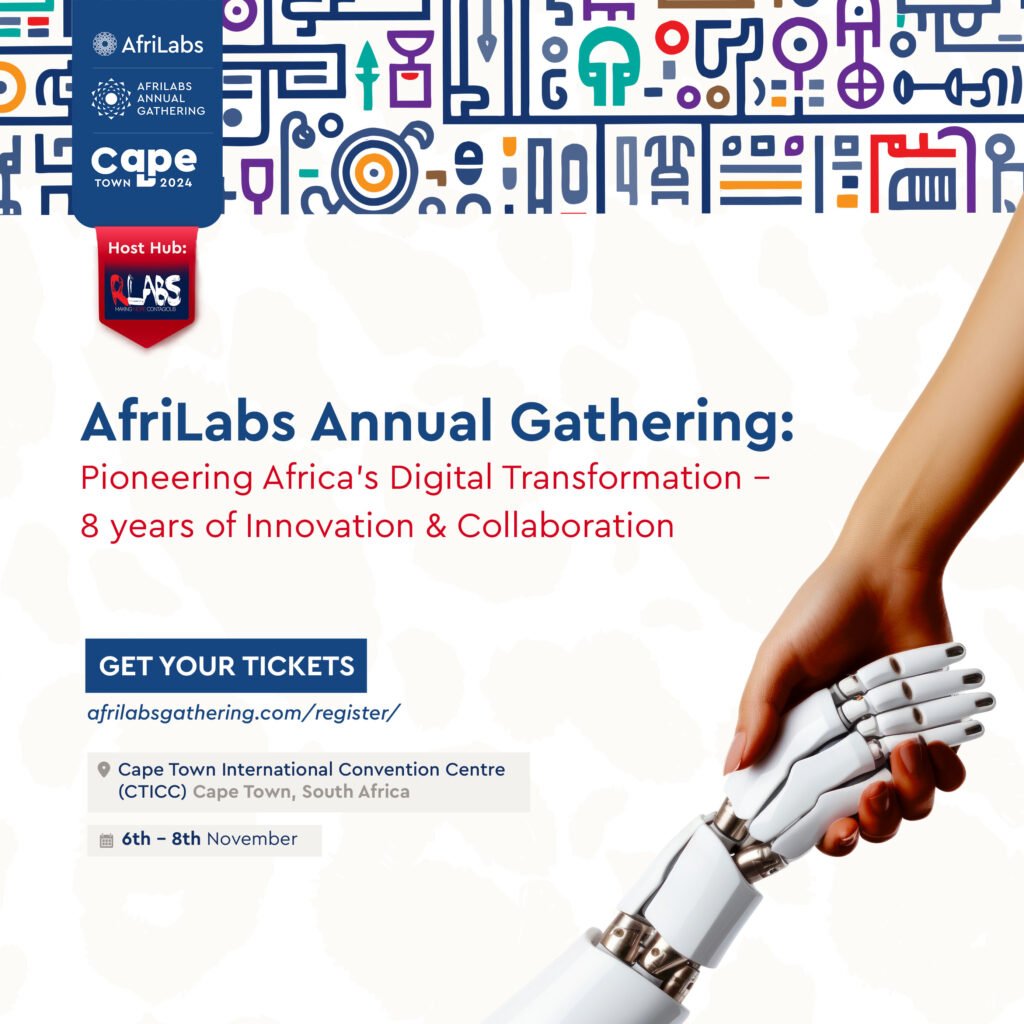
AfriLabs Annual Gathering: Pioneering Africa’s Digital Transformation – 8 years of Innovation and Collaboration Africa’s innovation ecosystem has been rapidly evolving, fueled by various initiatives and transformative events. Among these, the AfriLabs Annual Gathering stands out as a catalyst for fostering a dynamic tech landscape across the continent. Over the past nine years, it has played a pivotal role in uniting innovators, entrepreneurs, and stakeholders, accelerating Africa’s digital growth. This article delves into the impact of AfriLabs and highlights why continental events like the Annual Gathering are vital to shaping the future of African innovation. The Rise of AfriLabs AfriLabs has been a driving force for change in the African tech ecosystem, leveraging innovation and digital technologies to create sustainable businesses, generate jobs, and foster economic development. With over 500 innovation hubs convening at the annual gathering, the event has become a melting pot for young innovators, entrepreneurs, and startups across various sectors. The organization’s multifaceted approach includes capacity building, policy advocacy, networking, innovative financing models, and a strong emphasis on gender inclusion. The Impact of AfriLabs AfriLabs has had a profound impact on the African innovation ecosystem, with its influence extending far beyond networking. The organization has played a pivotal role in shaping the continent’s innovation landscape, driving policy changes, and creating a supportive environment for startups to thrive. The Nigeria Startup Act and the ongoing Nigeria Startup Act State Adoption program are testaments to AfriLabs’ commitment to driving conversations and effecting change. Our impact extends even further through strategic collaborations like the Timbuktoo Initiative, an ambitious program spearheaded by the UNDP. Focused on fostering a robust entrepreneurial ecosystem across Africa, the Timbuktoo Initiative aligns with AfriLabs’ mission of driving transformative change through innovation and entrepreneurship. Together, Timbuktoo and AfriLabs aim to highlight the critical role that impactful policies play in nurturing startups and creating a sustainable environment for growth on the continent. At the heart of our work is AfriLabs’ purpose-built ecosystem engagement platform – a digital hub that connects Africa’s largest and most diverse community of innovation enablers. This platform is the pulse of collaboration, where startups, entrepreneurs, and innovation hubs across the continent exchange ideas, forge partnerships, and collectively drive the future of African tech. It is more than a digital space; it’s a catalyst for groundbreaking innovation, ensuring that the African innovation ecosystem is interconnected, inclusive, and primed for global competitiveness. The Role of Continental Tech & Innovation Events Continental events like the AfriLabs Annual Gathering play a crucial role in shaping the African innovation ecosystem. These events provide a platform for innovators, entrepreneurs, and startups to connect, share ideas, and collaborate. The AfriLabs Annual Gathering has been instrumental in strengthening the tech ecosystem, leveraging innovation and digital technologies to create sustainable businesses, generate jobs, and foster economic development. The event has also marked the signing of significant partnerships, including one with Algeria Venture, focusing on exploring cooperation opportunities and supporting the management, funding, and promotion of startups across Africa. Uniting Innovation: AfriLabs Annual Gathering 2024 The 9th edition of the AfriLabs Annual Gathering, themed “Uniting Innovation,” is set to take place from November 6th to 8th, 2024, at the Cape Town Convention Centre (CTCC) in South Africa. This premier platform for Africa’s innovation community promises to bring together the brightest minds, dynamic speakers, and visionaries from across the African continent to drive forward the continent’s digital transformation. The event is strategically aligned with the African Union Agenda 2063, which aims to achieve a prosperous, integrated, and peaceful Africa. A Decade of Innovation and Collaboration Since its inception in 2016 in Ghana, the AfriLabs Annual Gathering has consistently served as a catalyst for Africa’s innovation ecosystem. The event has provided a unique platform for stakeholders from diverse sectors to converge, collaborate, and exchange knowledge on how to propel Africa towards a fully digitized future by 2030. What to Expect at AfriLabs Annual Gathering 2024 This year’s event promises to be an exciting celebration of innovation, featuring: → Dynamic Speakers: Renowned thought leaders and visionaries from across the African continent and beyond will share their insights and experiences on driving innovation and digital transformation in Africa. → Interactive Sessions: Participants will engage in interactive sessions, workshops, and masterclasses focused on topics such as innovation, entrepreneurship, digital economy, and more. → Networking Opportunities: The event will provide a unique platform for African innovators, policymakers, investors, startups, and thought leaders to connect, collaborate, and explore opportunities for growth and development. Special Offers for AAG2024! Discounted Flights: Enjoy 12% off flights to South Africa with our partner, Ethiopian Airlines. Accommodation Discounts: Book your stay at Southern Sun for special rates. Haven’t secured your ticket yet? Don’t miss out on this transformative experience! Register now to gain access to a platform that will fuel your growth, connect you with key leaders, and unlock opportunities across Africa’s innovation landscape. Join us in Cape Town this November for a once-in-a-lifetime gathering that will shape Africa’s future in tech and entrepreneurship. Register Now
AfriLabs set to host Llama 3.1 Impact Sub-Saharan Africa Hackathon for AI Innovators
AfriLabs and its partners, Meta and the Bill & Melinda Gates Foundation (BMGF), will host the Llama 3.1 Impact Sub-Saharan Africa Hackathon from 8th to 10th October 2024 in Kigali, Rwanda. The hackathon is designed to harness the power of Artificial Intelligence (AI) to address critical social challenges across Africa, with a focus on gender bias, linguistic inclusivity, and economic development. AI holds immense potential to drive social impact across Africa by addressing key challenges in areas like healthcare, education, economic development, and governance. In Sub-Saharan Africa, where only 60% of women achieved literacy in 2020 – far below the global average of 88% – AI-driven tools can bridge gaps in education and economic participation, fostering greater equity. Closing the gender gap across Africa could have profound economic implications. The World Economic Forum estimates that achieving gender parity could add $2.1 trillion to the continent’s GDP by 2025. The hackathon’s emphasis on addressing gender bias aims to help achieve this through innovative AI solutions. In addition to gender bias, the linguistic diversity of Africa poses both a challenge and an opportunity. Only 10% of African languages are represented on the internet, according to a report by the African Union. Language barriers are proven to limit economic opportunities, with studies showing a potential reduction in opportunities by as much as 20%. AI’s capability to improve language representation and inclusivity will play a key role in unlocking the continent’s economic potential. Financial inclusion is another critical focus area. In Sub-Saharan Africa, only 66% of women have a bank account compared to 73% of men, according to the World Bank. AI solutions that promote inclusive financial access can help bridge these gaps, contributing to economic development in the region. With Africa poised for significant economic growth, the African Development Bank estimates that the continent’s GDP will rise from $2.2 trillion in 2020 to $3.4 trillion by 2025 – the Llama 3.1 Impact Hackathon comes at a pivotal time. Africa also boasts the highest rate of entrepreneurship globally, with 22% of the population starting businesses, making it a fertile ground for AI-driven innovation. Building on this foundation, the hackathon will unite a diverse group of participants, including startup founders, developers, tech enthusiasts, students, and professionals. Leveraging Meta’s cutting-edge Llama AI technology, participants will develop innovative solutions with the potential to drive lasting impact across the continent. This hackathon will serve as a dynamic platform for innovators to explore the limitless possibilities of AI in solving real-world challenges. Following the hackathon, top-performing teams will be selected to enter a second phase focused on mentorship and product development. These teams will receive insights from experts at Meta, BMGF, and AfriLabs to refine their prototypes, prepare for market validation, and explore business development strategies. The program’s goal is to ensure that AI innovations from Sub-Saharan Africa not only thrive but also contribute meaningfully to addressing the region’s most pressing challenges. Stay tuned for more updates from the Llama 3.1 Impact Hackathon and the solutions that will emerge from it. For more details about the hackathon, please contact baluku@afrilabs.com.
AfriLabs Strengthens Global Ties in Innovation & Tech with Paris Delegation
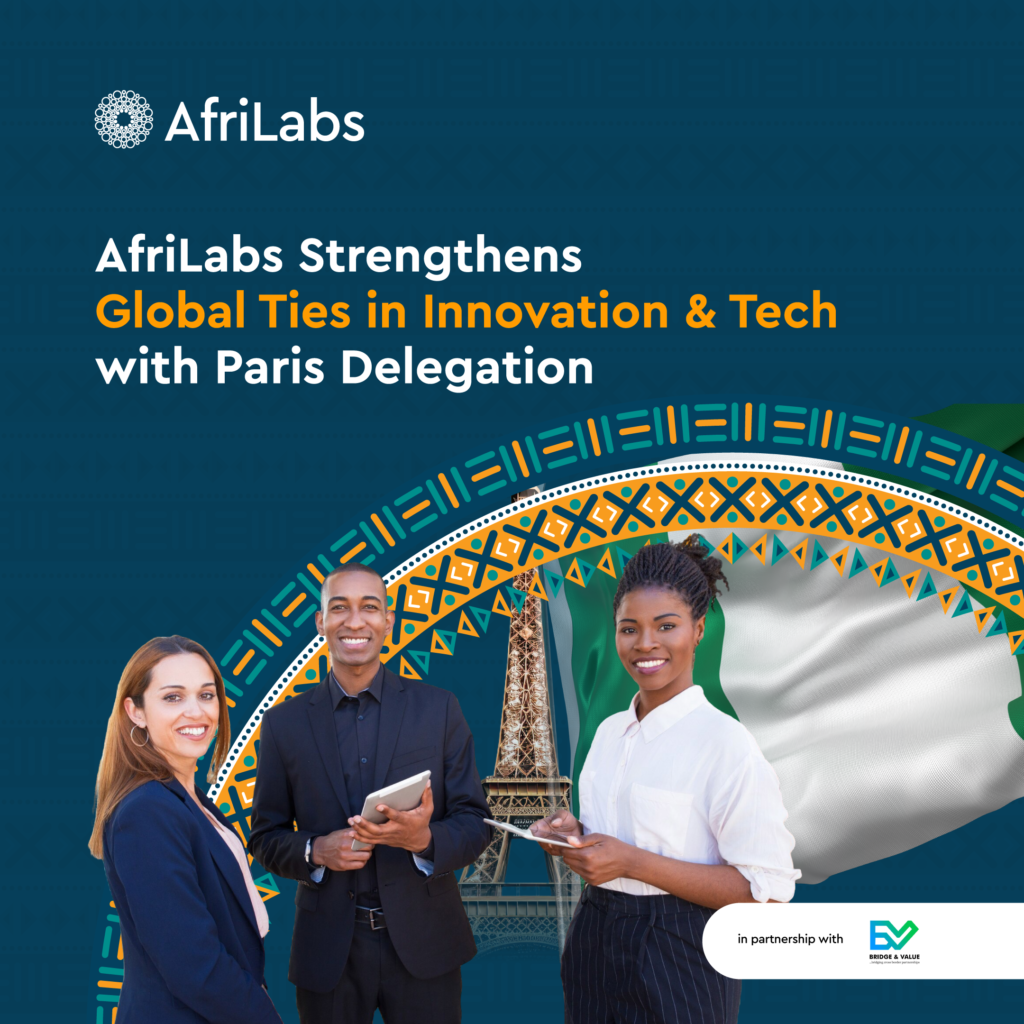
AfriLabs Strengthens Global Ties in Innovation & Tech with Paris Delegation The upcoming AfriLabs delegation to Paris, scheduled for October 9th to 11th, 2024, represents a significant opportunity to enhance global engagement in innovation and technology. This exclusive delegation aims to connect African innovation hubs with key players in Europe’s vibrant tech ecosystem, fostering valuable partnerships and collaborations. The three-day immersion will provide a unique chance to experience the Spotlight Nigeria event, BIG 2024 (Bpifrance Inno Génération), and a visit to Station F, the world’s largest startup campus. Through these engagements, AfriLabs aims to foster strategic collaborations, explore investment opportunities, and showcase the innovations emerging from Africa's tech landscape. Paris Delegation Highlights: Spotlight Nigeria: Organized by Friends of Nigeria (FON) Europe, this event brings together top executives, investors, and business leaders from Europe and Nigeria. It serves as a platform to discuss business and investment opportunities in Nigeria, fostering critical partnerships that can drive growth and innovation across both continents. BIG 2024 (Bpifrance Inno Génération): BIG 2024 is Bpifrance’s flagship event, renowned as one of Europe’s largest gatherings for entrepreneurs, investors, and innovators, it offers a dynamic environment to explore new ideas, forge partnerships, and celebrate innovation on a global scale. AfriLabs delegates will participate in VIP workshops, B2B engagements, and networking opportunities. Station F is the world’s largest startup campus, housing over 1,000 startups under one roof. It is a hub of cutting-edge innovation and entrepreneurship. AfriLabs delegates will tour the campus, engage with resident startups, and explore collaborations aimed at strengthening ties between African and European innovation ecosystems. Delegation Agenda: Tuesday, October 8, 2024: Arrival: Delegates arrive in Paris. Wednesday, October 9, 2024: 9:00 AM – 5:00 PM: Spotlight Nigeria Business Forum 2024Location: Hôtel de l'Industrie, 4 Place Saint-Germain des Prés, 75006 ParisThe day will feature plenary/ panel sessions, networking, and B2B meetings. 7:00 PM – 11:00 PM: Bpifrance Special International Cocktail & NetworkingLocation: Pomereu Hotel, 67 rue Lille, 75007 ParisAn exclusive VIP event connecting African institutions and French investors. Thursday, October 10, 2024: 8:00 AM – 7:00 PM: Bpifrance BIG 2024Location: Accor Arena, Bercy, ParisA full-day event with curated VIP workshops, B2B engagements, and networking opportunities for AfriLabs delegates. Friday, October 11, 2024: 11:00 AM – 12:00 PM: Visit to Station FLocation: Station F, 5 Parvis Alan Turing, 75013 ParisDelegates will tour Station F, meet with resident startups, and explore potential collaborations. Saturday, October 12, 2024: Group Tour: A cultural exploration of Paris Strengthening Global Innovation Ties AfriLabs' goal to broaden the global narrative of African technology is reaching a critical milestone with this delegation. Through active engagement with key players in Paris, AfriLabs is creating new opportunities for investment, cooperation, and knowledge sharing. The Paris delegation reaffirms AfriLabs' dedication to making sure African innovation keeps flourishing on the international scene. AfriLabs' Chief Operating Officer, Ajibola Odukoya, emphasized the importance of the Paris delegation, stating: “This delegation to Paris reflects AfriLabs’ commitment to building stronger bridges between African innovators and global markets. By engaging with key stakeholders in Europe, we aim to unlock new opportunities for collaboration, investment, and growth that will fuel Africa’s tech ecosystem. The Paris trip will be an important milestone in our ongoing efforts to place African innovation at the forefront of global conversations.” During the visit to Station F, Odukoya will have a strategic meeting with Yves Cabanac, Director at Plug & Play, to explore further collaborations between African startups and global investors. The delegation will include Ajibola Odukoya from AfriLabs, Roberta Orioma from The Clan Production Studios Limited, Segunfunmi Oyedele from Raiz Digital Services Technology, Henry Ogbuagu from Vencapital, as well as data science experts Temitope Baye, Aanu Oyeniran, and Oluwatoyin Adekanmbi. If you’re in Paris and would like to explore potential partnerships or discuss AfriLabs’ mission, we would love to connect. We also welcome media representatives interested in learning more about our initiatives at AfriLabs for interviews or discussions. For media inquiries, please contact our Strategic Communications & Public Relations Lead, Millie Abila, at [millicent@afrilabs.com]. Stay tuned for updates and insights from the AfriLabs delegation as we embark on this journey of global collaboration and innovation.
AfriLabs at the 79th Session of the United Nations General Assembly

AfriLabs at the 79th Session of the United Nations General Assembly AfriLabs at the 79th session of the United Nations General Assembly As the world convenes in New York for the 2024 United Nations General Assembly (UNGA), AfriLabs will participate in critical discussions on global digital cooperation, sustainable development, and the future of African technology. From September 20th to 27th, our Executive Director, Anna Ekeledo, will represent AfriLabs at high-level events and panel discussions, ensuring that Africa’s voice in innovation, sustainability, and digital transformation is well heard. UNGA is an annual gathering of global leaders, policymakers, and influencers committed to addressing the most pressing challenges of our time. AfriLabs’ presence underscores our dedication to advancing Africa’s innovation ecosystem and fostering meaningful technological progress. Through these dialogues, we seek to strengthen partnerships, advocate for increased investment in African startups, and highlight the vital role of digital solutions in achieving the UN’s Sustainable Development Goals (SDGs). AfriLabs will participate in the Assembly program as follows; Friday, 20th September 2024 Summit of the Future Breakfast: Youth and Digital Compass 8:00 AM – 10:15 AM | Microsoft Office – One Dag Hammarskjöld Plaza, NYC AfriLabs will be present at this exclusive breakfast, where the focus is on empowering youth through digital solutions. As key stakeholders, AfriLabs will contribute to discussions on the future of youth leadership in Africa’s digital economy. Organized by the International Trade Centre (ITC). Broadband Commission for Sustainable Development Annual Fall Meeting 1:00 PM – 4:30 PM | Convene 237 Park Avenue, NYC As a special guest and speaker, Anna Ekeledo will share insights into broadband’s role in scaling Africa’s tech ecosystems. The discussion will center on the transformative impact of internet accessibility and digital inclusion across the continent. Organized by The ITU/UNESCO Broadband Commission for Sustainable Development SDG Digital Welcome Reception and GameChangers Awards Ceremony 6:15 PM – 8:15 PM | United Nations Headquarters, NYC AfriLabs will be a distinguished guest at this reception, honouring global leaders who are driving progress on the Sustainable Development Goals (SDGs) through digital innovation. This gathering is a celebration of those using technology to tackle climate change, inequality, and poverty, aligning with AfriLabs’ mission, organized by SDG Digital. Saturday, 21st September 2024 SDG Digital: A Digital Future for All 10:30 AM – 5:00 PM | ECOSOC Chamber, United Nations, NYC AfriLabs will join global tech leaders to explore the future of digital transformation for sustainable development. Africa’s role in shaping this future will be a key point of discussion, especially in advancing the SDGs through tech-driven solutions. Session organized by SDG Digital. Digital Cooperation Organisation High-Level Reception 7:00 PM – 10:00 PM | The Pierre, Taj Hotel, NYC AfriLabs will attend this high-level reception to foster partnerships with global digital leaders. This event will be critical in advancing multilateral digital cooperation, with Anna Ekeledo advocating for stronger collaborations that benefit Africa’s startups and tech entrepreneurs. Organized by the Digital Cooperation Organization (DCO). Fostering Multi-stakeholder Global Digital Cooperation for Prosperity 4:00 PM – 5:17 PM | UN Headquarters, NYC Anna will take the stage as a panelist for the discussion on new multi-stakeholder models for digital cooperation. The session will explore innovative ways for public and private sectors to collaborate, with a special focus on Africa’s growing digital ecosystem. This event is organized by the Digital Cooperation Organization (DCO), where AfriLabs holds observer status membership. DCO is dedicated to fostering global digital cooperation to drive inclusive growth in the digital economy. Sunday, 22nd September 2024 The Future of U.S. Global Development 5:00 PM – 7:00 PM | 315 W 35th St, NYC AfriLabs will join key discussions as a guest, exploring the role of the U.S. in global development. The conversation will touch on investment in African startups and the importance of cross-continental partnerships. The session is organized by Unlock Aid and One Campaign. Monday, 23rd September 2024 Open Source AI & Improving Global Language Access 5:30 PM – 7:00 PM | Ivy Terrace, NYC As a guest, AfriLabs will explore how AI can revolutionize language access globally, particularly in African countries with diverse linguistic backgrounds. The conversation will be crucial in shaping AI policies that ensure inclusivity and diversity. This event is organized by Meta, with Anna attending as a guest. It’s also worth noting our recent partnership with Meta, which focuses on supporting AI innovators across Africa. Through this collaboration, we aim to provide resources, mentorship, and platforms for African AI startups, fostering innovation that addresses local challenges while contributing to global advancements in AI technology. Tuesday, 24th September 2024 African Business Stories Roundtable: Funding the Gap – Strategies for African Female Entrepreneurs 9:30 AM – 11:30 AM | Akin Gump Strauss Hauer & Feld LLP, NYC Anna will play a pivotal role as a speaker at the roundtable, highlighting collaboration and partnership strategies to accelerate growth for female entrepreneurs across Africa. Bridging the funding gap and empowering women in tech are central themes. The session is organized by African Business Stories. The Next 3 Billion Summit: Unlocking the Biggest Social and Economic Opportunity of Our Time 9:00 AM – 3:00 PM | The Pierre, A Taj Hotel, New York, 2 E 61st St, New York, NY 10065, USA AfriLabs will participate as a guest at this summit, which is organized by Semafor. The event will explore how the next 3 billion internet users, primarily from emerging markets, represent a significant social and economic opportunity. AfriLabs’ involvement will provide an opportunity to engage with global thought leaders on how Africa’s tech ecosystem can play a pivotal role in unlocking this opportunity by driving innovation, digital inclusion, and economic growth across the continent. Destination 2030 – Nigeria Everywhere @UNGA 6:00 PM | Bathhouse Studios 538 E 11th St New York, NY 10009 Hosted by Destination 2030 – Nigeria Everywhere, an Initiative by Federal Ministry of Arts Culture & Creative Economy, Anna will participate as a guest at this event, which is a Cultural Experience designed to celebrate and showcase the rich and diverse creative industries of Nigeria. This event will highlight various aspects of
Is AI A Threat To Skilled Education?

Is AI A Threat To Skilled Education? The rise of Artificial Intelligence (AI) has led many to question the future of education, especially the value of skilled labor – it’s economic value proposition. For generations, expertise and the time it took to acquire such skills were the cornerstones of economic stability. The path from education to career progression was carefully crafted, as the flow of market entry and retirement allowed room for new recruits, while experienced professionals paved the way. But with AI now able to perform tasks once considered exclusive to humans, is there still a need for skilled education? Before AI, skills were highly valued because they required years of specialized training and mastery. The structure of industries, from engineering to creative writing, revolved around this. However, the world is rapidly moving toward automation, and AI is beginning to dominate fields that were once believed to be safe from technological disruption. Complex disciplines like engineering, law, medicine, and even creative writing, which required critical thinking and emotional intelligence, are now being tackled by AI systems. What was once thought impossible is now becoming reality. AI systems don’t require breaks, retirement, or downtime, and as automation continues to evolve, tasks that once demanded human expertise will be handled by these independent agents. Even the notion that directing or managing AI would remain a human stronghold is slowly eroding. With self-learning algorithms and the ability to act as independently functioning entities, AI could one day manage itself better than any human could. This fear of a future where labor prices crash due to an overabundance of skill, caused by AI, is one of the driving factors behind proposals for Universal Basic Income (UBI) by individuals like Sam Altman. The concern is that as AI increasingly handles high-skill tasks, humans may find themselves unable to compete in a job market dominated by machines capable of learning and adapting from vast, networked datasets. To visualize this future, imagine a mathematician competing against a calculator in a simple multiplication test. The calculator, which doesn’t need to be perfect but only better than the average human, would win effortlessly. This is the scenario experts fear across numerous industries. It’s worth noting that since 1997, when IBM’s Deep Blue defeated world chess champion Garry Kasparov, no human has beaten AI in chess. The point is, it doesn’t take perfection—just an edge over the average human worker—to disrupt an entire field. Ironically, many African parents in the Baby Boomer generation urged their Millennial children to pursue high-skill degrees, viewing them as guarantees of career security. Yet, in their lifetime, we are witnessing accountants, engineers, and even medical professionals facing greater existential risk than blue-collar trades like plumbing. As AI’s capabilities continue to expand, the debate over the future of education and skilled labor becomes more urgent. What will the future of work look like? What role will human skill play in a world where AI can outperform us in both logical and creative tasks? To explore this topic from the foundations, join our Candid Conversations and engage with experts and futurists on the subject of education in an AI-driven world on X. Click to Register