
The Imperative of AI Infrastructure Investment for Africa’s Digital Future
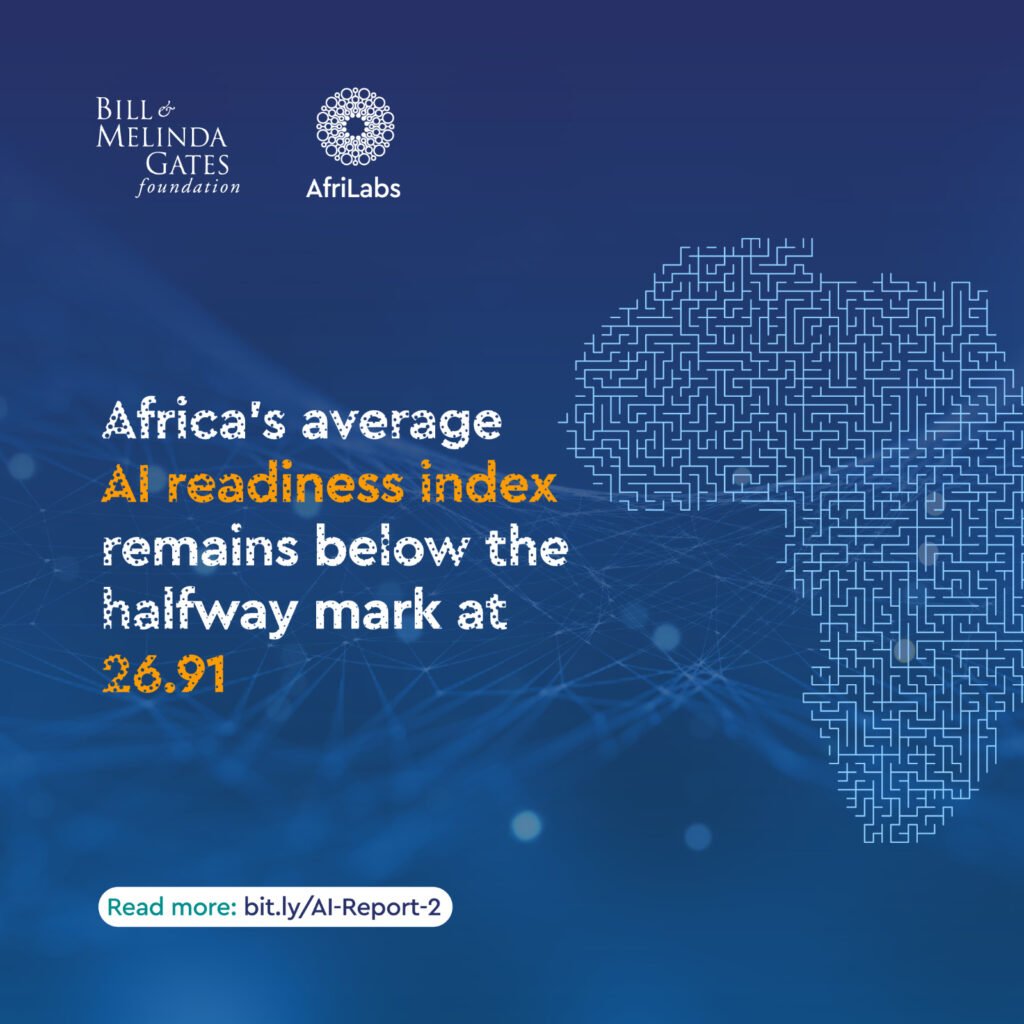
The Imperative of AI Infrastructure Investment for Africa’s Digital Future As we approach a new era powered by artificial intelligence (AI), the need for strong internet infrastructure in Africa has never been more important. The AI Startups Mapping in Africa report by AfriLabs, funded by the Gates Foundation provides a sobering but positive assessment of the continent’s AI readiness, with an average index of 26.91. This figure, which is far below the halfway point, emphasizes the vital need for further efforts and expenditures to boost AI activity across the continent. Bridging the AI Readiness Gap Despite Egypt, Kenya, South Africa, and Tunisia leading with index values above 40, none have achieved 50. This suggests that even the most advanced African countries are still in the early phases of AI development. Without substantial improvements in digital infrastructure, Africa risks falling further behind in the global AI race. The surge in AI applications necessitates an increase in high-performance computing (HPC) capabilities, such as GPUs and TPUs. These components are essential for developing and deploying complex AI models that rely on massive datasets and intricate computations. Over the past decade, global investments in digital infrastructure have soared, driven by factors like smartphone penetration and the rise of cloud computing. However, Africa must ramp up these investments to meet the evolving demands of AI. The Role of Digital Infrastructure Effective AI infrastructure is multifaceted, encompassing hardware and software elements that provide a broad range of capabilities. From data storage and cloud computing to robust communication networks and secure power connections, each component is crucial for unlocking AI’s full potential. For Africa, building this infrastructure is not just about technology; it’s about creating a foundation for innovation and socioeconomic development. Several initiatives are already underway, African countries are adopting digital strategies aimed at fostering an environment conducive to digitalization. Tech giants such as Amazon, Google, and Microsoft are investing in African data centers, rapidly expanding the continent’s hosting capacity. For instance, the establishment of the Tanzania National Internet Data Center (NIDC) exemplifies how government and private sector collaboration can enhance AI capabilities. By providing scalable storage and AI services, the NIDC is helping Tanzanian entities to leverage AI without the need to develop services from scratch. Specialization in AI Subfields African AI startups are showing remarkable focus in various AI subfields, which is crucial for addressing the continent’s unique challenges. The report highlights that 30% of AI startups in Africa specialize in Machine Learning, followed by Deep Learning (17%), Natural Language Processing (15%), Computer Vision (12%), Generative AI (10%), Reinforcement Learning (9%), and Robotics (7%). This specialization is pivotal for driving innovation in sectors like healthcare, finance, and agriculture, where AI can significantly improve outcomes. However, the growth in AI subfields also brings to light the urgent need for better infrastructure. As AI algorithms become more complex, the demand for computational power increases. Without the necessary digital backbone, these startups may struggle to scale their solutions and achieve their full potential. The Path Forward Africa’s digital infrastructure development requires a concerted effort to enhance digital infrastructure. This means investing in state-of-the-art data centers, expanding cloud computing capabilities, and ensuring reliable and fast communication networks. For instance, Tanzania’s licensing of public data centers from the private sector reflects a positive trend, but it must be scaled up to meet the high computing demands brought by AI. Governments across Africa must prioritize creating a safe and secure foundation for AI development. This involves not only building the physical infrastructure but also implementing policies that promote innovation, protect data privacy, and ensure cybersecurity. By doing so, Africa can create an ecosystem where AI can thrive, driving socioeconomic development and positioning the continent as a significant player in the global AI landscape. The future of AI in Africa holds immense promise, but realizing this potential hinges on the continent’s ability to build and sustain robust digital infrastructure. The AI Startups Mapping in Africa report serves as a clarion call for action. By addressing the current gaps and investing strategically in AI infrastructure, Africa can unlock unparalleled opportunities for innovation and development, ensuring that it does not just participate in the AI revolution but leads it. In the words of many experts, the time to act is now. The benefits of AI are too significant to be overlooked, and the costs of inaction are too high. Africa’s digital future depends on the steps we take today to build a foundation that can support the technologies of tomorrow. 📖 Read more in our report: bit.ly/AI-Report-2
The State Of The Innovation Policy Environment In Nigeria
Learnings from the Nigerian Innovation Policy Dialogue by AfriLabs and UNDP Accelerator Labs by Amadou Sow (UNDP Accelerator Labs), Serge Ntamack (AfriLabs), Tessy Okolo (AfriLabs), Tayo Akinyemi (UNDP Accelerator Labs) and Joshua Omena .A. (AfriLabs). Currently, it is difficult to inventory policies in Africa, and as a result of this, we have fragmentation and siloing in policy development, analysis and understanding. This sets the stage for the relevant dialogues on our innovation policies. We need to know where we are in terms of the progress made in creating a supportive policy environment for startups. Discussing innovation policy is worthwhile given Africa’s potential, its ecosystem and its creativity that makes it resilient despite the enormous challenges the continent faces. The low inventory of policies creates a dissonance in enabling startups across Africa. While some African countries have implemented policies that aim to help startups, many have not. This presents an opportunity for alignment between stakeholders and increased support for innovation. In the presence of a thorough dialogue (or series of dialogues) between stakeholders in a country’s innovation ecosystem, the right policies will be an appropriate response, incisively dealing with the identified block roads. These opportunities for learning and improved support for the innovation ecosystem are glaring especially when we examine the macroeconomic outlook in Africa, alongside the booming startup industry. According to the World Bank, the economic fallout of the COVID-19 pandemic was predicted to slow growth in Sub-Saharan Africa by -3.3% in 2020, pushing the region into its first recession in 25 years. However, there will be a sluggish and multi-speed recovery with significant variation across countries partly owing to higher commodity prices and private consumption and investment as confidence strengthens and exports increase. Simultaneously, funding for Africa’s startups is at a record high, with Nigeria and Kenya serving as the hotspots for Venture Capital investments including $307 million and $305 million raised in 2020. Further, it is predicted that capital funding for African startups will reach a record of $2.25 billion and $2.8 billion in 2021. The role of policy in the recovery and sustainable growth of the innovation economy is crucial and worthy of interrogating conversations. The UNDP Accelerator Labs, through its network of 91 labs covering 115 countries around the world, including 35 in Africa, partnered with AfriLabs, the largest pan-African network of 347 technology and innovation hubs across 52 African countries and the diaspora. This partnership aims to advance the development agenda in Africa – through capacity development, linking policy and practice to advance innovation as a driver for development. To achieve the ambition of this partnership, both organisations identified national dialogues on innovation policies as a good first step. The first edition was held online in December 2021 and focused on Nigeria. The conversations attempted to address various issues around innovation policies in the West African country, through the eyes of the stakeholders on ground. The stakeholders that were present included Nigerian government representatives, local innovation hubs managers, startup founders, local investors, corporate bodies, development agencies and others. The dialogue on the innovation policies in Nigeria provided a space for an inclusive discussion and policy exchange among key and diverse stakeholders, on how innovation policy can best serve development and help achieve sustainable goals. It focused on the following priority areas: Innovation and SDGs Startups Policy framework and prospects Innovation and achieving the SDGs It was highlighted during the conversations that we need to improve how we communicate about the SDGs and what we are doing to achieve them. The conversations emphasized the role of collaboration and aligning of interests between private and public sectors, and the need for connecting the national role of the Innovation Support Network (ISN) and the continental role of AfriLabs. Stakeholders also suggested a seat for innovators at various levels of government and policy-making, both the regional and country level. To build an enabling environment for innovation and ideas that tackle the SDGs, an inclusive and bottom-up policy development approach should be encouraged. Sustainable and decentralized funding and infrastructure development should also be a must. Governments and other stakeholders should support local solutions, develop local talent and encourage youth engagement while integrating innovators into decision-making and technical regulatory and overseeing bodies. We ought to also prioritize measuring and demonstrating impact and reinforce the role of the R&D function within the ecosystem. Supporting startups’ sustainability The government needs to make more effort to understand the startup environment. In the words of one of the stakeholders during the dialogue: “The government uses the same hammer that it applies on the big companies, on the startups. They correct the baby with the same method as the adult”. We need to ease the bureaucracy for startups and support them with incentives. For example, the new postal tax on logistics companies (i.e. 2% of total revenue applied to transportation startups to help the national post office) is not how you encourage growth in the logistics startup scene. We also need to encourage the geographical distribution of the installation of hubs and innovation poles. This will help reduce the drainage of resources towards the large economic and political centres and give all towns and cities in the country a chance to grow their local innovation economy. Mobilization and diversification of funding sources We need more local funding opportunities. Another idea shared was that the state should play the role of a guarantor for access to credit to remove certain barriers such as requiring a track record of 3 to 5 years of activity. Emerging sectors, not just Fintech, need to be supported and focused on, especially sectors like agriculture, healthcare, transportation, trade, real estate and the creative industry. It was also noted that the evolution of skills is required for startup sustainability. Stakeholders were encouraged to embrace negotiation, diplomacy, and a single and united voice to engage the Government on the needs of startups. Policy framework and prospects We need to agree on common objectives. What is an inclusive policy