
PRESS STATEMENT: AFRILABS CALLS FOR PEACEFUL RESOLUTION TO ONGOING SITUATION IN NIGER
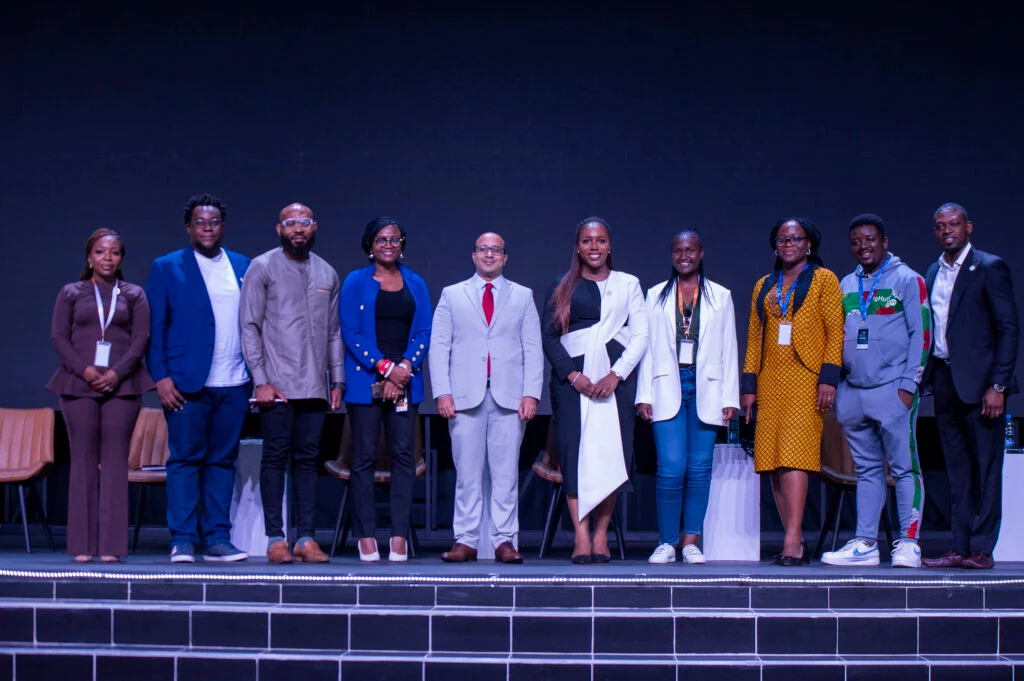
AfriLabs is closely monitoring the situation in Niger and is deeply concerned by the current developments. We pray all parties involved to find ways to de-escalate the tension and seek a peaceful resolution. Niger has made significant progress in developing its innovation ecosystem, which includes a growing number of innovation hubs and startups. It is important that this progress is not lost due to the current situation. As an organization dedicated to promoting innovation and entrepreneurship across Africa, AfriLabs stands for peace, positive, and impactful development in Niger and across the continent. We believe that Niger has the potential to become a regional hub for innovation, and AfriLabs remains committed to supporting the growth and development of our member hubs in Niger and the technology and innovation ecosystem on the continent. We urge all stakeholders to work together to ensure that Niger can continue to make progress towards this goal. Signed, Moetaz HelmyOn behalf of the AfriLabs Board AfriLabs suit de près la situation au Niger et est profondément préoccupé par les développements actuels. Nous prions toutes les parties concernées de trouver des moyens de désamorcer la tension et de rechercher une solution pacifique. Le Niger a fait des progrès significatifs dans le développement de son écosystème d’innovation, qui comprend un nombre croissant de centres d’innovation et de startups. Il est important que ces progrès ne soient pas perdus en raison de la situation actuelle. En tant qu’organisation dédiée à la promotion de l’innovation et de l’entreprenariat à travers l’Afrique, AfriLabs est en faveur de la paix, d’un développement positif et impactant au Niger et à travers le continent. Nous pensons que le Niger a le potentiel pour devenir un centre régional d’innovation, et AfriLabs reste engagé à soutenir la croissance et le développement de nos Hubs membres au Niger et de l’écosystème de la technologie et de l’innovation sur le continent. Nous exhortons toutes les parties prenantes à travailler ensemble pour s’assurer que le Niger puisse continuer à progresser vers cet objectif. Signé, Moetaz Helmy Au nom du Conseil d’Administration de AfriLabs
U.S. Department of State and AfriLabs Partner to Address Climate Crisis and Foster Entrepreneurship

Marrakech, Morocco, June 2, 2023 – The United States Department of State’s Office of Global Partnerships (E/GP) and AfriLabs signed an MOU at the GITEX Africa event in Marrakech, forging a partnership to address the climate crisis and promote entrepreneurship in Africa. During her speech, Dorothy McAuliffe, Special Representative from the Office of Global Partnerships, described the collaboration with AfriLabs as a significant step toward building 21st-century U.S.-Africa public-private partnerships. Through this collaboration, both organisations aim to support the Coalition for Climate Entrepreneurs (CCE) initiative, which focuses on nurturing startups and entrepreneurs driving climate solutions in developing nations. “We are excited to join forces with the U.S. Department of State in our shared mission to empower entrepreneurs and drive sustainable change,” said Anna Ekeledo, Executive Director of AfriLabs. “This partnership will create opportunities for climate-focused startups in our hub community across Africa to access expertise, capital, and global markets.” Under the MOU, the U.S. Department of State and AfriLabs will collaborate on various programs, including the U.S. Climate Ops and Partnership Opportunity Delegations (PODs), to connect climate entrepreneurs with resources and targeted opportunities. Also, the International Visitor Leadership Program (IVLP) and BridgeUSA will assist promising climate entrepreneurs. The partnership will focus on four pillars: engagement, expertise, capital, and deployment. By fostering collaboration, providing skills and knowledge, attracting investment, and implementing climate solutions, the partnership aims to make a significant impact. The MOU is effective immediately and will continue until the completion of the partnership goals, with the option for extension. …………………………………………………………………………………………………………………………………………………………………………………………………………… For media inquiries, please contact: U.S. Department of State Ashwood Heffern – Heffernja1@state.gov Avery Rodriguez – RodriguezAN2@state.gov AfriLabs Jennifer Okeke-Ojiudu – jen@afrilabs.com Joshua Omena – joshua@afrilabs.com About the U.S. Department of State: The U.S. Department of State is the leading foreign affairs agency of the United States government, dedicated to shaping a peaceful and prosperous world. The Office of Global Partnerships fosters public-private collaborations to address global challenges and promote sustainable development. About AfriLabs: AfriLabs, a dynamic community-focused organization has been empowering and nurturing innovation hubs across Africa since 2011. By building capacity, providing capital, networking, and advocating for policy changes, AfriLabs cultivates highly-promising innovators and entrepreneurs in its member hubs’ communities, ultimately driving economic and social growth. In addition to fostering a robust community around these rapidly emerging innovation hubs in Africa, the organization also connects them to other stakeholders in the broader ecosystem, thereby improving the quality of their interventions and contributing to a thriving African innovation economy.
AfriLabs and Intel host early-stage deep-tech investors’ roundtable in Kenya
On the 27th and 28th of July 2022, Intel in partnership with AfriLabs and African Business Angel Network held discussions on Early-Stage Deep-Tech Investing across Africa in Nairobi, Kenya. It was an interactive hybrid event involving a diverse group of early-stage investors in deep-tech who shared insights and learnings within the African context. The session provided a deep dive into the pillars of the transformation and the emergence of Deep Tech in Africa, and discussions focused on the importance and role of the Deep Tech sector in economic development. The sessions also interrogated the role early-stage funding plays in this sector. In attendance across the 2-days event was Dr Bienvenu Agbokponto Soglo, Director, Government Affairs Africa and IGA CTO Liaison (PE), Intel Corporation, Nekesa Were, Director of Strategy AfriLabs, Snehar Shah, CEO, Moringa School, Tim Dagori, Board Member Association of Startup and SME Enablers of Kenya, Philip Thigo, Senior Director for Africa, Thunderbird School of Global Management, H.E. Thomas Wimmer, Acting Ambassador to Kenya, Federal Republic of Germany, Hon. Ms. Maureen Mbaka, Chief Administrative Secretary at Ministry of ICT, Innovation and Youth Affairs, Republic of Kenya, Fadilah Tchoumba, Secretary-General, African Business Angel Network – and other top stakeholders. “At AfriLabs, we believe that world-class African hubs nurture innovators and entrepreneurs capable of competing and standing out globally. We have made our work the training and funding hubs, working with them to influence national innovation policies and offering hubs African innovation data to aid their work.” Nekesa Were said during her welcome speech. “Like anything worth doing, we cannot do this alone. This is why partnerships like the one we have with Intel matter.” “Supporting digital entrepreneurship and tech start-ups in Kenya means bringing down barriers through the entire ecosystem, including those related to connectivity, payment systems, data protection, financial inclusion, and logistics. This is why entrepreneurs and female founders need comprehensive support structures that provide them with capacity building, affordable credit, and facilitated access to new markets.” H.E. Thomas Wimmer, Acting Ambassador to Kenya, the Federal Republic of Germany on why support for deep-tech startups in Kenya and Africa is relevant. “According to the World Bank, deep tech companies bring transformative technology from the lab to the market in addition to democratised research infrastructure. Increased available funding has led to the rise of deep-tech companies globally, including in emerging markets and Africa, Kenya to be specific should follow suit.” Ms. Maureen Mbaka, Chief Administrative Secretary at the Ministry of ICT, Innovation and Youth Affairs, Republic of Kenya also commented on why understanding how to support deep-tech startups is important. She also congratulated AfriLabs and Intel on their partnership. Dr. Bienvenu Agbokponto Soglo, Director, Government Affairs Africa and IGA CTO Liaison (PE), Intel Corporation in his opening remarks spoke about Intel’s mission: “Technology will play a critical role in building a digital future that is equitable, accessible, and inclusive for all. That is why Intel launched its new RISE strategy and 2030 goals. Through this strategy, Intel strives to create a more responsible, inclusive, and sustainable future, enabled through its technology and the expertise and passion of its employees.” Another highlight was a hybrid workshop for deep-tech startups in Kenya and across Africa. The participants were introduced to Intel Ignite and Intel OneAPI programs. The session was facilitated by Dr Bienvenu AGBOKPONTO SOGLO, the Director, Government Affairs Africa & EMEA CTO Liaison, and a Principal Engineer at Intel Corporation, Mrs. Kate Hach, Head of Program at Intel Ignite’s accelerator in Munich and Mr Ralph Wargny, Leads the Intel’s oneAPI global virtual startup accelerator program for early-stage software innovators in AI, HPC, graphics.
UNFPA in collaboration with AfriLabs launches its Incubation Programme to support ideas tackling FGM and Climate Change
Following the successful training at the UNFPA Climate and FGM HackLab (virtual bootcamps), 6 innovators were selected as winners in a follow-up pitch event and have been invited to participate in the UNFPA Incubation Programme. UNFPA in partnership with AfriLabs will leverage AfriLabs’ existing pipeline of innovation hubs across the locations of the innovators to provide a robust and intensive 6-month incubation programme, which will entail capacity-building activities focused on product and business development of the selected innovations, and support with resources and opportunities to produce full-fledged viable and scalable innovations and solutions. The selected hubs will provide incubation services to the UNFPA Climate and FGM HackLab top innovators via online and offline channels throughout the programme. UNFPA East and Southern Africa Regional Office, under the flagship Safeguard Young People Programme, launched the Climate HackLab project in May 2021. The HackLab is a climate innovation project that aims to build climate resilience and generate innovative climate adaptation solutions led by young people, especially women and girls. The UNFPA FGM HackLab project aims to empower young people and offer them the opportunity to be game-changers and drivers of a sustainable green future. The project targets young innovators, especially women and girls, who have innovative solutions that will accelerate efforts toward UNFPA’s goal of ending gender-based violence and harmful practices by 2030. Meet the selected innovators and startups Agnes Kimweri is a Laboratory Technologist and founder of Agki Medical Laboratory company in Tanzania. By using free carbon immersion electric motorcycles Agki medical lab offers mobile clinics for anaemia patients especially pregnant women and children under five age living in rural communities by providing affordable haemoglobin tests, health education and drugs such as folic acid for those with low blood levels. Agripa Maposa is the CEO and founder of Tivwane Money Solution, a registered company in Zambia that supplies financing and training to help small farmers grow their way out of hunger. To combat climate change which causes all forms of malnutrition, poverty and hunger amongst smallholder farmers in Zambia and Africa at large, Tivwane Money Solution provides Agriculture Asset-Based Loans such as solar irrigation equipment systems for small-scale farmers to increase their farm production. Joseph Mulabbi is the Team Lead of AXCES Mobile System based in Uganda. Health Mobile Application, to connect beneficiaries with medical services providers. The idea aims to improve access to health services (health, social, legal) for victims of Female Genital Mutilation (FGM). Dirug Samuel Yugoro is the Team Lead of Big Family 360 Foundation based in Nigeria. This is a mobile app that enhances access to Female Genital Mutilation (FGM) services and information by way of referral through mobile technology & survivors can access services anonymously. Roukiatou SEDGO is the Team Lead of Afriyan Burkina based in Burkina Faso. It is a website, which will allow the dissemination of the testimonies of victims, written or audiovisual; and provide medical and psychological help for these victims. Deborah NANSANGA is the Team Lead of HERstory based in Uganda. A mobile application to collect and analyse crowdsourced, anonymous reports of FGM practices identifying patterns and key insights to increase awareness, transparency and public accountability and improve policy and tactical precision with data-led insights. AfriLabs, being the largest pan-African community of innovation centres across Africa with 353+ hubs that operate in 50 African countries selected a member hub in each of the innovators’ countries to carry out the incubation programme. Meet the selected hubs Ennovate Hub, Dar Es Salaam & Mwanza, Tanzania – Ennovate Hub is an incubator and co-creation space with the fundamental objective to facilitate entrepreneurship development across the continent, inspire innovation in designing today’s solutions for the future, support early-stage entrepreneurs to scale and become investment-ready and to build collaborations across the startup value chain to strengthen startup economic activities. Jacaranda Hub, Lusaka, Zambia – Jacaranda hub has an independent body that oversees the management and runs a not-for-profit business model. They are an Incubator and Accelerator focused on social impact, youth engagement and skill acquisition and get most of their funds from Africa. North-East Humanitarian Innovation Hub, Yola, Nigeria – North-East Humanitarian Innovation Hub developed an ecosystem of innovation close to conflict and natural disaster-affected people by co-creating solutions with them and with humanitarian service providers to address the protection and assistance challenges that have remained so far neglected to address in the recovery rebuilding of the North East. Burkina Business Incubator (BBI), Ouagadougou, Burkina Faso – The Burkina Business Incubator Association (BBI) is an incubation centre for SMEs, a framework for the maturation of ideas for innovative projects and training in business creation, business development, a real common working space. Its main purpose is the promotion of entrepreneurship through the selection of innovative and high-potential projects and their support from ideas to launch through the economic model, studies, training of the promoter, mobilisation of resources and the creation of the company. BBI prioritizes projects from the following areas: Information and Communication Technologies (ICT), Agro-Industry, Tourism and Hospitality, Renewable Energies and Environment, and Crafts. Stay with us as we share more updates on the journey of these admitted startups. For further enquiries, kindly send an email to taiye@afrilabs.com.
AfriLabs partners with Zayed Sustainability Prize for an African workshop in Rwanda to attract more entries
AfriLabs, the largest pan-African network of technology and innovation hubs with over 340 members across 52 African countries, is set to host an awareness session in Rwanda on June 27, 2022, to encourage local participation in the 2023 edition of the Zayed Sustainability Prize. As the United Arab Emirates’ (UAE) pioneering global award for recognising excellence in sustainability, the Prize’s US$3 million annual fund rewards winners US$600,000 in each of the Health, Food, Energy, and Water categories. While the Global High Schools category is split into six world region winners, with each school receiving up to US$100,000 to start or further expand their project. Inspired by the sustainability and humanitarian legacy of the UAE’s founding father, Sheikh Zayed bin Sultan Al Nahyan, the Prize has, since its inception in 2008, awarded a total of 96 winners whose solutions or student-led school projects have positively transformed the lives of 370 million people around the world. The Health, Food, Energy, and Water categories reward organisations that are already delivering impact and improving living and working conditions with their products and services. In the Global High Schools category, the Prize supports student-led projects in one or more of the four categories (Health, Food, Energy and Water) with the students actively involved in the planning, implementation, and monitoring processes. Rwanda’s emerging innovation ecosystem and its thousands of entrepreneurs have the opportunity to showcase their work and impact to an international audience through the Zayed Sustainability Prize. Established in 2011, AfriLabs builds a community around rapidly emerging tech hubs – innovation spaces that serve as meeting points and communities for developers, entrepreneurs, and investors. AfriLabs’ Executive Director, Anna Ekeledo, said: “AfriLabs is indeed excited to be joining forces with the Zayed Sustainability Prize, a global award that recognises and rewards the achievements of those who are driving impactful, innovative, and inspiring sustainability solutions across Health, Food, Energy, and Water sectors. We will leverage our expertise in stakeholders’ engagement and organising national and pan-African events to host awareness sessions and workshops in Rwanda to raise awareness about the prize and encourage more African innovators to enter and potentially benefit from this opportunity.” The awareness session will provide attendees including organisations and high schools with a practical tutorial on how to apply for the Prize and inform them about the benefits of participation – for themselves as entrants and the country. Applicants are encouraged to submit their entries by July 6, 2022. To qualify for consideration, submissions should demonstrate the following three core criteria: Impact: Significant and tangible outcomes on the quality of people’s lives. Innovation: Distinctive characteristics that positively transform lives and have the potential to catalyse opportunities that will have a disruptive positive impact. Inspiration: The potential to scale up project outcomes, over the next decade, and the ability to inspire others. For the Global High Schools category, their projects should be designed to deliver a positive educational impact, including providing access to quality education and ensuring students are given key skills and capabilities to achieve their goals. Like the other categories, each project should demonstrate new and innovative approaches and be inspirational to others. In the Global High Schools category, however, students may propose to solve a combination of challenges across all Health, Food, Energy, and Water categories; not just focusing on one. Winners will be announced at the 2023 Zayed Sustainability Prize Awards Ceremony on January 16, 2023, as part of Abu Dhabi Sustainability Week (ADSW). For more information, visit www.ZayedSustainabilityPrize.com.
The State Of The Innovation Policy Environment In Nigeria
Learnings from the Nigerian Innovation Policy Dialogue by AfriLabs and UNDP Accelerator Labs by Amadou Sow (UNDP Accelerator Labs), Serge Ntamack (AfriLabs), Tessy Okolo (AfriLabs), Tayo Akinyemi (UNDP Accelerator Labs) and Joshua Omena .A. (AfriLabs). Currently, it is difficult to inventory policies in Africa, and as a result of this, we have fragmentation and siloing in policy development, analysis and understanding. This sets the stage for the relevant dialogues on our innovation policies. We need to know where we are in terms of the progress made in creating a supportive policy environment for startups. Discussing innovation policy is worthwhile given Africa’s potential, its ecosystem and its creativity that makes it resilient despite the enormous challenges the continent faces. The low inventory of policies creates a dissonance in enabling startups across Africa. While some African countries have implemented policies that aim to help startups, many have not. This presents an opportunity for alignment between stakeholders and increased support for innovation. In the presence of a thorough dialogue (or series of dialogues) between stakeholders in a country’s innovation ecosystem, the right policies will be an appropriate response, incisively dealing with the identified block roads. These opportunities for learning and improved support for the innovation ecosystem are glaring especially when we examine the macroeconomic outlook in Africa, alongside the booming startup industry. According to the World Bank, the economic fallout of the COVID-19 pandemic was predicted to slow growth in Sub-Saharan Africa by -3.3% in 2020, pushing the region into its first recession in 25 years. However, there will be a sluggish and multi-speed recovery with significant variation across countries partly owing to higher commodity prices and private consumption and investment as confidence strengthens and exports increase. Simultaneously, funding for Africa’s startups is at a record high, with Nigeria and Kenya serving as the hotspots for Venture Capital investments including $307 million and $305 million raised in 2020. Further, it is predicted that capital funding for African startups will reach a record of $2.25 billion and $2.8 billion in 2021. The role of policy in the recovery and sustainable growth of the innovation economy is crucial and worthy of interrogating conversations. The UNDP Accelerator Labs, through its network of 91 labs covering 115 countries around the world, including 35 in Africa, partnered with AfriLabs, the largest pan-African network of 347 technology and innovation hubs across 52 African countries and the diaspora. This partnership aims to advance the development agenda in Africa – through capacity development, linking policy and practice to advance innovation as a driver for development. To achieve the ambition of this partnership, both organisations identified national dialogues on innovation policies as a good first step. The first edition was held online in December 2021 and focused on Nigeria. The conversations attempted to address various issues around innovation policies in the West African country, through the eyes of the stakeholders on ground. The stakeholders that were present included Nigerian government representatives, local innovation hubs managers, startup founders, local investors, corporate bodies, development agencies and others. The dialogue on the innovation policies in Nigeria provided a space for an inclusive discussion and policy exchange among key and diverse stakeholders, on how innovation policy can best serve development and help achieve sustainable goals. It focused on the following priority areas: Innovation and SDGs Startups Policy framework and prospects Innovation and achieving the SDGs It was highlighted during the conversations that we need to improve how we communicate about the SDGs and what we are doing to achieve them. The conversations emphasized the role of collaboration and aligning of interests between private and public sectors, and the need for connecting the national role of the Innovation Support Network (ISN) and the continental role of AfriLabs. Stakeholders also suggested a seat for innovators at various levels of government and policy-making, both the regional and country level. To build an enabling environment for innovation and ideas that tackle the SDGs, an inclusive and bottom-up policy development approach should be encouraged. Sustainable and decentralized funding and infrastructure development should also be a must. Governments and other stakeholders should support local solutions, develop local talent and encourage youth engagement while integrating innovators into decision-making and technical regulatory and overseeing bodies. We ought to also prioritize measuring and demonstrating impact and reinforce the role of the R&D function within the ecosystem. Supporting startups’ sustainability The government needs to make more effort to understand the startup environment. In the words of one of the stakeholders during the dialogue: “The government uses the same hammer that it applies on the big companies, on the startups. They correct the baby with the same method as the adult”. We need to ease the bureaucracy for startups and support them with incentives. For example, the new postal tax on logistics companies (i.e. 2% of total revenue applied to transportation startups to help the national post office) is not how you encourage growth in the logistics startup scene. We also need to encourage the geographical distribution of the installation of hubs and innovation poles. This will help reduce the drainage of resources towards the large economic and political centres and give all towns and cities in the country a chance to grow their local innovation economy. Mobilization and diversification of funding sources We need more local funding opportunities. Another idea shared was that the state should play the role of a guarantor for access to credit to remove certain barriers such as requiring a track record of 3 to 5 years of activity. Emerging sectors, not just Fintech, need to be supported and focused on, especially sectors like agriculture, healthcare, transportation, trade, real estate and the creative industry. It was also noted that the evolution of skills is required for startup sustainability. Stakeholders were encouraged to embrace negotiation, diplomacy, and a single and united voice to engage the Government on the needs of startups. Policy framework and prospects We need to agree on common objectives. What is an inclusive policy
Digital Entrepreneurship in Africa: Case Studies of Nigeria and South Sudan
The book Chapter ‘Digital Entrepreneurship in Africa: Case Studies of Nigeria and South Sudan’, based on the Female Entrepreneurs Support Program (FESP), has been published by Palmgrove, in the book titled Digital Service Delivery in Africa. FESP is a collaborative initiative by AfriLabs member hubs and AfriLabs Capacity Building Program (ACBP) award winners: ‘TechQuest STEM Academy’ (Nigeria) and ‘Junub Open Space’ (South Sudan). The book chapter written by the collaborating hubs aligns with one of the strategic pillars of Afrilabs on Research, Evidence and Learning. The book chapter provides an evidence base for entrepreneurs in 2 African countries and provides a pathway for insights into Africa. FESP funded by ACBP and AFD through the Digital Africa Seed fund, directly impacted over 700 female entrepreneurs from Nigeria and South Sudan and engaged over 90 experienced mentors across 13 countries. The program provided capacity building training, business support coaching and mentorship for females that intended to go into business, nascent female-led start-ups and entrepreneurs. It offered support and build capacities in terms of knowledge, skills and networks, to access markets and promote innovations through networking, mentorship and our business clinic. The initiative inspired, educated, empowered and supported female entrepreneurs. Get FREE access to the chapter here. In case you are interested in purchasing the whole book, click here.
Intel and AfriLabs collaborate to support the African Deep Tech Startup Ecosystem
AfriLabs is excited to announce that we have partnered with the global manufacturer of advanced integrated digital technology platforms, Intel to gain a deeper understanding of the African deep-tech startup ecosystem and identify pathways in which Intel can extend their support to deep tech startups on the continent. The startup scene in Africa has experienced incredible growth in recent years, and this is partly a result of several significant interventions by stakeholders to enable entrepreneurship and innovation in local ecosystems. AfriLabs and Intel’s collaboration hopes to sustainably build on the work done and set a framework for future interventions. “To give more impactful support to the startup ecosystem in Africa, we need to consider specialised capacity building. Different kinds of startups need different kinds of support, and the AfriLabs partnership with Intel explores learning more about how we could better support deep tech ventures. I am particularly excited about this collaboration and how it would lay the foundation for deeper interactions between the ecosystem and big global tech players like Intel.” Anna Ekeledo, Executive Director, AfriLabs said during her opening remarks. At the official partnership agreement signing ceremony on the 24th of May, 2022, Intel was represented by Maurits Tichelman, Vice President SMG & GM EMEA Territory, Intel (virtual), Dr Bienvenu AGBOKPONTO SOGLO, Director, Government Affairs Africa and EMEA CTO Liaison, Intel (onsite), Kate Hach, Head of Program, Intel Ignite’s accelerator (virtual) and the Emerging Markets Director for Government and Education of Intel Corporation, Mr Sven Beckmann (virtual). “As part of our desire to support the African Startups Ecosystem, Intel is looking to learn from and harvest new technology disruptions that will help position Intel’s Business in Africa in areas such as Healthcare, Fintech, Agriculture, E-commerce, Mobility, Hardware/IoT that are enabled by Intel Technologies.” said Maurits Tichelman, Vice President SMG & GM EMEA Territory, Intel during the signing ceremony. “It is in this regard, that we are signing a collaboration agreement with AfriLabs” he continued. Anna Ekeledo, Executive Director of AfriLabs, Daniel Chinagozi, Member of the AfriLabs Board, Ajibola Odukoya, AfriLabs COO, Nekesa Were, Director of Strategy, AfriLabs, Felista Aku, Partnerships Manager at AfriLabs and other members of the AfriLabs team represented the AfriLabs. A cross-section of high-level local and regional innovation ecosystem key players was also present. The partnership will leverage AfriLabs’ pan-African reach to map startups and ecosystem stakeholders and provide recommendations for future modes of collaboration that will ensure continuous deal flow and establish a presence for Intel. Dr Bienvenu AGBOKPONTO SOGLO, Director Government Affairs Africa & EMEA CTO Liaison, Intel also spoke about the organisation’s ambition: “As Intel looks ahead to the next decade, our ambitions and opportunities have never been greater to unleash the power of data and help advance integrated corporate responsibility strategies in which companies use collaborative models to drive increased value creation and societal impact.” A prominent outcome of this partnership is that African startups in deep-tech will be introduced to Intel programs: Intel Ignite and Intel OneAPI for startups. A hybrid workshop focused on these programs was held after the signing ceremony with several startups from across the continent in attendance. Stay tuned as we share more about the activities of this partnership and how you can be a part of it. For more information, reach out to Felista Aku at felista@afrilabs.com.
AfriLabs and Association of Countrywide Innovation Hubs, Kenya sign MoU to support grassroots hubs
The largest network of innovation hubs in Africa, AfriLabs and the Association of Countrywide Innovation Hubs (ACIH) have signed a comprehensive long-term partnership to co-create capacity building interventions, foster rural innovations, and create training and mentorship programs for grassroots hubs in Africa. It is common knowledge that most innovation support in Africa is focused on the continent’s urban centres. This has slowed down the growth of the entrepreneurship and innovation ecosystems in peri-urban and rural areas. This partnership aims to address this gap and tap into the innovation potential outside the big cities. “Innovation takes place everywhere. The role of entrepreneur support organisations like AfriLabs and the Association of Countrywide Innovation Hubs in Kenya is to find, support and amplify these innovators to help them have maximum impact. AfriLabs is delighted to begin work with the Association of Countrywide Innovation Hubs in Kenya to ensure that our entrepreneur support hubs and the communities they serve, regardless of their geographical location, have an equal chance to thrive.” Nekesa Were, Director of Strategy, AfriLabs said during her speech at the signing event at Rift Valley Innovation Centre. Magdaline Chepkemoi, Chairperson of Association of Countrywide Innovation Hubs and Nekesa Were, AfriLabs Director of Strategy officially sign the MOU. Witnessed by (l-r): Benjamin Towet, Manager of Rift Valley Innovation Centre, State Department for Broadcasting and Telecommunications Principal Secretary, Esther Koimett and Engineer John Tanui CEO of Konza Technopolis and Patron of Rift Valley Innovation Centre. Picture credit: Rift Valley Innovation Centre. The collaboration will co-create and implement capacity building programs for AfriLabs and ACIH grassroots member hubs to support peri-urban and rural innovations. It will also support the creation of a more robust, more coordinated Pan African ecosystem among the numerous technology and innovation hubs currently operating on the continent. “What a milestone. When two visionary membership organisations like the Association of Countrywide Innovation Hubs and Afrilabs come together, it can only mean one thing, a plus for African startups and communities. Through this collaboration, we are looking forward to an inclusive innovation ecosystem in Africa, and becoming a source of prosperity for all, by strengthening grassroots hubs to foster rural and peri-urban innovations and strong links with technology and innovation hubs across the continent.” Chepkemoi Magdaline, Chairperson, Association of Countrywide Innovation Hubs commented while speaking to the press at the signing ceremony. For more information on this partnership, kindly send an email to joshua@afrilabs.com and pauline.nthambi@countrywidehubs.org ……………………………………………………………………………………………………………………………………………. About AfriLabs AfriLabs is a network organisation supporting over 340 Innovation Centres across 52 African countries, founded upon the mission of building a community around the rapidly emerging technology hubs in Africa. These hubs serve as centres that provide support to African entrepreneurs, innovators, developers, and youths. By providing physical co-working and dedicated office spaces, as well as inclusive training and business, legal and financial support, we play an active role in helping to raise successful entrepreneurs who will create jobs and develop innovative solutions to African problems. About Association of Countrywide Innovation Hubs (ACIH) The Association of Countrywide Innovation Hubs (ACIH) is a network of innovation hubs based outside Kenya’s capital city, Nairobi. Its current membership comprises over 56 Technology and Innovation Hubs that are sector agnostic, with startups in diverse fields of agribusiness, finTech, Edtech, Energy, Blue economy, Environment & Conservation as well as FCMG among others. Our Mission is to foster innovation, entrepreneurship and Technology and contribute to the greater goals of development through innovation, mentorship, research and policy input. Our main objective is to: promote activities and programs of the member hubs and support their vision of testing and building impactful sustainable businesses in rural and second-tier towns of Kenya. We work to deliver on our mandate by: Capacity building and resource mobilization to support the activities of individual startups and member hubs, Exploring and running joint programs that are of mutual benefit to members and the target groups, Providing an opportunity for joint research, expert opinion and the central point where different information on startups and thematic core areas can be sought and verified and Engaging local and national governments in policy frameworks or programs to enhance the activities and sustainability of startup enablers.
AfriLabs launches its e-learning platform to support innovation across Africa
AfriLabs has successfully launched the AfriLabs Academy in a virtual ceremony on Wednesday, 18th May 2022 with major stakeholders and key players in the African Innovation Ecosystem present. Innovation hubs in Africa are key structures in enabling tech and entrepreneurship and are providing scalable solutions to Africa’s core economic and social problems. However, some of these hubs require support to help them function at full capacity. In 2020, AfriLabs under the AfriLabs Capacity Building Programme undertook a Needs Assessment to identify the needs of Enterprise Support Organisations (ESOs) and hubs. “The Needs Assessment report established a need for a comprehensive harmonized ESOs curriculum framework that addresses the skills and business development gaps as well as their financial sustainability. The AfriLabs Academy addresses the skills and knowledge gap” Nanko Madu, Director of Programmes, AfriLabs during the launch of the platform on Wednesday, 18th May 2022. AfriLabs Academy is an initiative of AfriLabs and a part of the AfriLabs Capacity Building Programme (carried out thanks to AFD’s support through the Digital Africa seed fund). It was designed to equip African Hub managers and staff, ESOs and other startup support structures with the training and management skills needed to improve their ability and capacity to support the growing number of startups and MSMEs in their communities. The content on the platform was co-created and certified by Strathmore University. “The AfriLabs Academy is a knowledge repository for innovation hubs and other stakeholders across Africa designed to equip startup ecosystem enablers with the needed skills and training to support African startups. I am proud of the team, partners, and community for making this happen.” Anna Ekeledo, Executive Director, AfriLabs said during the launch. The platform responds to demands from the innovation ecosystem for greater support in building successful tech- startups, and the critical need to build cadres of skilled and effective leaders by adapting best skills, practices and strategies unique to the African context. Moetaz Hemly, Board Chair, AfriLabs during his speech said “The AfriLabs Academy focuses on the realities and challenges of African hubs and startups, and its modules were developed by Africans and are very practical for the African Innovation Ecosystem. This is aligned with AfriLabs’ mission in building the capacity of hubs across the continent.” “The AfriLabs Academy is a reflection of our commitment to making better entrepreneurs for tomorrow. This is exciting because it tells us that together as a community, we can really achieve a lot together. There was a lot of effort put in, to make sure the content was not just educational but also very interactive.” Rebecca Enonchong, former Board Chair of AfriLabs also noted at the launch. Emmanuel Kweyu of Strathmore University said that the AfriLabs Academy courses are divided into GROWTH and SCALE-UP stages designed to continually improve, with quality assessment and certification from Strathmore University. Visit the platform today at www.academy.afrilabs.com to start your learning journey. For more information about the platform and to make enquiries, kindly send an email to funmilayo@afrilabs.com. and cc: adebambo@gmail.com.