
Bridging the Gap: AfriLabs at the DCO General Assembly on Africa’s AI and Digital Future
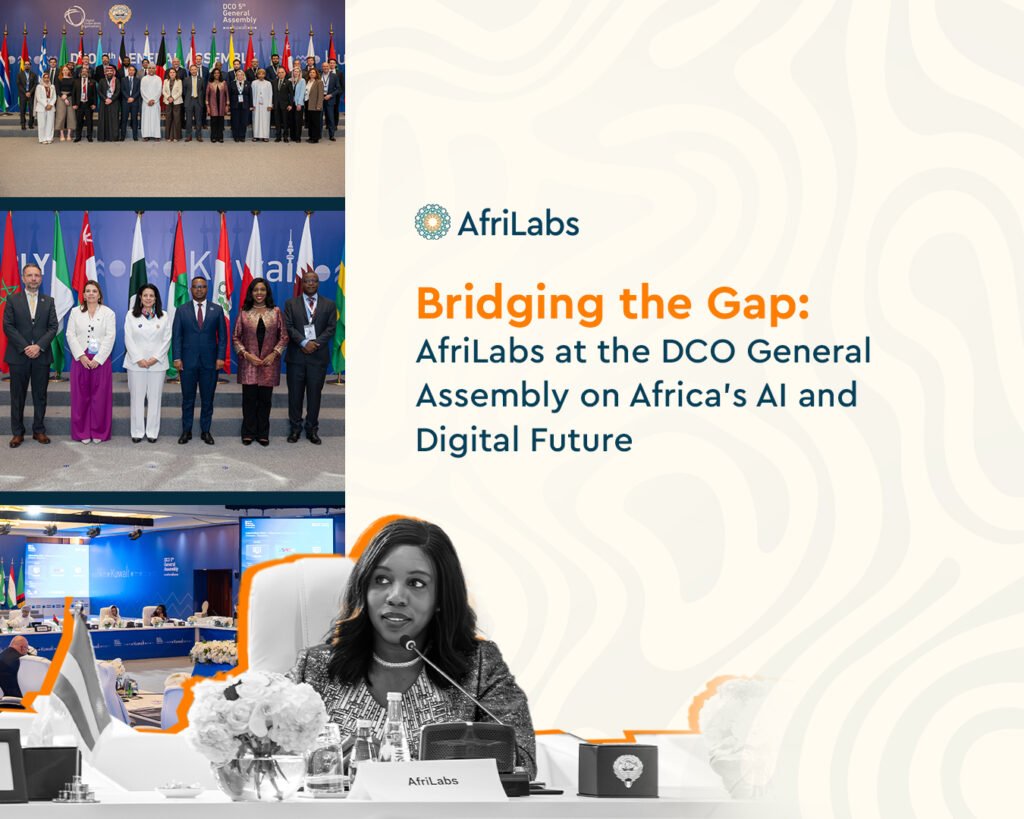
Bridging the Gap: AfriLabs at the DCO General Assembly on Africa’s AI and Digital Future Across Africa and the Arab world, national AI strategies are being written, ministerial portfolios are being restructured, and digital cooperation frameworks are being signed. Inside the continent’s universities, the picture is more complicated. The question is no longer whether AI matters for the continent’s economic future. It is whether the institutions responsible for producing that future’s workforce are equipped to keep pace. At the 5th DCO General Assembly in Kuwait, AfriLabs joined a high-level side-event co-hosted with the Kingdom of Morocco on “Strengthening African-Arab Partnerships for Artificial Intelligence and Data-Driven Development.” Our Executive Director, Anna Ekeledo, participated alongside H.E. Dr. Amal El Fallah Seghrouchni, Morocco’s Minister of Digital Transition and Administrative Reform, and H.E. Yves N. Iradukunda, Rwanda’s Minister of State for ICT and Innovation, in a session moderated by Ms. Emma Morley, UNDP Resident Representative in Kuwait. The discussion was focused on a unified digital transformation agenda across both regions. AfriLabs came to that table with something specific: evidence. What the Data Actually Shows In November 2025, AfriLabs, WISE (Qatar Foundation), Mohammed VI Polytechnic University (UM6P), and The Education Collaborative at Ashesi University published “Harnessing AI for Higher Education in Africa,” a study drawing on responses from 3,875 stakeholders across 47 African HEIs and 199 edtech companies. It is one of the most comprehensive examinations of AI adoption in African higher education produced to date. The findings reveal a sector caught between recognition and readiness. Most institutions understand the direction of travel. Few have built the internal conditions to move confidently in that direction. 62% of all AI usage across surveyed institutions occurs within AI-enabled Learning Management Systems. Adoption beyond that is scattered. Six in ten institutions have no AI policy. The same proportion operate without ethical guidelines for responsible AI use. Respondents widely described their institutions as being at an early or developing stage of AI integration, even where individual staff reported intermediate competency levels. The gap is not in awareness. It is in institutional architecture. This matters because the absence of governance frameworks does not simply slow adoption. It creates the conditions under which adoption, when it does happen, is fragmented, inconsistent, and difficult to build on. A Market That Has Not Caught Up The edtech investment landscape reflects the same structural imbalance. Of 414 active post-secondary edtech startups operating in Africa, only 45 specifically target HEIs. Fewer than 2% are building AI-powered solutions for the tertiary level. 64% of edtech activity remains concentrated at K–12. This is a rational market response to a set of structural disincentives. HEIs involve complex procurement processes, longer sales cycles, limited dedicated budgets in public institutions, and significant content adaptation requirements. Startups building for universities carry more risk for slower returns. Meanwhile, over 83% of AI startup funding in early 2025 flowed to just four countries: Kenya, Nigeria, South Africa, and Egypt, concentrating capital in ecosystems that are already better resourced and leaving HEI-focused innovation largely unfunded across the rest of the continent. 41% of edtech startups in our study cited funding and revenue generation as their primary obstacle. Without capital structures designed for the complexity of higher education markets, AI solutions for African universities will continue to be built by too few players, at too small a scale, to drive systemic change. Infrastructure Is the Starting Point, Not the Backdrop None of the above can be addressed without confronting the infrastructure reality directly. Africa holds less than 1% of global data centre capacity despite representing 18% of the world’s population, and the continent needs an estimated 700 new data centres to meet medium-term connectivity and storage requirements. No African country has yet reached 20% AI adoption, a figure shaped by five compounding deficits: electricity, data infrastructure, internet access, skills, and language. For African HEIs, these deficits are not abstract. They determine whether a faculty member can reliably use an AI tool in a classroom, whether an institution can afford to run cloud-based administrative systems, and whether students in under-resourced regions have any meaningful access to the tools their urban counterparts are beginning to use. Our study found that lack of affordable internet access and adequate hardware consistently ranked among the top barriers to AI adoption in universities. AI policy frameworks and faculty training programs are necessary investments. But they operate on top of a connectivity and compute layer that, in much of the continent, is not yet stable enough to carry them. What Implementation Actually Looks Like Our research does not only identify gaps. It documents what structured, intentional implementation looks like when conditions align. The case study we conducted with UM6P in Morocco, currently ranked first in Morocco and North Africa and fourth across the continent in the 2026 Times Higher Education rankings, offers the clearest available model for African HEI-led AI integration. UM6P approached AI not as a set of tools to adopt, but as a design challenge. Its Digital Ecosystem Office coordinates all AI and digital initiatives campus-wide, ensuring that technology adoption is grounded in pedagogy rather than novelty. The outcomes are measurable. Course development timelines fell from 8–12 weeks to 2–3. Instructional video production costs dropped by up to 70%. In 2025, UM6P became the first African HEI to deploy ChatGPT Edu institution-wide, giving more than 2,000 students and faculty access within a policy-controlled environment and generating institutional learnings now shared beyond Morocco. UM6P is a well-resourced institution, and our report acknowledges that directly. But its approach is transferable: identify a specific problem, ground the solution in pedagogy, design for scale from the start, and build human capacity alongside every tool deployed. These are principles, not budgets. The UM6P model demonstrates that the constraints facing African HEIs are real but not deterministic. Policy Is Moving. Implementation Needs to Follow. Rwanda’s 2023 National AI Policy and Kenya’s National Artificial Intelligence Strategy 2025–2030 both place higher education institutions at the center of national AI implementation, calling for expanded curricula, postgraduate training, and structured research-industry partnerships. These frameworks signal a shift from aspiration to architecture at the national level. The DCO General Assembly
She Was Never the Problem. Access Was.
She Was Never the Problem. Access Was. How African Women Are Rewriting the Continent’s Innovation Story and What Still Stands in Their Way She did not start with funding. She did not start with connections. She started with a second-hand laptop, a problem she was tired of watching her community suffer through, and the kind of determination that does not take no for an answer. Her name is Maria. This is not an unusual story on the African continent. It is, in fact, the story of millions of women who are building businesses, launching startups, and driving change without the support systems that others often take for granted. This International Women’s Day, AfriLabs pauses to look at the full picture. The progress that has been made, the gaps that still exist, and the work that still needs to be done to build ecosystems that are truly worthy of Africa’s women. Africa Produces the World’s Most Educated Women in STEM. Then What? Here is a fact that surprises most people: Africa leads the world in women STEM graduates. According to McKinsey, 47% of all STEM university graduates across the continent are women. That is higher than Europe at 42%, Asia at 41%, and North America at 39%. In Tunisia, the number goes even higher, with women making up 62% of STEM students. This is not a pipeline problem. This is an ecosystem problem. Because despite these strong educational outcomes, women make up only 30% of professionals in Sub-Saharan Africa’s tech sector. McKinsey’s research also shows that almost half of Africa’s women STEM graduates never enter the tech workforce at all. Cultural biases, a lack of mentorship, and discrimination in the workplace continue to push out talent that the continent cannot afford to lose. The talent is there. The question is whether the systems around it are ready to receive it. The Funding Gap Is Not Just a Gap. It Is a Chasm. If the numbers around education give hope, the numbers around funding tell a harder story. In 2024, female CEOs in African tech received just $48 million in funding, while male CEOs secured nearly $2.2 billion. That is a ratio of roughly 1 to 46. The 2% share that female-led startups received was the lowest recorded since 2016 and a sharp drop from 8.2% just the year before, according to The Big Deal and Disrupt Africa’s annual reports. By 2025, the situation had not improved much. Disrupt Africa’s latest funding report found that only 16.9% of funded startups had a woman on their founding team, down from 26.3% in 2023. The tightening of available capital has not affected everyone equally. Women have felt it the most. There is one area of progress worth noting. In 2025, women claimed 20% of all grant funding, and gender-diverse teams secured 42%. But as TechMoran reports, grants made up just 1.5% of total capital invested in African startups that year. It is progress, but it is still very small in the bigger picture. Africa leads the world in female entrepreneurship rates. And yet the systems meant to fund and grow entrepreneurs continue to overlook the women leading them. That is a contradiction the continent can no longer afford to ignore. They Are Building Anyway. What makes the story of African women in tech so powerful is not the barriers they face. It is what they are building in spite of those barriers. Odunayo Eweniyi co-founded PiggyVest, now Nigeria’s leading savings and investment platform, changing the way young Africans think about managing money. Miishe Addy built Jetstream Africa to make cross-border trade simpler and more accessible for small businesses across the continent. Hilda Moraa created Pezesha, a lending platform working to close what researchers estimate is a $42 billion financing gap for African women entrepreneurs. Beyond individual stories, the collective impact is growing. Women Techsters is working toward equipping five million girls and women across Africa with digital skills. She Code Africa has supported more than 40,000 people with coding skills and resources. Africa Code Week has reached over 17 million young people since 2015, with nearly half of 2023 participants being girls. These women are not waiting for permission. They are building what they needed and could not find. The Role of Ecosystems: Where AfriLabs Stands Personal resilience is powerful. But resilience should not be the only strategy available to women building on this continent. That is where ecosystem builders like AfriLabs come in. Across our network of innovation hubs spanning the continent, AfriLabs has made a clear commitment to ensuring that women are not an afterthought in Africa’s innovation story. Through women-focused programmes built into our hub network, we have worked to close the distance between ambition and access, between talent and opportunity. We have seen women walk into co-working spaces in Dakar, training sessions in Kampala, and pitch rooms in Abuja, and leave not just with new skills but with networks, confidence, and a community that lasts long after the programme ends. The work is not finished. But the direction is clear. The hubs in our network must be spaces where women do not just participate. They must be spaces where women lead. What Happens When You Actually Invest in Women: The RevUp Story Talk about supporting women in business is everywhere. What is rarer is real proof. AfriLabs’ RevUp Women Initiative is building that proof, one cohort at a time. Launched as a pan-African programme to support early-stage women-led businesses and reduce the gender gap in entrepreneurship, RevUp is backed by the Visa Foundation. It does not just run training sessions and move on. It provides tailored mentorship, access to networks, and a direct path to funding. In short, it builds the support structure that African women entrepreneurs have long been building their businesses without. The results from the first cohort speak clearly: The Impact So Far Programme Outcomes & Results 0 Entrepreneurs Supported across 5 countries in the first cohort 0 Jobs Created By RevUp-supported ventures to date 0 Grants Awarded Awarded in the pilot phase to 10 founders 0 Applied Lessons Successfully applied programme curriculum 0 Revenue Growth Reported measurable income increases
6 Strategic Reasons to Join the Africa Manufacturing and Innovation Pavilion at WAM Saudi 2026
1. Africa Is Entering a Forced Industrialization Phase Africa’s manufacturing shift is no longer aspirational. It is defensive and strategic. Currency volatility, rising import costs, and fragile global supply chains have made import dependence economically unsustainable. Across the continent, manufacturers and governments are being pushed to localize production, assembly, and value addition faster than planned. The Africa Manufacturing and Innovation Mission provide a coordinated platform to present this new industrial reality to global buyers, investors, and partners who are actively restructuring their supply chains. This is where Africa signals that it is open for manufacturing partnerships, not just trade. 2. Saudi Arabia Is a Capital and Market Gateway, Not Just a Host WAM Saudi is not a conventional exhibition. It sits at the centre of one of the fastest expanding industrial and logistics markets globally. Saudi Arabia is deploying hundreds of billions of dollars into advanced manufacturing, logistics, industrial zones, energy, and supply chain infrastructure. For African manufacturers and governments, this creates direct pathways to buyers, capital, joint ventures, and long term off take agreements. Participating in the Pavilion positions African stakeholders where industrial capital is actively being deployed, not where it is being discussed. 3. The Mission Is Designed for Deal Making, Not Visibility Most exhibitions optimize for footfall. This Pavilion is structured for transactions. Participants gain access to curated B2B, B2G, and G2G matchmaking, an investor and deal making lounge, and structured engagements with buyers, investors, procurement teams, and government delegations. – For manufacturers, this shortens sales and partnership cycles. – For governments, it enables targeted industrial diplomacy. – For investors, it improves deal quality and reduces sourcing noise. This is a working platform for outcomes. 4. Africa’s Future OEMs Are Emerging Now African innovators are no longer only assembling imported technologies. They are designing machinery, components, automation tools, industrial software, and energy systems tailored to local and regional markets. These future OEMs are building solutions across manufacturing technology, logistics, energy, and industrial AI. The Mission curates and amplifies these actors, giving them exposure to global buyers, distributors, and partners who can accelerate scale and internationalization. This is where Africa’s next industrial champions are introduced to the world. 5. Governments and Institutions Gain Strategic Industrial Visibility For governments, visibility at WAM Saudi is no longer optional. Global manufacturers and investors increasingly assess countries based on industrial readiness, regulatory clarity, infrastructure quality, and energy reliability. The Pavilion allows governments and agencies to present SEZs, PPP pipelines, investment incentives, and industrial strategies directly to decision makers shaping global manufacturing flows.t This is industrial diplomacy executed in a commercial environment. 6. The Mission Is a Continental Play, Not an Isolated Booth Africa’s competitiveness will be driven by regional value chains, not isolated national efforts. The Mission presents a unified African industrial narrative, while still allowing countries, hubs, and companies to showcase their unique strengths. This continental framing increases credibility, scale perception, and bargaining power in global negotiations. It positions Africa as a serious manufacturing partner capable of supporting diversified, resilient, and scalable production. Bottom Line The Africa Manufacturing and Innovation Pavilion at WAM Saudi 2026 is not about presence. It is about positioning Africa within the next reconfiguration of global manufacturing, logistics, and industrial value chains. Those who participate help shape that positioning. Those who do not will adapt to it later. Join the Africa Manufacturing and Innovation Pavilion at WAM Saudi 2026. Register your Interest Now: wamafricapavilion@afrilabs.com
Beyond Capital: How African Startups Are Keeping Control While Growing
In recent years, Africa’s innovation ecosystem has transformed, emerging as a vibrant hub of entrepreneurial energy, technological growth, and socio‑economic opportunity. Across the continent, startups are finding creative ways to grow while keeping control over their businesses, showing that success does not have to come at the expense of independence. Many African startups once relied heavily on seed funding and angel investments. Today, there is growing use of alternative funding models. One of the most notable trends is the rise of venture debt, a form of financing that gives founders access to capital without significant dilution of ownership. This route enables startups to scale quickly while retaining operational autonomy, a crucial advantage especially in sectors like fintech. The shift is visible in funding statistics. According to data referenced by AfriLabs, while equity funding remains the most common form of investment, its dominance is receding. In 2023, equity funding dropped from 94.8% in 2022, even as total funding across the continent dipped. Meanwhile, debt financing rose, accounting for 10.6% of total funding in 2023, a significant increase compared with previous years. More broadly, 2024 and 2025 funding reports show a mixed picture but underline that debt financing and other non‑traditional investments are gaining traction. For instance, a 2025 report covering first eight months shows that startups across Africa raised about US$2.8 billion in funding, although this marked a 28% decline compared with similar periods previously. Crucially, debt financing surpassed US$1 billion for the first time, reflecting growing confidence in asset-backed and revenue-generating models rather than just equity. This shift toward debt and hybrid funding reflects how founders are adapting to changing investor sentiment, global economic headwinds, and the need to preserve control while scaling. Innovation activity is concentrated in dynamic regional hubs where talent, infrastructure, investors, and supportive regulation intersect. Countries such as Kenya, Nigeria, South Africa, Egypt, and Rwanda continue to lead fundraising across the continent. Within these hubs, startups have benefited from diversified funding approaches. Equity remains important, especially for early‑stage growth, but increasing numbers of ventures, especially more mature ones are turning to debt or hybrid financing to expand. This strategy allows them to grow while avoiding excessive equity dilution. Across Africa, investors are also adapting. There is growing interest from non‑traditional funders: impact investors, corporate investors, and funds offering structured debt or revenue‑based financing. These forms of capital are shaping a more mature, strategic investment landscape, one where long‑term growth, measurable social impact, and sustainability matter just as much as rapid expansion. Africa’s innovation narrative is no longer defined solely by challenges and funding scarcity. Instead, evolving financing mechanisms, increasing investor confidence, and the rise of regional hubs demonstrate a continent ready for transformative growth. Entrepreneurs, investors, and policymakers who align their strategies with these trends stand to contribute meaningfully to Africa’s dynamic startup landscape. By leveraging local insights, nurturing strategic partnerships, and applying diversified funding strategies, African startups are setting new standards in technology‑driven development. Their journey shows that control and growth can coexist harmoniously, offering a blueprint for inclusive, sustainable innovation across the continent.
AfriLabs to Spotlight Entrepreneurial Ecosystem Building at Bridge Africa Summit 2025
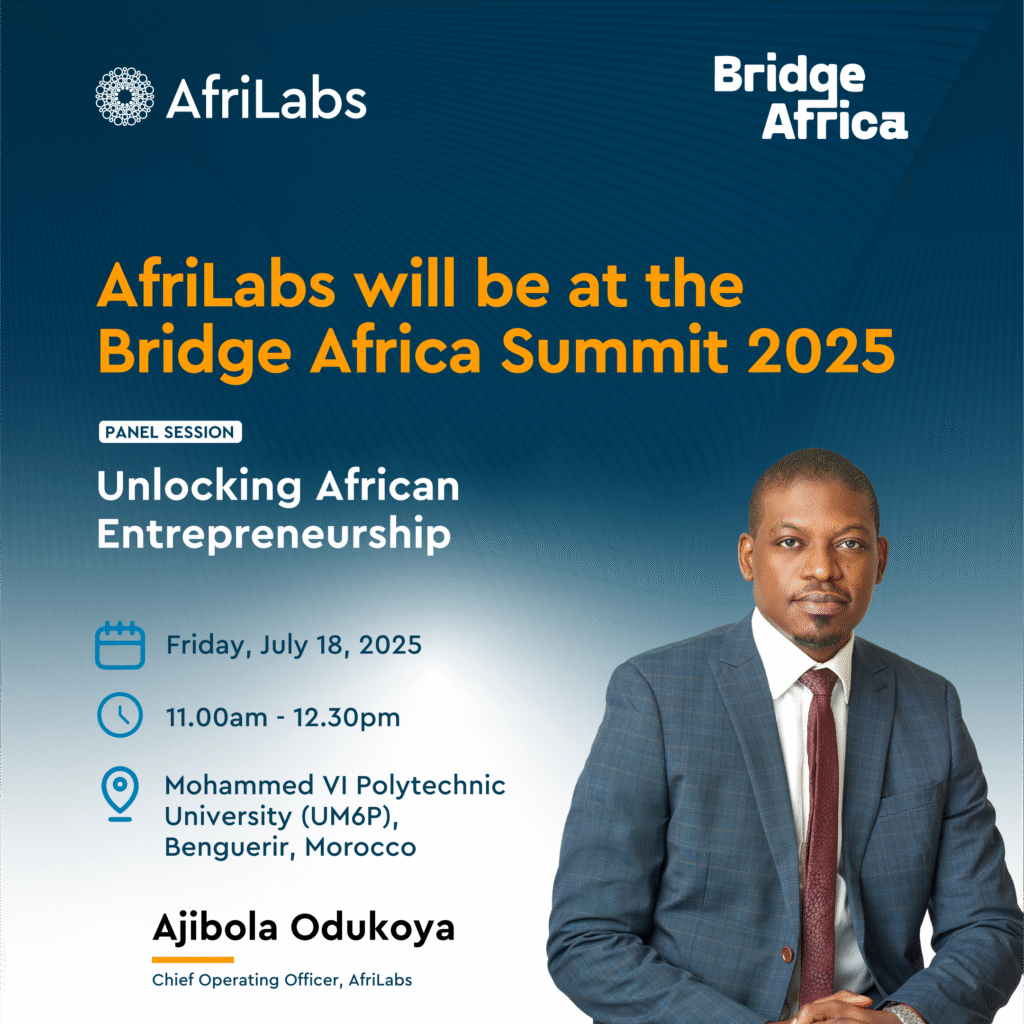
AfriLabs to Spotlight Entrepreneurial Ecosystem Building at Bridge Africa Summit 2025 AfriLabs, the largest network of innovation and technology hubs across Africa, will participate in the Bridge Africa Summit 2025, hosted by the Mohammed VI Polytechnic University (UM6P) in Benguerir, Morocco, from July 17–19, 2025. The summit will convene influential voices from across the continent to reimagine innovation, responsibility, and action in shaping Africa’s development future. As part of the official programme on Friday, July 18, AfriLabs’ Chief Operating Officer, COO, Ajibola Odukoya, will join a high-level panel session titled “Unlocking African Entrepreneurship”, contributing to a strategic dialogue on how to create stronger enabling environments for entrepreneurship across the continent. The session brings together diverse actors from academia, ecosystem support organizations, and innovation policy to explore the systemic levers that can shift Africa’s entrepreneurial landscape from promise to performance. It will spotlight the roles of universities, government institutions, catalytic programs, and platforms like AfriLabs in building the architecture for scalable, inclusive entrepreneurship. “Across the continent, entrepreneurs are innovating in high-impact sectors, but without systems to support them, scale remains elusive,” said Ajibola Odukoya, COO of AfriLabs. “This conversation is about unlocking the real value of entrepreneurship through intentional collaboration, aligned investment, and infrastructure that grows with the entrepreneur.” Drawing from AfriLabs’ work with over 500 hubs in 53 countries, Ajibola will offer practical insights into how innovation ecosystems can: ➜ Facilitate meaningful access to finance and mentorship, ➜ Strengthen collaboration between education institutions and startup communities, ➜ Drive localized policy advocacy that removes systemic barriers to growth, ➜ Position Africa’s entrepreneurs to compete and lead globally. AfriLabs’ participation reinforces its mission to create interconnected, resilient ecosystems that support entrepreneurs from ideation to expansion. From capacity building and access to markets to influencing startup-friendly policy, AfriLabs serves as a continental enabler, fostering environments where African innovation can thrive and scale sustainably. The Bridge Africa Summit’s emphasis on co-creation and innovation aligns with AfriLabs’ vision of entrepreneurship not as an isolated act but as a system-wide effort, involving both public and private actors, local talent, and global partnerships. UM6P’s leadership in convening this dialogue reflects the growing consensus that innovation must be backed by strong research, talent development pipelines, and policy coherence. The university’s presence in global innovation corridors points to a future where African entrepreneurs engage with the world on equal footing. This critical conversation also builds momentum toward the AfriLabs Annual Gathering 2025, taking place in Nairobi, Kenya, from October 7–9. Under the theme “Africa’s Innovation Future: Policy, Partnerships & Progress,” the Gathering will be a pan-African platform to deepen these discussions and forge the partnerships required to realize them. “We are no longer asking whether Africa can innovate; we’re showing how it already is. What we now need are the systems that allow innovation to scale across borders, sectors, and generations,” Ajibola added. The “Unlocking African Entrepreneurship” session is a timely contribution to Africa’s broader development agenda, one that understands that entrepreneurship is not just about opportunity, but about the ecosystems that enable ideas to become industries. For more on AfriLabs’ work or to connect during the summit, reach out to comms@afrilabs.com or visit www.afrilabs.com.
AfriLabs and Partners Convene Cross-Regional AU-AU Study Visit to Advance Africa’s Clean Energy Agenda
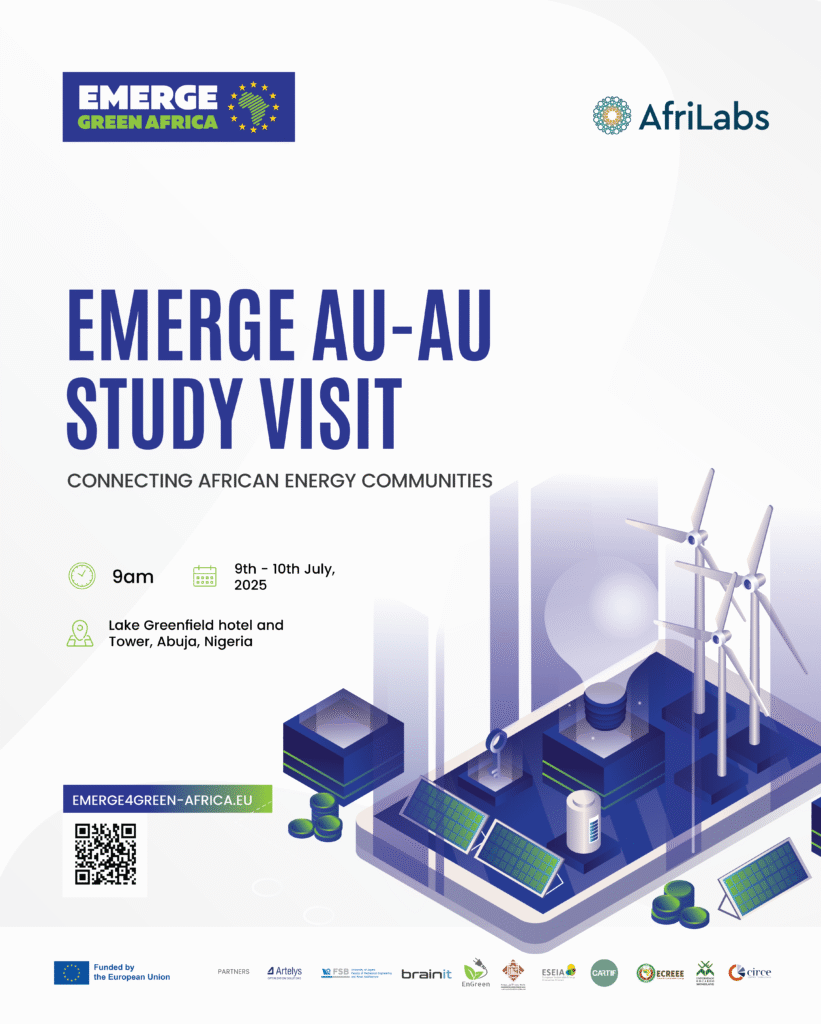
AfriLabs and Partners Convene Cross-Regional AU-AU Study Visit to Advance Africa’s Clean Energy Agenda AfriLabs, in partnership with leading institutions under the EMERGE Project, funded by the European Union, is set to host the AU-AU Study Visit in Nigeria on July 9, 2025, a strategic knowledge exchange initiative aimed at accelerating Africa’s transition to clean and sustainable energy systems. This visit brings together energy stakeholders from across the continent to share insights, showcase innovations, and co-create solutions tailored to Africa’s diverse energy landscapes. As part of the EMERGE Project’s commitment to strengthening African-led responses to climate and energy challenges, the study visit serves as a hands-on, immersive opportunity for pilot project owners, technical experts, and policymakers from Nigeria, Mali, Morocco, and Mozambique to interact directly with successful energy implementations. The goal is not only to observe but also to collaboratively build models that address regional disparities, resource gaps, and policy needs in the pursuit of energy equity and sustainability. The EMERGE Project itself is centered on equipping Africa’s policymakers, academics, entrepreneurs, and communities with practical tools and knowledge to expand clean energy access while promoting the sustainable use of natural resources. By integrating existing technologies, methodologies, and research into a co-designed toolbox and knowledge base, EMERGE is building strong, context-specific frameworks that reflect the realities of African ecosystems. The AU-AU Study Visit is a major milestone in this process as it seeks to translate theoretical approaches into grounded regionally informed strategies through peer learning and on-site exploration. The day-long agenda is designed to spark critical conversations around Africa’s energy future. It includes high-level presentations from key institutions such as the Rural Electrification Agency (REA), the National Agency for Science and Engineering Infrastructure (NASENI), and Sustainable Energy for All (SEforALL), alongside interactive workshops that will unpack real-time challenges and innovations emerging from the pilot regions. Throughout the visit, participants will explore how Africa can localize clean energy technologies, unlock financing for green infrastructure, and strengthen policy environments that drive inclusive energy transitions. Crucially, this convening embodies the spirit of African solidarity. By bridging geographies and bringing together varied experiences, the AU-AU Study Visit creates space for mutual learning, trust-building, and the development of actionable strategies that respond to Africa’s urgent energy needs. The connections forged here — between institutions, communities, and countries — will be instrumental in shaping the continent’s clean energy trajectory and ensuring no region is left behind in the global push for sustainability. As AfriLabs and its partners continue to champion innovation ecosystems across Africa, the AU-AU Study Visit affirms our belief that Africa holds the answers to its own energy future and that those answers grow stronger when we learn, build, and act together. To learn more about our participation and the EMERGE project please contact Adaora Okolie at adaora@afrilabs.com
Africa’s AI-Powered Innovation Revolution: Conditioned on Ecosystem Readiness
Africa’s AI-Powered Innovation Revolution: Conditioned on Ecosystem Readiness While the global conversation around artificial intelligence (AI) frequently centers on distant developments like chatbots emerging from Silicon Valley, robotic process automation transforming East Asia, or ethics dialogues convened in Geneva – a more deeply rooted and profoundly significant phenomenon is unfolding across Africa. Beneath the surface of these prominent international narratives lies a quiet yet urgent revolution situated at the dynamic intersection of innovation, snowballing youth ambition, and accelerating digital transformation. This movement transcends mere attempts to emulate Western technological advancements; it is fundamentally about actively shaping a distinctly African AI future. At the nexus of this transformative effort stands AfriLabs, the continent’s largest pan-African network of innovation hubs, which is actively redefining how technology, talent, and indigenous creativity can be effectively mobilized to address Africa’s most pressing and urgent challenges. Within the broader global discourse concerning AI and its potential for economic transformation, Africa is regrettably often framed as a latecomer or, worse, a passive recipient of solutions imported from elsewhere. This limiting perspective unfortunately obscures a far more critical and structural challenge: Africa’s innovation ecosystems currently suffer from insufficient support, inadequate funding, and persistent undervaluation within global AI conversations. The fundamental question is not whether Africans are actively engaged in building with AI – they demonstrably are. The crucial determinant lies in whether the underlying ecosystems designed to foster innovation can genuinely support this work and enable its scaling to achieve widespread impact. Analogous to the insidious drain of wealth through illicit financial flows that severely constrains public service funding, Africa’s digital future is being undermined by fragmented infrastructure, extractive technological partnerships, and the sustained export of local talent to global platforms that offer minimal reciprocal benefit. For the continent to truly reap the benefits promised by the AI economy, it must move beyond simply adopting existing tools; it is imperative that it actively shapes these tools, asserts ownership over its data, and establishes the foundational rules governing this new technological landscape. The potential for AI to profoundly transform Africa is indeed immense. Projections from PwC suggest AI could contribute a staggering $15.7 trillion to the global economy by 2030. However, without a deliberate and concerted effort to build foundational domestic capacity, Africa risks capturing only a marginal fraction of this value, while simultaneously exporting its invaluable data, talent, and creative potential to systems constructed far beyond its borders. Crucially, Africa possesses the world’s youngest population, experiences one of the fastest rates of mobile penetration globally and is witnessing a rising tide of dynamic tech entrepreneurs actively solving real-world problems in real time. This narrative is not one of inherent deficit, but rather one highlighting a significant missed opportunity that demands urgent rectification. AfriLabs, leveraging its extensive network comprising over 500 innovation hubs spanning 53 African countries, is diligently working to bridge this critical gap. It provides essential infrastructure, targeted training, crucial funding, and supportive policy advocacy specifically designed to place the creation and deployment of African solutions firmly into African hands. To speak plainly, Africa does not require generative AI tools primarily focused on mimicking celebrity voices or automating generic digital marketing tasks. What the continent genuinely needs, and what many of its visionary innovators are already actively developing, are AI-driven systems specifically engineered to: – Facilitate accurate diagnosis of diseases in remote rural clinics. – Optimize irrigation strategies for smallholder farmers to enhance yields and resilience. – Predict climate patterns with greater accuracy to protect vulnerable livelihoods. – Power comprehensive financial inclusion initiatives for the vast unbanked population. These solutions are not mere theoretical concepts; they are tangible realities already being developed and piloted within hubs across the AfriLabs network. However, their ultimate success hinges on factors extending far beyond the elegance of code. It relies fundamentally on establishing robust networks of trust, ensuring equitable access to necessary funding, guaranteeing reliable connectivity, and cultivating supportive regulatory environments – precisely the critical areas within which AfriLabs strategically operates. Much like the misleading narrative that portrays corruption as Africa’s single greatest developmental hurdle, the notion that Africa will effortlessly “leapfrog” into the AI economy solely on the strength of its mobile penetration is profoundly misleading. While it is true that African innovators have historically demonstrated remarkable capacity for leapfrogging technological stages, this narrative unfortunately obscures the persistent structural deficits that severely impede scaling efforts: unreliable internet connectivity, insufficient compute power, inadequate access to high-quality training resources, and extractive data practices perpetuated by external actors. Genuine leapfrogging will not materialize spontaneously within a vacuum. It must be deliberately engineered through intentional strategy, sustained investment, and a commitment to inclusive participation. This fundamental understanding underpins AfriLabs’ strategic focus, which extends beyond merely spotlighting individual innovations to actively supporting the complex systems that render innovation possible and sustainable. To achieve authentic and meaningful participation in the blooming AI revolution, Africa must proactively construct and safeguard its own digital sovereignty. This imperative necessitates: – Asserting ownership over and diligently protecting African data assets. – Training talent specifically for advanced AI development roles, moving beyond basic tech support functions. – Substantially strengthening innovation hubs by providing shared access to crucial cloud computing resources, establishing dedicated AI laboratories, and fostering widespread ethical AI literacy. – Developing and implementing regulatory frameworks explicitly designed to prioritize and safeguard long-term African interests. AfriLabs is already actively collaborating with a diverse range of partners across multiple sectors to decisively move in this direction. Through impactful initiatives such as Catalytic Africa and AfriLabs Connect Deal Room (ACDR) it is providing direct financial support to promising African startups and empowering local ecosystems to thrive, not as passive beneficiaries, but as assertive architects of their own digital futures. Governments across the continent bear a vital responsibility to act as proactive facilitators of this transformation. They must significantly invest in domestic research capabilities, actively support homegrown technological talent, and demand equitable terms from global AI companies operating within their borders. Concurrently, international partners must transcend superficial corporate social responsibility narratives and
Unlocking Africa’s Potential for Sustainable Growth through the Creative Industry
Unlocking Africa’s Potential for Sustainable Growth through the Creative Industry Africa’s creative industry serves as a dynamic and promising sector with the ability to drive significant economic growth, foster innovation, and create job opportunities across the continent. As Africa advances and adapts to current global trends, the creative economy is emerging as a crucial element in determining its future trajectory. Rich in cultural diversity and artistic expression, Africa’s creative industry not only instils a sense of pride among its people but also makes a substantial contribution to the continent’s overall GDP. According to the United Nations Conference on Trade and Development (UNCTAD), the global creative economy was valued at approximately $2.25 trillion in 2021, with Africa’s share increasing steadily. Forecasts for 2024 suggest that Africa could account for as much as 10% of global creative goods exports by 2030, potentially totalling around $200 billion. This remarkable growth is largely fuelled by advancements in digital technology and an increasing global appetite for authentic African content. In Sub-Saharan Africa, the music industry has experienced an impressive 24% rise in revenue in 2024, establishing itself as the fastest-growing music market in the world. Artists such as Tyla have gained international attention, earning prestigious awards and highlighting the global appeal of African music. At the same time, Nollywood continues to thrive, generating an estimated $1.2 billion each year, while Netflix has invested over $175 million in African productions since 2016, significantly elevating the profile and reach of African narratives on a global scale. Leveraging Technology for Growth Technology plays a crucial role in the evolution of Africa’s creative industries. The rise of digital platforms has enabled artists and creators to reach global audiences, breaking down traditional barriers to entry. Streaming services like Spotify and Apple Music have opened new revenue streams for African musicians, while platforms like YouTube allow filmmakers and content creators to monetize their work directly. Moreover, the global export of creative services reached $1.4 trillion in 2022, marking a 29% increase since 2017. Africa is increasingly tapping into this trend, with digital tools empowering creatives to build personal brands, engage with audiences in real-time, and collaborate across borders. Unlocking Funding for Creative Ventures Despite the immense potential, access to funding remains a significant challenge for many creatives in Africa. Traditional financing models often overlook the unique needs of the creative sector, leaving many talented individuals without the resources to scale their ventures. Innovative funding models are emerging, including crowdfunding, venture capital, and partnerships with private sector players. Countries like Côte d’Ivoire and Zambia are leading the way with initiatives that support creative entrepreneurs through policy reforms and ecosystem development. Financial literacy and business development programs are also equipping creatives with the tools to navigate the funding landscape effectively. The Role of Events in Shaping the Creative Economy Events are instrumental in shaping Africa’s creative economy by fostering collaboration, sharing insights, and spotlighting innovation. One of the most anticipated gatherings this year is the AfriLabs Annual Gathering 2025 (AAG2025), happening from 7–9 October 2025 in Nairobi, Kenya, under the theme “Africa’s Innovation Future: Policy, Partnerships, & Progress.” Among the seven thematic tracks at AAG2025 is the Creative Economy Track, which focuses on the power of African creativity in the digital age. This track explores how African culture, art, music, film, and storytelling can thrive in the digital economy. It will cover key topics such as monetization strategies, the ethical use of AI in creative industries, and how innovation can coexist with cultural preservation and global influence. Learn more at www.afrilabsgathering.com. Additionally, the Africa Creative Economy Lens Forum, taking place from 28–31 August 2025 in Kigali, Rwanda, is another landmark event. AfriLabs Strategic Communications & PR Manager, Millie Abila, will represent AfriLabs on a panel exploring investment in Africa’s creative industries for sustainable growth. This panel will push the conversation beyond product creation, focusing on how African creatives can leverage technology, unlock funding, and build scalable, monetizable ventures. Together, these events are shaping the future of Africa’s creative industries by bringing together stakeholders from across the continent and beyond to collaborate, innovate, and invest. To connect with us at the Africa Creative Economy Lens Forum, please contact our communications team at comms@afrilabs.com.
The Rise of Deep Tech in Africa: Challenges and Opportunities
The Rise of Deep Tech in Africa: Challenges and Opportunities AfriLabs is increasingly focused on supporting innovation that not only addresses immediate challenges but also establishes a foundation for lasting change across Africa. In line with this commitment, we are looking closely at the rise of deep tech, an emerging area of science-based, engineering-driven innovation that is transforming sectors such as healthcare, agriculture, energy, and climate. Deep tech is not about quick solutions or popular apps. It focuses on meaningful, long-term answers grounded in cutting-edge research. This often pulls from areas like artificial intelligence, biotechnology, advanced materials, and robotics. Building these technologies requires time, teamwork, and bravery, but their ability to change entire systems is significant. Africa is at a crossroads where the scope and complexity of today’s problems are outstripping traditional development approaches. It takes innovative thinking to address the effects of climate change, gaps in healthcare delivery, and the need to feed expanding populations. Deep tech can help with this. Deep tech provides solutions that can be both significant and distinctively African, from AI tools that enhance diagnostic access in rural clinics to precision farming that assists smallholder farmers in adapting to unpredictable weather. These solutions are already being developed by innovators on the continent, who are creating indigenous technologies that take into account and understand local realities. At AfriLabs, we believe deep tech should play an integral role in Africa’s innovation future. That’s why we’re investing in dialogues, partnerships, and support systems that provide deep tech ventures with the space and resources they need to grow. Across our network of over 500 hubs in 54 countries, we are seeing a new generation of scientists, engineers, and entrepreneurs asking bold questions and building prototypes that challenge the status quo. These innovators do not just want to copy global models; they are creating solutions that are specific to their context and based on African ingenuity. Whether it’s startups using machine learning to fight crop disease, labs testing sustainable materials, or biotech companies mapping African genomes, a quiet revolution is happening. Deep tech cannot thrive in isolation. It requires time, patient capital, and supportive environments such as innovation hubs, research centers, and policy roundtables where risk is accepted, failure is acknowledged, and cross-sector collaboration is promoted. The ecosystem is slowly evolving, but it still has a long way to go. Many deep tech ventures grapple with significant hurdles as they seek the robust infrastructure, sufficient funding, and clear regulatory frameworks they urgently need. Investors often remain hesitant, wary of committing to science-based startups that come with extended timelines and uncertain returns. Meanwhile, researchers find themselves isolated in silos, deprived of valuable industry partnerships and viable pathways for bringing their innovations to market. Compounding these challenges, the talented individuals who could drive this work frequently leave the continent in pursuit of more promising opportunities elsewhere. At AfriLabs, we are acutely aware of the gaps that exist within the innovation landscape, and we are passionately committed to bridging them. Our mission involves uniting vibrant hubs with leading research institutions, cultivating an enriching culture of collaboration between the public, governments and private sectors, and championing policy frameworks that nurture and propel advanced innovation across the continent. Through our initiatives, such as Catalytic Africa and the AfriLabs Connect Deal Room (ACDR), we are pioneering novel funding models that seamlessly blend grants, equity, and impact capital, tailored specifically for startups tackling complex, high-potential technologies poised to transform the continent. The trajectory of deep tech in Africa relies on our courage to support it with unyielding resolve. It’s a call to action that extends far beyond mere financial backing; it requires synchronized leadership, forward-thinking policies, and platforms that elevate African science and ignite the flames of knowledge creation. At the upcoming AfriLabs Annual Gathering 2025 in Nairobi, Kenya, deep tech will be a key priority. We are organizing sessions aimed at uniting startups, researchers, investors, and policymakers to explore how Africa can lead responsibly and competitively in emerging technologies. This moment represents more than just a chance to reconnect; it embodies our opportunity to architect Africa’s deep tech future according to our vision. For a comprehensive understanding of AfriLabs’ overall transformative initiatives in building a vibrant ecosystem, please visit our website www.afrilabs.com. To engage in the enlightening discourse surrounding the AfriLabs Annual Gathering 2025, we invite you to explore more details at www.afrilabsgathering.com.
AfriLabs Welcomes 18 New Hubs to Its Thriving Pan-African Network in Q3 2024
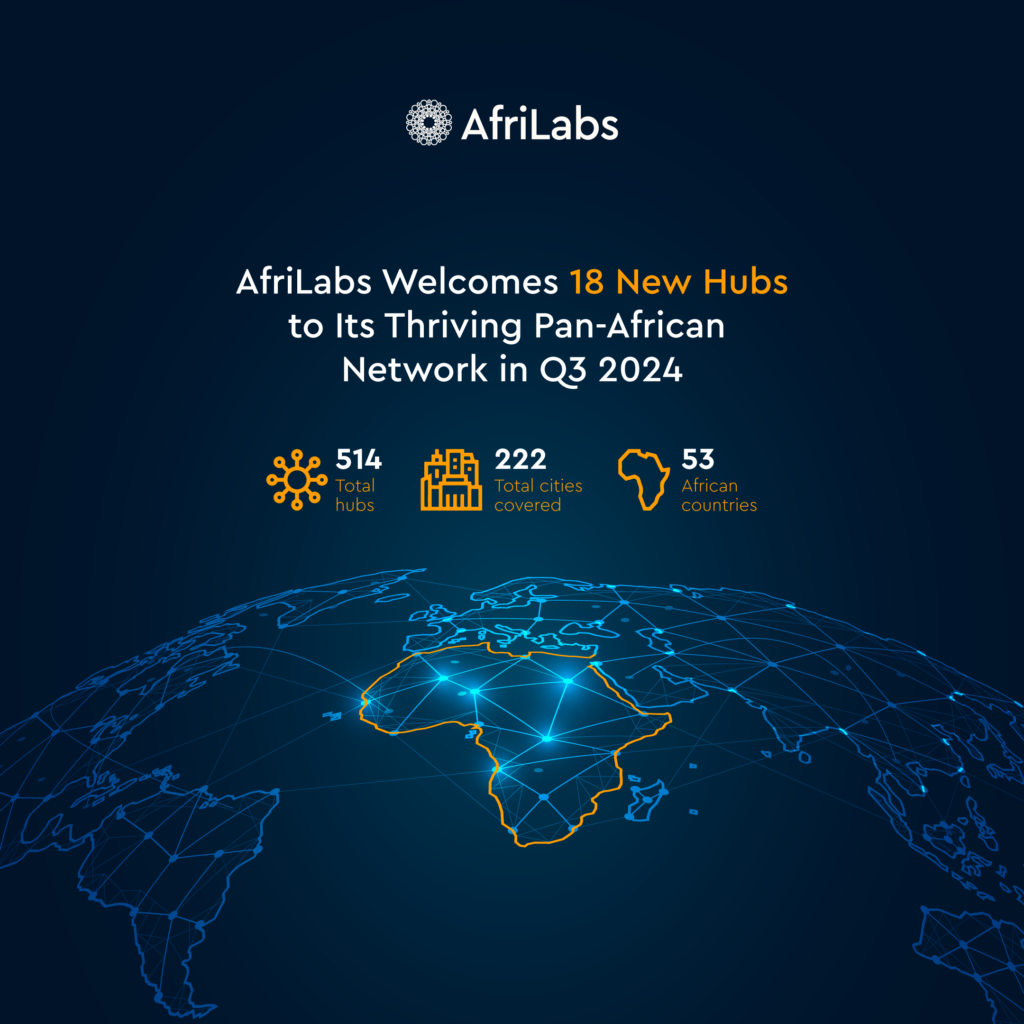
AfriLabs is proud to further its mission of nurturing a dynamic and collaborative innovation ecosystem across Africa by welcoming 18 new members to its expanding network of innovation-driven organizations. Representing all five regions of the continent, these new additions underscore AfriLabs’ commitment to empowering change-makers across Africa. In Western Africa, Nigeria welcomes five new hubs: VORTEX CENTRAL, Lhaude Africa, darey.io (Xterns Community), KRISTINA JADE CENTER, and CorestreamNG, expanding its innovation footprint in Lagos and Jos. Ghana sees the inclusion of INOVTECH FOUNDATION and Centre for Enterprise Learning in Accra, alongside Wislaw Education and Support Fund and Enactus UMaT in Tarkwa. Burkina Faso contributes to the diversity of the network with the addition of Mektoub, based in Ouagadougou. Eastern Africa strengthens its representation with Kenya’s The Lolwe AI Hub and JHUB Africa, both situated in Nairobi, marking a significant step in advancing AI and entrepreneurial collaboration in the region. Southern Africa boasts the inclusion of five hubs: South Africa’s Empire Partner Foundation and I’M IN STARTUP HUB in Johannesburg, and Savant Technology Incubator in Cape Town. Lesotho joins the network with the Lesotho Entrepreneurship Hub & Seed Financing Facility in Maseru and the Makhala Thekiso Foundation, marking Mokhotlong as a new city within the AfriLabs community. Central Africa celebrates the addition of Cameroon’s Boris Bison Youth Empowerment Business Incubator (BBYEBI), located in Douala, further strengthening the network’s presence in Francophone Africa. Speaking on the announcement, Zeineb Messaoud, the Director of Community at AfriLabs, stated: “The addition of these remarkable hubs underscores AfriLabs’ commitment to building a united and inclusive innovation ecosystem that transcends borders and fosters impactful collaborations. Each of these new members brings unique expertise and vibrant energy, further empowering communities to leverage technology and innovation for sustainable development. We are excited to work with them to create meaningful opportunities and drive growth across Africa.” Highlighting the significance of joining the AfriLabs network, Joanna Jacqueline Govender, CEO of Empire Partner Foundation and EPF Tech Fund, shared:“Joining the AfriLabs Community is more than a partnership; it’s the convergence of shared dreams and a united vision for Africa’s future. At the Empire Partner Foundation, we are driven by the belief that innovation knows no borders and that through collaboration, we can scale transformative solutions that touch lives across the continent. As a Pan-African AI foundation, we are honoured to stand alongside a network of changemakers committed to creating meaningful impact, empowering communities, and writing Africa’s next chapter of progress and resilience. Together, we are building a legacy that will echo for generations.” Dr. Lawrence Nderu, Founder of JHUB Africa, added: “Talent is evenly distributed, opportunities are not. By joining AfriLabs, JHUB Africa unlocks a pan-African network of mentorship and collaboration, expanding opportunities and ensuring talent connects with the resources it deserves!” These new additions mark a significant milestone in reinforcing AfriLabs role as a catalyst for transformative change and regional integration within Africa’s innovation landscape. About AfriLabsAfriLabs is a Pan-African network of over 500 innovation hubs across 53 African countries designed to drive sustainable economic growth across the continent through investment, innovation, technology, and entrepreneurship. For media inquiries, please contact pr@afrilabs.com & comms@afrilabs.com