Building on Transformative Impact, RevUp Women Initiative: Nigeria Edition Launches at Lagos Startup Week 2025

Building on Transformative Impact, RevUp Women Initiative: Nigeria Edition Launches at Lagos Startup Week 2025 Following the success and impact of its inaugural cohort, the RevUp Women Initiative is proud to announce the official launch of RevUp Women Initiative: Nigeria Edition on July 11 during the 10th year Anniversary of Lagos Startup Week organized by Prime Startups. Launching the program in Nigeria represents a significant milestone in the initiative’s mission to empower women-led businesses through a combination of enterprise development, strategic mentorship, and access to funding. With it’s first edition now completed, the RevUp Women Initiative has proven that targeted investment in women entrepreneurs yields transformative results. The first edition supported 459 women entrepreneurs from 5 African countries—Nigeria, Kenya, South Africa, Cameroon, and the Democratic Republic of Congo—creating 2,426 jobs and providing access to critical resources, including training on business models, financial management, and digital tools; positioning them for sustained growth and long-term success. Ten participants were awarded $10,000 each in grants and accessed mentorship from a global community to support their growth. Building on this achievement, the RevUp Women Initiative: Nigeria Edition will support 150 women-led businesses in Lagos, Abuja, and Abia, with a focus on Agribusiness and E-commerce sectors, which are key industries for economic growth and innovation. The program’s participants will connect with successful women entrepreneurs, and six outstanding participants will be considered for grant funding, totaling $24,000 and distributed among the selected awardees. “We’ve seen firsthand how intentional support and access to the right tools and networks can shift the trajectory of women-led businesses, not just helping them survive but thrive. Through tailored capacity building, mentorship, and meaningful partnerships, we’ve watched ideas turn into impactful ventures. With this new phase, we are doubling down on both impact and inclusivity, ensuring that more women across Nigeria have the resources, visibility, and community they need to grow scalable, sustainable businesses and become key players in the innovation ecosystem.”— Nanko Madu, Director of Programs at AfriLabs “Small businesses represent 90% of all companies, and account for nearly 70% of both jobs and GDP worldwide. With such a large footprint, they are an integral part of our global economy’s fabric and can’t be overlooked,” said Chukwudi Onike, Program Officer, Visa Foundation. “At Visa Foundation, we are focused on empowering SMBs and entrepreneurs with access to capital, digital tools and financial skills to grow and thrive. Our partnership with AfriLabs helps us reach more entrepreneurs in need of support, including women entrepreneurs.” Applications for the Rev Up Women Initiative: Nigeria Edition will be open from July 11 to August 8, 2025. Interested participants are encouraged to visit the official website at www.revupwomen.com to stay updated and prepare for the application launch. The RevUp Women Initiative remains committed to supporting Africa’s entrepreneurial ecosystem, with an ambitious long-term goal of supporting 50,000 women-led enterprises and creating over 152,000 jobs. With a strong foundation laid and an enthusiastic cohort of trailblazing women ready to step forward, this next edition promises to push boundaries and unlock even greater impact. About RevUp Women Initiative RevUp Women is an initiative dedicated to empowering women entrepreneurs across Africa. Through mentorship, training, and access to resources, RevUp Women provides women with the support they need to start and grow successful businesses, driving economic growth and fostering gender equality. Learn more at RevUp Women. About AfriLabs AfriLabs is an innovation-focused organization established in 2011 to empower a community of innovation hubs and stakeholders across Africa. Our mission is to support these hubs in nurturing high-potential entrepreneurs, driving economic growth, and fostering social development across the continent. Through capacity building, financing, networking, policy advocacy, and reliable data provision, AfriLabs works to create a thriving innovation economy in Africa. Our goal is to equip entrepreneurs with essential skills and resources for sustainable development within the tech and innovation landscape. For more information about AfriLabs and the Rev Up Women initiative, visit www.afrilabs.com & RevUp Women For media inquiries, please contact pr@afrilabs.com & comms@afrilabs.com
Breaking Down Barriers for Entrepreneurs in Africa: AfriLabs at the 4th AU MSME Forum 2025
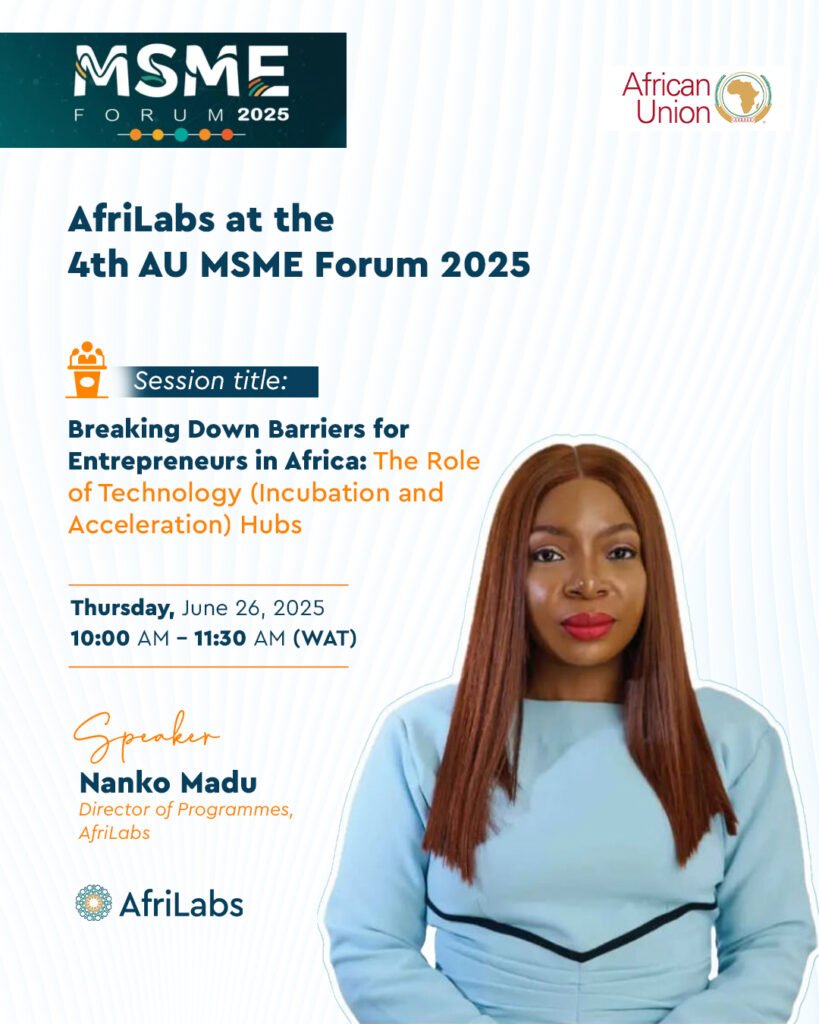
Breaking Down Barriers for Entrepreneurs in Africa: AfriLabs at the 4th AU MSME Forum 2025 The African innovation ecosystem will take center stage at the 4th Annual African Union Micro, Small, and Medium-Sized Enterprises (MSME) Forum, under the theme “Building Resilient MSMEs through Digital Innovation, Market Access & Affordable Financing for Africa.” The event, hosted by the African Union Commission (AUC) in collaboration with the Government of Nigeria, will bring together over 300 stakeholders to shape inclusive pathways for entrepreneurship across the continent. Among the high-impact sessions during this week-long forum, AfriLabs is set to participate in a critical conversation on “Breaking Down Barriers for Entrepreneurs in Africa: The Role of Technology (Incubation and Acceleration) Hubs.” The session is scheduled for Thursday, June 26th, from 10:00 AM to 11:30 AM, WAT. Representing AfriLabs will be Nanko Madu, Director of Programmes, who brings a wealth of experience on how innovation hubs are supporting Africa’s emerging and growing entrepreneurial talent. The session will convene leading accelerators, incubators, and innovation enablers to unpack the vital role that tech hubs play in nurturing early-stage startups, especially in environments marked by limited funding, fragmented infrastructure, and constrained market access. The conversation aims to spotlight how hubs are anchoring Africa’s digital transformation by: Providing startups with access to training, mentorship, and funding opportunities Driving inclusive digital adoption among MSMEs Bridging local entrepreneurs with continental and global markets. Helping startups navigate regulatory hurdles and compliance challenges Promoting inclusive innovation by targeting women- and youth-led businesses. AfriLabs, with its network of over 500 hubs in 53 African countries, plays a critical role in enabling this transformation. Through its programs and advocacy, AfriLabs fosters an environment where African startups can scale and thrive. Set against the broader backdrop of the African Union’s strategy to empower SMEs, this session complements the forum’s focus on digital tools, intra-African trade, and structural financing. Delegates will engage with actionable strategies to: Mobilize public-private partnerships to fund entrepreneurial infrastructure Align hub efforts with the African Continental Free Trade Area (AfCFTA) to promote intra-African commerce Embed environmental, social, and governance (ESG) principles in entrepreneurial development Encourage joint policy-making efforts between governments and ecosystem enablers Highlight replicable success stories and data-backed outcomes of incubation and acceleration programs. As African economies look to MSMEs as the backbone of job creation and innovation, the forum’s agenda aligns closely with AfriLabs’ mission: to support the development of a knowledge-driven, innovation-led economy across the continent. AfriLabs invites ecosystem actors, investors, policymakers, and partners to join this vital session and explore how collaborative models can dismantle persistent barriers for African entrepreneurs. Event Details Date: Thursday, June 26, 2025 Time: 10:00 AM – 11:30 AM (WAT) Venue: Abuja Continental Hotel, Abuja, Nigeria Speaker: Nanko Madu, Director of Programmes, AfriLabs To learn more about our participation, please contact Shaka Mutuku at shaka@afrilabs.com
From Momentum to Movement: Why You Should Apply for Intel Community Reach Program 2.0
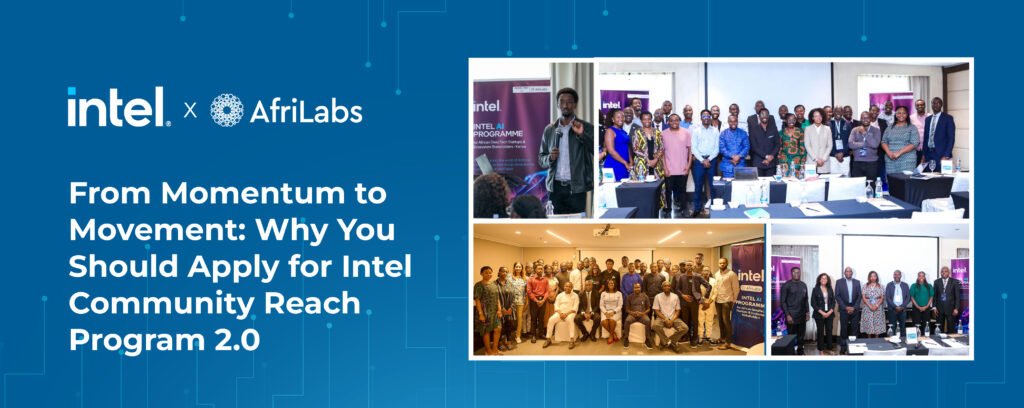
From Momentum to Movement: Why You Should Apply for Intel Community Reach Program 2.0 After the overwhelming success of its inaugural edition, the Intel Community Reach Program is back—and it’s bigger, bolder, and more inclusive than ever. In 2024, the program united 436 changemakers from 35 African countries, championing groundbreaking tech solutions that tackled local challenges head-on. From AI-powered healthcare logistics in Ghana to Kinyarwanda-speaking voice assistants improving financial literacy in rural Rwanda, the program proved one thing without a doubt: Africa’s tech innovators are ready. Now, with Intel Community Reach Program 2.0, we’re not just continuing the momentum—we’re building a movement. Why Now Is the Right Time to Apply You’ve seen what’s possible. Now imagine what you could do with access to world-class support, funding opportunities, and technical mentorship from a global tech leader like Intel. Whether your focus is: Using AI to improve maternal health, Empowering farmers through connected agriculture, Expanding digital access in remote communities, Or building local talent pipelines through edtech… This is your chance to turn your vision into impact. What You Get When You Join the Program Intel Community Reach Program 2.0 offers more than recognition—it’s an end-to-end support system designed to help you succeed and scale. Here’s what’s in it for you: Technical and Business Mentorship Connect with experts from Intel and our ecosystem of partners to refine your solution and growth strategy. Global Exposure Be part of a growing pan-African cohort of changemakers and unlock visibility across international platforms. Access to AI & Digital Tools Leverage cutting-edge Intel technologies to power your solution and increase your impact. Capacity Support Tap into strategic partnerships, resources, and potential funding pathways through Intel and collaborators like Prosper Africa and Modus Africa VC. Who Should Apply? If you are: A startup or enterprise building tech-enabled solutions A nonprofit using digital tools to increase community impact A university research group innovating in AI, IoT, or broadband access Or a social innovator committed to transforming lives at scale… This program is for you. We especially encourage women-led initiatives and applicants from underserved regions to apply. Last year, 30 women-led projects gained access to tailored support and participated in the Academy for Women Entrepreneurs (AWE). This year, we’re building on that foundation with even deeper inclusion and targeted support. Be Part of the Change In the face of complex social challenges, Africa’s greatest asset is its creativity. The Intel Community Reach Program 2.0 isn’t just an opportunity—it’s a launchpad for change. By participating, you’re not only elevating your solution; you’re contributing to a broader movement of African-led innovation, for Africans, by Africans. The call is out. The platform is set. All that’s left is your idea. Apply Before June 13, 2025 Time is limited. Submit your application today and take the next step toward transforming your community with technology. APPLY NOW About the Program The Intel Community Reach Program is a collaborative initiative between Intel and AfriLabs to empower African innovators with the tools, knowledge, and support needed to bridge digital gaps and create inclusive, tech-driven progress. About Intel Intel (Nasdaq: INTC) is a global leader in computing innovation, committed to enabling transformative solutions through AI, broadband access, and digital inclusion. About AfriLabs AfriLabs is a network organization of 500+ innovation hubs across 53 African countries, driving innovation, entrepreneurship, and sustainable development across the continent.
RevUp Women Initiative Call for Applications: Mentors and Mentees Apply Now

RevUp Women Initiative Call for Applications: Mentors and Mentees Apply Now The RevUp Women Mentoring Programme, an initiative powered by AfriLabs, funded by The Visa Foundation, is a unique opportunity for passionate women entrepreneurs and professionals to embark on an empowering and transformative mentoring journey. It is a critical component of the RevUp Women Initiative The RevUp Women Program was founded with a clear mission: to accelerate women-led businesses into profitable and sustainable ventures through enterprise development training, access to finance, peer-to-peer learning, and mentorship. Through our structured approach, we’re addressing the persistent gender gap in technology leadership and innovation. This groundbreaking programme connects experienced leaders with rising stars across Africa’s innovation and technology ecosystem. We are now calling for both mentors and mentees to apply and be part of this impactful movement to drive inclusive growth and leadership for women in tech and entrepreneurship. For Mentors: Empower the Next Generation of Women Leaders We are seeking seasoned female entrepreneurs and executives with at least five years of experience in Africa’s innovation and technology ecosystem. If you have successfully navigated the challenges of entrepreneurship and have a proven track record in relevant industries across Africa, we invite you to become a mentor in this transformative programme. Eligibility for Mentors: Must be a woman with at least Seven years of experience in relevant sectors. Proven success as a female entrepreneur or executive within Africa’s innovation and technology landscape. Strong communication, interpersonal, and coaching skills. A passion for empowering women entrepreneurs and supporting their growth. Deep understanding of the unique challenges faced by women in business. Prior experience in mentoring or assessing African innovators/entrepreneurs is highly desirable. Proficiency in English, French, Portuguese, or Arabic. Why Become a Mentor? As a mentor, you will: Build meaningful relationships with inspiring women entrepreneurs. Expand your network by connecting with over 500 innovation hubs across 53 African countries. Enhance your leadership and mentoring abilities through exclusive workshops, seminars, and training. Play a key role in breaking down barriers for women entrepreneurs, fostering a diverse and thriving entrepreneurial ecosystem. Gain recognition for your contributions through AfriLabs newsletters, social media, and events. Benefit from research reports, case studies, and best practices to refine your mentoring approach. For Mentees: Accelerate Your Entrepreneurial Journey The RevUp Women Mentoring Programme is also open to women entrepreneurs with early-stage businesses in Africa who are eager to overcome barriers, accelerate growth, and enhance their leadership capabilities. If you have a clear vision for your business and are ready to tackle your challenges with structured support, this programme is for you. Eligibility for Mentees: Must be a woman entrepreneur with an existing early-stage business in Africa. Must demonstrate commitment to business growth and sustainability. Have clearly defined business challenges that would benefit from mentorship. Availability for regular communication and meetings with your mentor. Proficiency in English, French, Portuguese, or Arabic. What You Gain as a Mentee: By participating as a mentee, you will: Accelerate your business growth with tailored guidance from an experienced mentor. Gain access to AfriLabs’ extensive network, which includes over 450 innovation hubs across 53 African countries. Develop essential leadership and entrepreneurial skills that will help you overcome the unique challenges faced by women entrepreneurs in Africa. Connect with potential investors and business partners who can help elevate your business. Access a wealth of resources, including research reports, case studies, and best practices for business success. Application Process The call for applications for both mentors and mentees opens on 15th April 2025 and closes on 30th April 2025. Don’t miss out on this opportunity to join a programme that will help shape the future of women entrepreneurship across Africa. How to Apply: Visit the application form For Mentees click HERE For Mentors click HERE Select whether you are applying as a mentor or a mentee. Fill out the application form with your details and provide necessary documents (CV, business details for mentees, mentorship experience for mentors, etc.).
AfriLabs at the 79th Session of the United Nations General Assembly

AfriLabs at the 79th Session of the United Nations General Assembly AfriLabs at the 79th session of the United Nations General Assembly As the world convenes in New York for the 2024 United Nations General Assembly (UNGA), AfriLabs will participate in critical discussions on global digital cooperation, sustainable development, and the future of African technology. From September 20th to 27th, our Executive Director, Anna Ekeledo, will represent AfriLabs at high-level events and panel discussions, ensuring that Africa’s voice in innovation, sustainability, and digital transformation is well heard. UNGA is an annual gathering of global leaders, policymakers, and influencers committed to addressing the most pressing challenges of our time. AfriLabs’ presence underscores our dedication to advancing Africa’s innovation ecosystem and fostering meaningful technological progress. Through these dialogues, we seek to strengthen partnerships, advocate for increased investment in African startups, and highlight the vital role of digital solutions in achieving the UN’s Sustainable Development Goals (SDGs). AfriLabs will participate in the Assembly program as follows; Friday, 20th September 2024 Summit of the Future Breakfast: Youth and Digital Compass 8:00 AM – 10:15 AM | Microsoft Office – One Dag Hammarskjöld Plaza, NYC AfriLabs will be present at this exclusive breakfast, where the focus is on empowering youth through digital solutions. As key stakeholders, AfriLabs will contribute to discussions on the future of youth leadership in Africa’s digital economy. Organized by the International Trade Centre (ITC). Broadband Commission for Sustainable Development Annual Fall Meeting 1:00 PM – 4:30 PM | Convene 237 Park Avenue, NYC As a special guest and speaker, Anna Ekeledo will share insights into broadband’s role in scaling Africa’s tech ecosystems. The discussion will center on the transformative impact of internet accessibility and digital inclusion across the continent. Organized by The ITU/UNESCO Broadband Commission for Sustainable Development SDG Digital Welcome Reception and GameChangers Awards Ceremony 6:15 PM – 8:15 PM | United Nations Headquarters, NYC AfriLabs will be a distinguished guest at this reception, honouring global leaders who are driving progress on the Sustainable Development Goals (SDGs) through digital innovation. This gathering is a celebration of those using technology to tackle climate change, inequality, and poverty, aligning with AfriLabs’ mission, organized by SDG Digital. Saturday, 21st September 2024 SDG Digital: A Digital Future for All 10:30 AM – 5:00 PM | ECOSOC Chamber, United Nations, NYC AfriLabs will join global tech leaders to explore the future of digital transformation for sustainable development. Africa’s role in shaping this future will be a key point of discussion, especially in advancing the SDGs through tech-driven solutions. Session organized by SDG Digital. Digital Cooperation Organisation High-Level Reception 7:00 PM – 10:00 PM | The Pierre, Taj Hotel, NYC AfriLabs will attend this high-level reception to foster partnerships with global digital leaders. This event will be critical in advancing multilateral digital cooperation, with Anna Ekeledo advocating for stronger collaborations that benefit Africa’s startups and tech entrepreneurs. Organized by the Digital Cooperation Organization (DCO). Fostering Multi-stakeholder Global Digital Cooperation for Prosperity 4:00 PM – 5:17 PM | UN Headquarters, NYC Anna will take the stage as a panelist for the discussion on new multi-stakeholder models for digital cooperation. The session will explore innovative ways for public and private sectors to collaborate, with a special focus on Africa’s growing digital ecosystem. This event is organized by the Digital Cooperation Organization (DCO), where AfriLabs holds observer status membership. DCO is dedicated to fostering global digital cooperation to drive inclusive growth in the digital economy. Sunday, 22nd September 2024 The Future of U.S. Global Development 5:00 PM – 7:00 PM | 315 W 35th St, NYC AfriLabs will join key discussions as a guest, exploring the role of the U.S. in global development. The conversation will touch on investment in African startups and the importance of cross-continental partnerships. The session is organized by Unlock Aid and One Campaign. Monday, 23rd September 2024 Open Source AI & Improving Global Language Access 5:30 PM – 7:00 PM | Ivy Terrace, NYC As a guest, AfriLabs will explore how AI can revolutionize language access globally, particularly in African countries with diverse linguistic backgrounds. The conversation will be crucial in shaping AI policies that ensure inclusivity and diversity. This event is organized by Meta, with Anna attending as a guest. It’s also worth noting our recent partnership with Meta, which focuses on supporting AI innovators across Africa. Through this collaboration, we aim to provide resources, mentorship, and platforms for African AI startups, fostering innovation that addresses local challenges while contributing to global advancements in AI technology. Tuesday, 24th September 2024 African Business Stories Roundtable: Funding the Gap – Strategies for African Female Entrepreneurs 9:30 AM – 11:30 AM | Akin Gump Strauss Hauer & Feld LLP, NYC Anna will play a pivotal role as a speaker at the roundtable, highlighting collaboration and partnership strategies to accelerate growth for female entrepreneurs across Africa. Bridging the funding gap and empowering women in tech are central themes. The session is organized by African Business Stories. The Next 3 Billion Summit: Unlocking the Biggest Social and Economic Opportunity of Our Time 9:00 AM – 3:00 PM | The Pierre, A Taj Hotel, New York, 2 E 61st St, New York, NY 10065, USA AfriLabs will participate as a guest at this summit, which is organized by Semafor. The event will explore how the next 3 billion internet users, primarily from emerging markets, represent a significant social and economic opportunity. AfriLabs’ involvement will provide an opportunity to engage with global thought leaders on how Africa’s tech ecosystem can play a pivotal role in unlocking this opportunity by driving innovation, digital inclusion, and economic growth across the continent. Destination 2030 – Nigeria Everywhere @UNGA 6:00 PM | Bathhouse Studios 538 E 11th St New York, NY 10009 Hosted by Destination 2030 – Nigeria Everywhere, an Initiative by Federal Ministry of Arts Culture & Creative Economy, Anna will participate as a guest at this event, which is a Cultural Experience designed to celebrate and showcase the rich and diverse creative industries of Nigeria. This event will highlight various aspects of
AfriLabs announces Llama 3.1 Impact SSA Hackathon for AI Innovators, Funded by Meta and the Bill & Melinda Gates Foundation

AfriLabs announces Llama 3.1 Impact SSA Hackathon for AI Innovators, Funded by Meta and the Bill & Melinda Gates Foundation AfriLabs is excited to announce the launch of the Llama 3.1 Impact Hackathon for Sub-Saharan Africa funded by Meta and the Bill & Melinda Gates Foundation (BMGF). The project is aimed at fostering AI innovation that addresses social impact issues across Africa. The program will be implemented in two phases. The first phase of the program, the hackathon, will bring together participants from Sub-Saharan Africa from startup founders to developers, tech enthusiasts, students in technical fields, gender and language studies professionals, and more. These participants will collaborate in cross-disciplinary teams to develop AI-driven solutions that address gender bias and ensure linguistic inclusivity and diversity in digital content, while also focusing on economic development, science & innovation, public services, or education & skills development using Meta’s Llama AI technology. To facilitate in-person participation, travel and logistics costs will be covered for all selected participants to attend the Hackathon in Kigali, Rwanda from October 8th to 10th, 2024. The second phase of the program, the post-hackathon phase, will focus on mentorship, product development, market validation and refinement, and business development for the top-performing teams identified from the Hackathon. These teams will receive feedback and insights from experts from Meta, BMGF, and AfriLabs to help refine and develop their prototypes. This phase will prepare them to submit an application for the global Llama 3.1 Impact Grants program, which offers up to $100,000 in funding to further develop and scale their projects, and well as the possibility of securing up to $500,000 in seed funds through a global call for proposals. Nanko Madu, Director of Programs at AfriLabs stated, “Llama 3.1 Impact African Hackathon” is more than just a competition—it’s a call to action for innovators across Africa to harness the transformative power of AI to drive social change on the continent. This hackathon is an opportunity for participants to not only push the boundaries of AI innovation, but to also ensure that the solutions we build are inclusive, equitable, and impactful for all.” Speaking about the hackathon, Balkissa Idé Siddo, Public Policy Director for Africa, Meta commented: “We’re thrilled to partner with the Bill and Melinda Gates Foundation on the Sub-Saharan Africa Llama Impact Hackathon, which embodies our shared commitment to driving innovation and social impact in Africa. Through this hackathon and the wider Llama 3.1 Impact Grants Program, Meta aims to empower local developers and entrepreneurs to build AI-driven solutions that address critical societal challenges and bring about positive change in our communities.” Applications are open until September 21, 2024. To apply please visit this link and take the first step toward contributing to a future where AI is inclusive, diverse, and free from gender and language biases.
Is AI A Threat To Skilled Education?

Is AI A Threat To Skilled Education? The rise of Artificial Intelligence (AI) has led many to question the future of education, especially the value of skilled labor – it’s economic value proposition. For generations, expertise and the time it took to acquire such skills were the cornerstones of economic stability. The path from education to career progression was carefully crafted, as the flow of market entry and retirement allowed room for new recruits, while experienced professionals paved the way. But with AI now able to perform tasks once considered exclusive to humans, is there still a need for skilled education? Before AI, skills were highly valued because they required years of specialized training and mastery. The structure of industries, from engineering to creative writing, revolved around this. However, the world is rapidly moving toward automation, and AI is beginning to dominate fields that were once believed to be safe from technological disruption. Complex disciplines like engineering, law, medicine, and even creative writing, which required critical thinking and emotional intelligence, are now being tackled by AI systems. What was once thought impossible is now becoming reality. AI systems don’t require breaks, retirement, or downtime, and as automation continues to evolve, tasks that once demanded human expertise will be handled by these independent agents. Even the notion that directing or managing AI would remain a human stronghold is slowly eroding. With self-learning algorithms and the ability to act as independently functioning entities, AI could one day manage itself better than any human could. This fear of a future where labor prices crash due to an overabundance of skill, caused by AI, is one of the driving factors behind proposals for Universal Basic Income (UBI) by individuals like Sam Altman. The concern is that as AI increasingly handles high-skill tasks, humans may find themselves unable to compete in a job market dominated by machines capable of learning and adapting from vast, networked datasets. To visualize this future, imagine a mathematician competing against a calculator in a simple multiplication test. The calculator, which doesn’t need to be perfect but only better than the average human, would win effortlessly. This is the scenario experts fear across numerous industries. It’s worth noting that since 1997, when IBM’s Deep Blue defeated world chess champion Garry Kasparov, no human has beaten AI in chess. The point is, it doesn’t take perfection—just an edge over the average human worker—to disrupt an entire field. Ironically, many African parents in the Baby Boomer generation urged their Millennial children to pursue high-skill degrees, viewing them as guarantees of career security. Yet, in their lifetime, we are witnessing accountants, engineers, and even medical professionals facing greater existential risk than blue-collar trades like plumbing. As AI’s capabilities continue to expand, the debate over the future of education and skilled labor becomes more urgent. What will the future of work look like? What role will human skill play in a world where AI can outperform us in both logical and creative tasks? To explore this topic from the foundations, join our Candid Conversations and engage with experts and futurists on the subject of education in an AI-driven world on X. Click to Register
Navigating the Future of Education in an AI-Driven World

Navigating the Future of Education in an AI-Driven World As we enter a new decade, it’s clear that the future of education is at a crossroads. The rapid advancement of artificial intelligence (AI) is reshaping industries across the globe, and education is no exception. AI’s growing influence in classrooms and beyond raises important questions about the role of human skills, the value of traditional education, and how we can best prepare for the future. The Power of AI in Education AI holds tremendous potential to revolutionize how we learn. With AI-powered systems, education can become more personalized than ever before. Adaptive learning technologies can tailor lessons to individual students’ needs, providing targeted feedback that helps them succeed. AI-driven analytics can highlight areas where students struggle, allowing educators to intervene early and improve outcomes. This technology promises a more efficient and customized learning experience, where each student can progress at their own pace, mastering concepts before moving on. It could help close learning gaps and provide support where it’s most needed. The Concerns We Must Address However, the rise of AI in education is not without its challenges. One major concern is the potential decline in the need for human educators. As machines take on more tasks, from grading to even teaching certain subjects, there’s a fear that the role of teachers could diminish. But education is not just about transmitting information; it’s about mentorship, emotional support, and inspiring students—roles that AI cannot replicate. There’s also the question of balance. As we emphasize STEM (Science, Technology, Engineering, and Mathematics) to keep up with AI-driven changes, we risk undervaluing the arts and humanities. These fields foster creativity, critical thinking, and ethical reasoning—skills that are crucial in an AI-augmented world. Additionally, AI systems can sometimes perpetuate biases present in the data they are trained on, potentially reinforcing inequalities in education. Why This Conversation Matters These issues underline the importance of ongoing dialogue about the future of education in an AI-driven world. This is where initiatives like the Candid Conversations come in. This initiative brings together experts, educators, policymakers, industry leaders, and students to explore the intersection of AI and education. On the 11th September, through a Twitter space, we’ll tackle these pressing questions. We’ll hear from those on the front lines of education, as well as those shaping the future with AI technology, to ensure that education remains relevant, inclusive, and empowering. A Call to Action This is not just a conversation about technology; it’s a conversation about people. It’s about making sure our education systems evolve to meet the needs of a world where AI and human skills must work together. It’s about preparing students not just to survive, but to thrive in a future where their unique human abilities complement technological advancements. So, we invite you to be a part of this crucial conversation. Tune in to our live session on X (formerly Twitter), engage in our online discussions, and share your thoughts. Together, we can shape an educational landscape that harnesses the power of AI while preserving the values that make education a key driver of social mobility, economic growth, and human development. Join the conversation, and let’s shape the future of education together. Standalone quotes from the blog. Quote 1: Education is not just about transmitting information; it’s about mentorship, emotional support, and inspiring students—roles that AI cannot replicate. Quote 2: The integration of AI into education is not just about technology; it’s about people and ensuring education remains empowering and inclusive. Quote 2: The future of education is at a crossroads as AI reshapes how we learn and teach.
Small and Medium-Sized enterprises (SMEs) as Key drivers of Climate Adaptation and Innovation in Africa
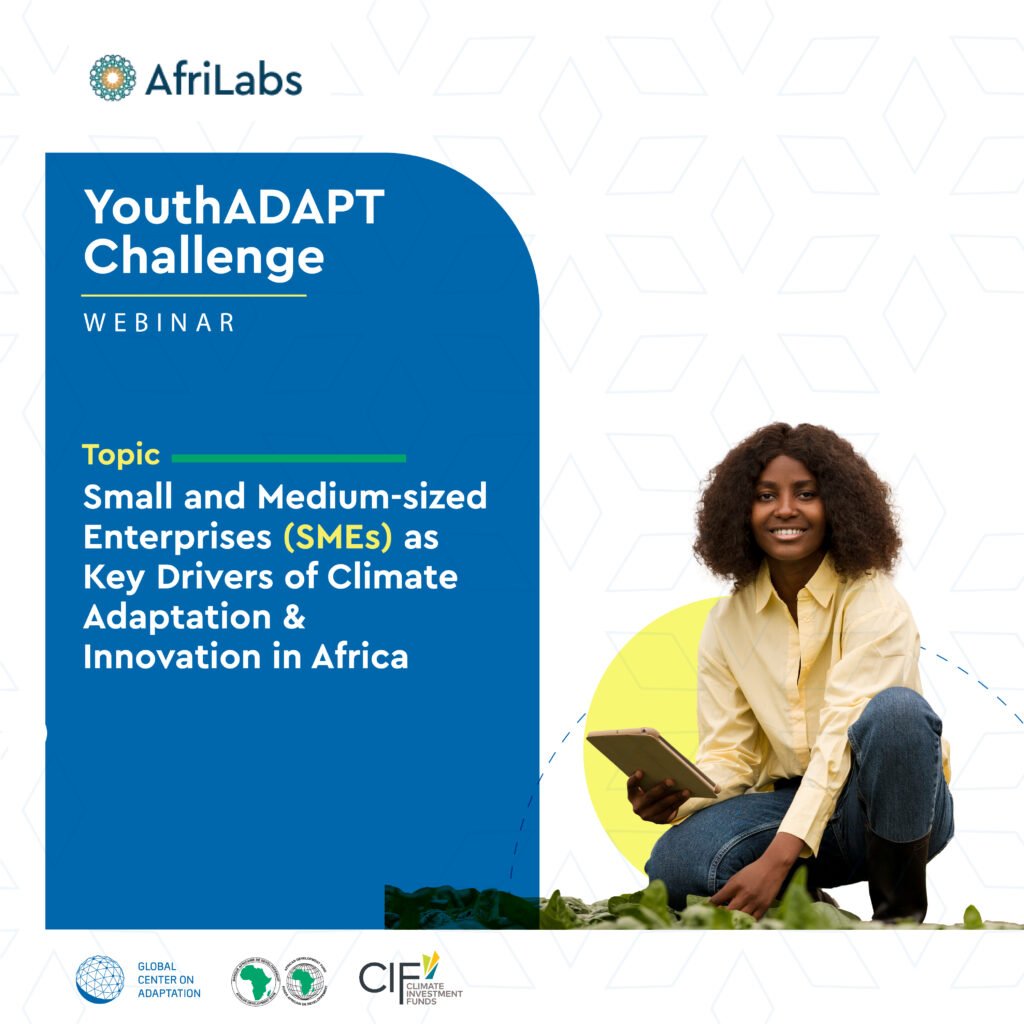
Small and Medium-Sized enterprises (SMEs) as Key drivers of Climate Adaptation and Innovation in Africa On June 27th, 2024, YouthADAPT hosted a transformative webinar, spotlighting Small and Medium-sized Enterprises (SMEs) as pivotal drivers of climate adaptation and innovation across Africa. This event, supported by esteemed partners including the Global Center on Adaptation (GCA), Climate Investment Funds (CIF), Africa Development Bank (AfDB), and African Technology Innovation Hubs Initiative (AfriLabs) underscored the critical role of SMEs in shaping sustainable development amidst escalating climate challenges. Coinciding with World SME Day, the webinar emphasized the significant contributions of SMEs to economic growth and how they contribute to building climate resilient communities and celebrating their essential role in adapting to climate impacts. The session commenced with a welcome address from the moderator – Venan Sondo, Chief Stewardship Officer at Chaint Afrique, emphasizing the urgent need to bolster support for SMEs in combating climate change. Serah Nderitu, Senior Program Officer at the Global Center of Adaptation (GCA) highlighted that SMEs constitute 90% of businesses on the continent, generating 80% of employment and contributing 60% to Africa’s GDP. The resilience and agility of SMEs uniquely position them to swiftly address climate impacts in underserved communities. Emmanuel Kouadio, Climate Resilience Programs Lead at Climate Investment Funds (CIF), highlighted the important role SMEs play in influencing change and accelerating Africa’s progress towards reaching the goal of net zero emissions and encouraging sustainability. He also reiterated the deep connections SMEs have with their local communities and the impact they have on accelerating growth and development. Through initiatives like the YouthADAPT Challenge Program – a key component of the Youth Empowerment for Entrepreneurship and Job Creation in Climate Adaptation and Resilience Pillar under the African Acceleration Adaptation Programme (AAAP). So far, YouthADAPT has supported over 41 entrepreneurs across 21 African countries with grants to the tune of $5.4 million since 2021. The keynote speaker, Dr. Youssef Brouziyne of the International Water Management Institute outlined key strategies for supporting SMEs, including enhancing access to finance and fostering innovation through incubation programs. Challenges like knowledge gaps and complex institutional setups were acknowledged, suggesting a need for tailored support frameworks to nurture sustainable entrepreneurial growth. Insightful panel discussions were facilitated by experts in the African innovation and entrepreneurship space. Panelists included Chidera Ejiofor, Kris Senanu and Irene Boghdadi; as well as previous winners of the YouthADAPT challenge – Rita Idehai founder of Ecobarter, Nigeria and Kaveto Tjatjara founder of Flushh, Namibia. The panelists highlighted the pivotal role of digital transformation in enhancing SME efficiency and market competitiveness. Several discussants emphasized the importance of digital solutions “from fintech applications to operational software” to optimize internal processes and expand market reach. The consensus pointed towards capacity-building programs and governmental support for Research & Development (R&D) centers as critical enablers for digital adoption by SMEs. Furthermore, alternative finance models such as African venture funds and crowd-sourcing were proposed, while the importance of capacity-building and government-supported R&D centers were equally highlighted. These initiatives aim to diversify funding streams and enhance SME resilience against financial uncertainties. Another key point was the need for larger, established corporations to support SMEs by including them in their supply chains. Toyin Omasan Oyeniyi, Programmes Manager at AfriLabs, concluded the webinar by highlighting the importance of sustained collaboration and innovation in supporting SMEs. She highlighted the role of AfriLabs in nurturing a conducive ecosystem for SMEs to thrive, reinforcing the organization’s commitment to empowering youth-led initiatives for a more sustainable Africa. The Youth Adaption Solutions Challenge webinar on “Small and Medium-Sized enterprises (SMEs) as Key drivers of Climate Adaptation and Innovation” in Africa not only shed light on the pivotal role of SMEs in climate adaptation and some of the challenges hindering growth such as limited access to finance and policy barriers, but also galvanized stakeholders towards actionable solutions. Investment in adaptation SMEs was emphasized as crucial due to their direct impact on vulnerable communities and rapid market growth potential. With steadfast support from the Global Center on Adaptation (GCA), African Development Bank (AfDB), Climate Investment Funds (CIF) and AfriLabs, SMEs are poised to lead Africa’s transformation towards a greener, more resilient future. As challenges persist, the collective resolve to empower SMEs through financial support, digital innovation, and strategic partnerships remains steadfast – a testament to the continent’s entrepreneurial spirit and commitment to sustainability.
Uniting Innovation: The Future of Africa’s Tech Landscape
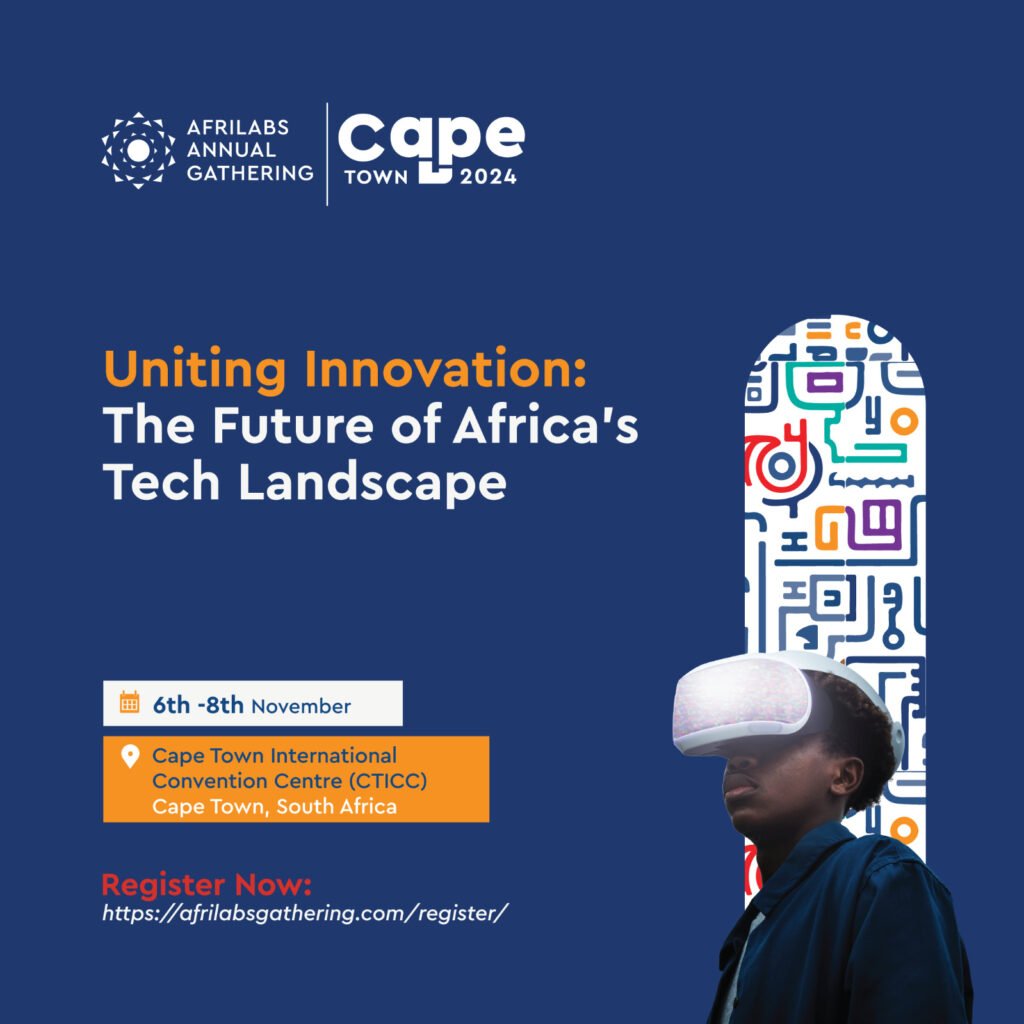
Uniting Innovation: The Future of Africa’s Tech Landscape As Africa’s tech ecosystem continues to evolve, the need for unity and collaboration has never been more pressing. The AfriLabs Annual Gathering 2024, which will take place from November 5th to 8th, 2024, under the theme “Uniting Innovation,” promises to bring together innovators, policymakers, and industry experts to shape the future of Africa’s tech landscape. According to a joint report by Google and the International Finance Corporation titled “e-Conomy Africa 2020”, the internet economy in Africa is projected to reach $180 billion by 2025, accounting for 5.2% of the continent’s GDP. This growth is driven by increased internet access, urbanization trends, and a vibrant startup ecosystem (IFC). At this year’s AfriLabs Annual Gathering (AAG), AI emerges as a pivotal theme. AI has the potential to dramatically enhance these projections. McKinsey & Company estimates that AI could boost Africa’s GDP by up to $1.2 trillion by 2030. Already, AI applications in healthcare, finance, and other sectors are demonstrating significant impacts, from improving diagnostic accuracy to enhancing financial inclusion. Discussions at AAG 2024 will focus on strategies to harness AI’s transformative power, aiming to accelerate economic growth and foster sustainable development across the continent (McKinsey & Company). Another critical track is sustainability, a theme that resonates deeply in Africa, where the impact of climate change is already being felt. Innovators and policymakers will come together to discuss how technology can be used to drive sustainable development and build resilient economies. For instance, renewable energy sources like solar and wind power have the potential to reduce carbon emissions by up to 70% in Africa, according to the United Nations. The future of work is another area of focus, as Africa grapples with the challenges of unemployment and skills development. The conversation at AfriLabs will center around how innovation and technology can create new opportunities for employment and entrepreneurship. The African Development Bank estimates that digital technology could create up to 230 million jobs in Africa by 2030, with a significant portion of the workforce engaged in the gig economy (Global Institute). Healthtech, fintech, and edtech are also on the agenda, as Africa’s innovators showcase solutions that are revolutionizing healthcare, finance, and education. For example, mobile health (mHealth) solutions have improved healthcare outcomes in Africa, with a study by the World Health Organization showing that mHealth interventions have increased vaccination rates by up to 20% in some countries. Beyond technology, the AfriLabs Annual Gathering emphasizes unity and collaboration. It seeks to unite diverse perspectives to drive innovation and sustainable development in Africa’s evolving tech ecosystem. Join us at the AfriLabs Annual Gathering 2024 and be part of the conversation that will shape the future of Africa’s tech landscape.