
AfriLabs Webinar Recap: Women as Leaders in Climate Adaptation: Empowering Change

AfriLabs Webinar Recap: Women as Leaders in Climate Adaptation: Empowering Change In an engaging and impactful session held 5th December 2024, AfriLabs hosted a webinar highlighting the critical role of women as leaders in climate adaptation. The webinar served as a convergence point for a diverse panel of experts, women leaders, and innovators across diverse sectors to discuss solutions, challenges, and opportunities for empowering women to lead in the climate adaptation space. Opening Remarks: Highlighting the Impact of Women-Led Climate Action Representatives from the Global Center on Adaptation (GCA), African Development Bank (AfDB), and Climate Investment Funds (CIF)—the funders of the Youth Adaptation Solutions Challenge— provided insightful opening remarks. Gloria Gowal-Abiri from GCA emphasized their commitment to empowering African youth through initiatives like the YouthADAPT Challenge, highlighting “GCAs commitment to empowering the next generation of African youth through the youth pillar of the African Adaptation Acceleration Program” which enhances capacity through investor- readiness programs while fostering sustainable solutions. She highlighted how the program breaks barriers for women in climate adaptation by ensuring a 50% gender mainstreaming in the program, and over 60% of the enterprises supported are women. Moving forward the program will link enterprises to private sector financing to further scale their businesses. Joash Moitui of AfDB called for inclusive approaches to climate action, particularly by empowering women. Joash stated “the fight against climate change requires inclusive and innovative approaches that harness the potential of all, particularly women who are most impacted by climate change”. He noted that 3rd cohort of the YouthADAPT- supported entrepreneurs are all women, leading innovations in AI, IoT, and blockchain to tackle adaptation challenges. Emmanuel Kouadio from CIF stressed the importance of gender-responsive strategies, noting that women are both disproportionately affected by, and integral to climate resilience. He advocated for increased investment in gender-sensitive programs, citing CIF’s Gender Action Plan and its support of over 55 million people globally—51% of whom are women. He further expressed, “at the CIF, we firmly believe empowering women in climate adaptation is not just a moral imperative, it is also a social strategy for achieving resilience system development as women are the most hit by the effects of climate change.” Keynote: Women’s Role in Driving Climate Adaptation Olola Vieyra, Country Representative for Côte d’Ivoire at the Global Green Growth Institute, highlighted the unique vulnerabilities and strengths of women in addressing climate change. She called for gender-responsive policies, capacity building, and innovative financing tools, such as green bonds, to scale women’s participation in climate action. She showcased programs in Senegal, Burkina Faso, and Uganda that empowered women through green jobs, solar energy, and leadership initiatives. Panel Discussions: Women as Drivers of Change The panel featured experts from various fields: Dr. Esther Onyango stressed education as the foundation for equitable climate solutions saying, “If you educate a woman, you educate a nation.” She emphasized building women’s agency to advocate for equitable and just climate solutions. She also called for strategies to integrate gender dimensions into national climate action plans, including policies like Nationally Determined Contributions (NDCs) and called for integrating gender dimensions into national climate policies. Mandy Jayakody highlighted innovative financing models like South Africa’s Green Outcomes Fund that lower barriers for women entrepreneurs. Shahira Yousef addressed the underrepresentation of women in STEM and advocated for mentorship and financial access to scale their innovations. Nonhlanhla Cynthia Mhlongo showcased her biodegradable hand glove sanitizer, a practical, eco-friendly solution to plastic pollution and an example of women’s ingenuity. Celebrating Women Innovators The webinar also highlighted groundbreaking innovations led by women from the YouthADAPT cohorts. Gislaine Matiedje Nkenmayi (Cameroon) reduces post-harvest losses by valorizing indigenous vegetables, supporting smallholder women farmers. Dr. Rebecca Andeshi (Nigeria) pioneers circular agro-solutions and IoT research for sustainable livestock waste management. Lucy Wangari (Kenya) utilizes IoT and AI to optimize onion farming, improving productivity and empowering farmers with market opportunities. These women exemplify how women-led enterprises address environmental challenges, create jobs, and promote economic growth. Addressing Barriers and Unlocking Potential Panellists identified systemic challenges hindering women’s leadership in climate adaptation, including limited access to resources, underrepresentation in policy-making, and societal biases. Overcoming these barriers requires collaborative efforts to equip women with education, mentorship, and access to resources. AfriLabs’ Commitment AfriLabs continues to champion women in climate action through initiatives like: RevUp Women Initiative: Supporting over 500 women-led businesses with training, mentorship, and peer learning. Greenovations Program: Amplifying women-led solutions in renewable energy, waste management, and climate-smart agriculture. As AfriLabs Programmes Manager Oluwatoyin Oyeniyi summarized, “Women are at the core of shaping a sustainable future. Their resilience and creativity are a testament to the untapped potential that can drive transformative climate solutions across Africa.” Looking Ahead This webinar celebrated the invaluable contributions of women to climate adaptation while calling for continued efforts to break barriers and integrate gender perspectives into climate strategies. By empowering women, entire communities can thrive in the face of climate challenges. AfriLabs remains committed to fostering women-led innovation ecosystems and amplifying the voices of women leaders in climate action.
Small and Medium-Sized enterprises (SMEs) as Key drivers of Climate Adaptation and Innovation in Africa
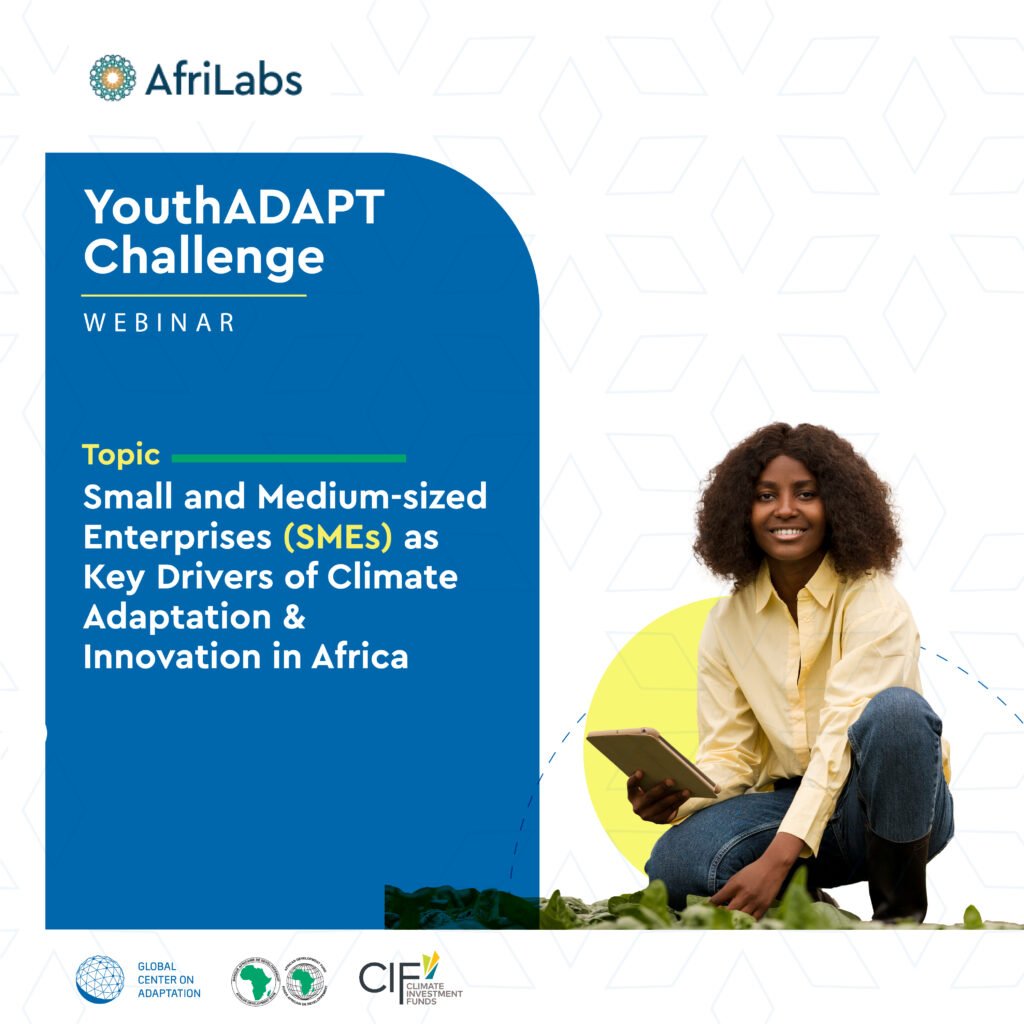
Small and Medium-Sized enterprises (SMEs) as Key drivers of Climate Adaptation and Innovation in Africa On June 27th, 2024, YouthADAPT hosted a transformative webinar, spotlighting Small and Medium-sized Enterprises (SMEs) as pivotal drivers of climate adaptation and innovation across Africa. This event, supported by esteemed partners including the Global Center on Adaptation (GCA), Climate Investment Funds (CIF), Africa Development Bank (AfDB), and African Technology Innovation Hubs Initiative (AfriLabs) underscored the critical role of SMEs in shaping sustainable development amidst escalating climate challenges. Coinciding with World SME Day, the webinar emphasized the significant contributions of SMEs to economic growth and how they contribute to building climate resilient communities and celebrating their essential role in adapting to climate impacts. The session commenced with a welcome address from the moderator – Venan Sondo, Chief Stewardship Officer at Chaint Afrique, emphasizing the urgent need to bolster support for SMEs in combating climate change. Serah Nderitu, Senior Program Officer at the Global Center of Adaptation (GCA) highlighted that SMEs constitute 90% of businesses on the continent, generating 80% of employment and contributing 60% to Africa’s GDP. The resilience and agility of SMEs uniquely position them to swiftly address climate impacts in underserved communities. Emmanuel Kouadio, Climate Resilience Programs Lead at Climate Investment Funds (CIF), highlighted the important role SMEs play in influencing change and accelerating Africa’s progress towards reaching the goal of net zero emissions and encouraging sustainability. He also reiterated the deep connections SMEs have with their local communities and the impact they have on accelerating growth and development. Through initiatives like the YouthADAPT Challenge Program – a key component of the Youth Empowerment for Entrepreneurship and Job Creation in Climate Adaptation and Resilience Pillar under the African Acceleration Adaptation Programme (AAAP). So far, YouthADAPT has supported over 41 entrepreneurs across 21 African countries with grants to the tune of $5.4 million since 2021. The keynote speaker, Dr. Youssef Brouziyne of the International Water Management Institute outlined key strategies for supporting SMEs, including enhancing access to finance and fostering innovation through incubation programs. Challenges like knowledge gaps and complex institutional setups were acknowledged, suggesting a need for tailored support frameworks to nurture sustainable entrepreneurial growth. Insightful panel discussions were facilitated by experts in the African innovation and entrepreneurship space. Panelists included Chidera Ejiofor, Kris Senanu and Irene Boghdadi; as well as previous winners of the YouthADAPT challenge – Rita Idehai founder of Ecobarter, Nigeria and Kaveto Tjatjara founder of Flushh, Namibia. The panelists highlighted the pivotal role of digital transformation in enhancing SME efficiency and market competitiveness. Several discussants emphasized the importance of digital solutions “from fintech applications to operational software” to optimize internal processes and expand market reach. The consensus pointed towards capacity-building programs and governmental support for Research & Development (R&D) centers as critical enablers for digital adoption by SMEs. Furthermore, alternative finance models such as African venture funds and crowd-sourcing were proposed, while the importance of capacity-building and government-supported R&D centers were equally highlighted. These initiatives aim to diversify funding streams and enhance SME resilience against financial uncertainties. Another key point was the need for larger, established corporations to support SMEs by including them in their supply chains. Toyin Omasan Oyeniyi, Programmes Manager at AfriLabs, concluded the webinar by highlighting the importance of sustained collaboration and innovation in supporting SMEs. She highlighted the role of AfriLabs in nurturing a conducive ecosystem for SMEs to thrive, reinforcing the organization’s commitment to empowering youth-led initiatives for a more sustainable Africa. The Youth Adaption Solutions Challenge webinar on “Small and Medium-Sized enterprises (SMEs) as Key drivers of Climate Adaptation and Innovation” in Africa not only shed light on the pivotal role of SMEs in climate adaptation and some of the challenges hindering growth such as limited access to finance and policy barriers, but also galvanized stakeholders towards actionable solutions. Investment in adaptation SMEs was emphasized as crucial due to their direct impact on vulnerable communities and rapid market growth potential. With steadfast support from the Global Center on Adaptation (GCA), African Development Bank (AfDB), Climate Investment Funds (CIF) and AfriLabs, SMEs are poised to lead Africa’s transformation towards a greener, more resilient future. As challenges persist, the collective resolve to empower SMEs through financial support, digital innovation, and strategic partnerships remains steadfast – a testament to the continent’s entrepreneurial spirit and commitment to sustainability.