AU Digital and Innovation Fellowship Capacity and Team Building Event in Addis Ababa
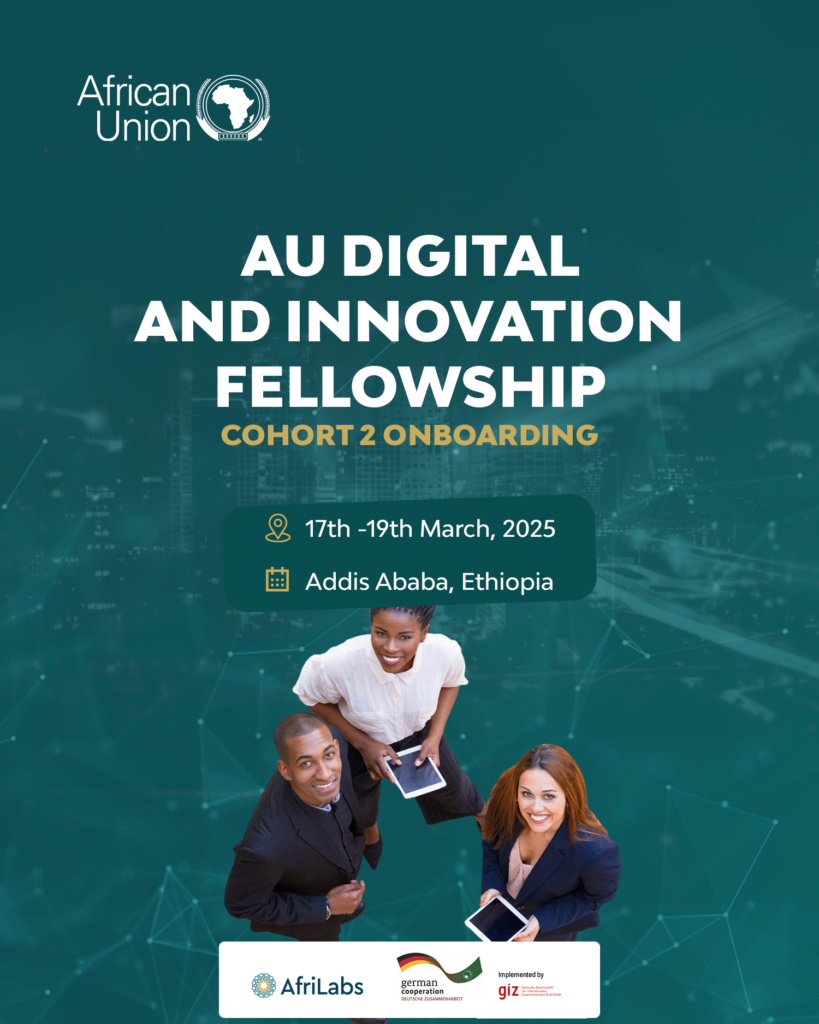
AU Digital and Innovation Fellowship Capacity and Team Building Event in Addis Ababa Addis Ababa, Ethiopia – March 17-19, 2025 – The African Union (AU), in collaboration with GIZ and AfriLabs, is proud to announce the Fellows Capacity Building and Team Building Event. This gathering will bring together Africa’s brightest digital innovators, empowering them with the skills, networks, and insights needed to drive the continent’s digital transformation. The AU Digital and Innovation Fellowship is a prestigious initiative designed to harness the potential of Africa’s leading innovators by embedding them within the AU’s organs, directorates, and departments. In alignment with the AU’s vision for continental growth and integration through digital transformation, the fellowship plays a pivotal role in advancing Agenda 2063. This event will immerse fellows in the AU’s structure, offering a comprehensive overview of the fellowship program along with clear expectations and deliverables. It is also a unique opportunity for fellows to engage directly with senior AU officials and key stakeholders, fostering an environment ripe for collaboration and innovative policy dialogue. Over the course of the three-day event, participants will build a deep understanding of the AU’s strategic priorities while developing the capacity to implement transformative digital solutions. The event will kick off with team-building activities and a guided city tour on the first day, setting the stage for the collaborative spirit that will define the gathering. The second day will feature introductory sessions on the AU, an in-depth overview of the fellowship program, and discussions centered on the vision of Agenda 2063 and the Digital Transformation Strategy for Africa. Sessions will delve into the critical role of digital innovation in driving economic growth, the development of robust innovation policies, and the enhancement of public service delivery through technology. The program will also include practical workshops on monitoring and evaluating digital initiatives, culminating in a networking dinner that offers additional opportunities for meaningful engagement. On the third day, the focus will shift to outlining the next steps for the fellowship, featuring reflective Q&A sessions, capacity building training, and concluding with a closing ceremony. Speaking on the significance of the upcoming event, Nanko Madu, Director of Programmes at AfriLabs, emphasized: “Africa’s digital transformation depends on fostering innovation-driven solutions that address key socio-economic challenges. Through this fellowship, we are empowering a new generation of African innovators with the tools, networks, and institutional knowledge needed to effect tangible change. This event marks a crucial step in building a robust digital ecosystem that will drive sustainable development and strengthen Africa’s global competitiveness.” The Fellows Capacity Building and Team Building Event is a strategic effort to not only build the capacity of Africa’s digital innovators but also to cultivate a dynamic network of professionals committed to accelerating the continent’s digital journey. By fostering dialogue on digital transformation and innovation policy, the initiative aims to reinforce Africa’s digital infrastructure and drive progress across both public and private sectors. About AfriLabs AfriLabs is the largest network of technology and innovation hubs across Africa, driving the growth of Africa’s innovation ecosystem. With a mission to support the development of the African technology and innovation ecosystem, AfriLabs connects hubs and other stakeholders to facilitate collaboration, resource sharing, and knowledge transfer. About African Union The African Union (AU) is a continental body consisting of 55 member states representing the continent of Africa. Its vision is to achieve an integrated, prosperous, and peaceful Africa, driven by its own citizens and representing a dynamic force in the global arena. For further details, please contact Chibudu Nyiro at chibudu@afrilabs.com or Funmilayo Caulcrick at funmilayo@afrilabs.com. For general information about the AU Digital and Innovation Fellowship Programme, please visit www.auinnovationfellowship.com. For media inquiries, please contact pr@afrilabs.com & comms@afrilabs.com
African Union Digital and Innovation Fellowship: What We Have Learnt So Far
by Taiye Salami, Project Officer, and Stephanie Titcombe, Project Associate at AfriLabs In the third quarter of 2021, the German Federal Ministry for Economic Cooperation and Development (BMZ)’s vision to support the mandate of The African Union (AU) via its commission (the African Union Commission), through the GIZ DataCipation project, materialized into what is now the AU Digital and Innovation Fellowship Program. The aim of the program is to identify and deploy highly competent technology innovators from the African continent to units and organs within the African Union headquarters as resident fellows. The mandate of the fellows is to understand the system within their assigned units, identify data and process management challenges and lead the development and the deployment of sustainable and innovative technology solutions. AfriLabs as the implementing partner designed and managed the project’s implementation which includes but is not limited to the identification and deployment of the fellows to their respective units in Addis Ababa, Banjul, and Accra in Ethiopia, The Gambia and Ghana respectively. After a few months of doing this, we have a couple of insights to report on our experience so far. Here are some of the important lessons we have learnt so far: Get stakeholder buy-in fast The level of success the program has recorded so far can be traced to the support the fellows have received from the African Union Commission and GIZ DataCipation Teams to ensure that they hit the ground running immediately after resumption. The experience has confirmed what we already factored into our design; that the buy-in of all relevant stakeholders from top-to-bottom is critical to the performance and the success of the fellows in an institution like the African Union Commission. The abundance of talents on the continent One of the key objectives of this program is to source for and identify the best talents that the continent has to offer. It took us several months to do that but based on the profile and quality of applications received, we can state for a fact that there is an abundance of young talents in Africa. Be iterative but ensure to accommodate for existing systems and processes We discovered very quickly that we had to find a balance between what we are used to (which is to understand the challenges, context and the affected, co-design a solution with all relevant stakeholders, then commence implementation and monitor from start to finish) and what it takes to effectively function and deliver at the African Union Commission. There are reasons why the existing systems and processes are in place and to better innovate in such an environment, a thorough understanding of the status quo especially during implementation is required. This lesson prompted the training and encouragement of the fellows to not just be agile but to also respect and leverage existing systems and processes. Leverage an inclusive approach Africa is a continent of diverse countries, cultures and languages but we have one common interest; the growth, development, independence, and sustainability of the continent. To ensure the inclusion of eligible young data and technology enthusiasts across Africa, we designed and implemented a non–barrier application and review process that factored in gender, geographical location, and language were critical parts of the review and selection process. The review and selection process also leveraged three of the most widespread African Union languages: Arabic, English and French, which resulted in over 700 applications from across the continent, and a merit-based selection process in assessing the applicants. This approach ensured that none of the applicants from across the region suffered discrimination based on gender, religion, or political affiliations. The entire process produced an equal spread of male and female fellows for the program. We expect to learn more in the coming weeks on how to plan and execute an impactful pan-African programme, so stay with us as we keep you updated on the activities of the pilot edition of the fellowship.