Is AI A Threat To Skilled Education?

Is AI A Threat To Skilled Education? The rise of Artificial Intelligence (AI) has led many to question the future of education, especially the value of skilled labor – it’s economic value proposition. For generations, expertise and the time it took to acquire such skills were the cornerstones of economic stability. The path from education to career progression was carefully crafted, as the flow of market entry and retirement allowed room for new recruits, while experienced professionals paved the way. But with AI now able to perform tasks once considered exclusive to humans, is there still a need for skilled education? Before AI, skills were highly valued because they required years of specialized training and mastery. The structure of industries, from engineering to creative writing, revolved around this. However, the world is rapidly moving toward automation, and AI is beginning to dominate fields that were once believed to be safe from technological disruption. Complex disciplines like engineering, law, medicine, and even creative writing, which required critical thinking and emotional intelligence, are now being tackled by AI systems. What was once thought impossible is now becoming reality. AI systems don’t require breaks, retirement, or downtime, and as automation continues to evolve, tasks that once demanded human expertise will be handled by these independent agents. Even the notion that directing or managing AI would remain a human stronghold is slowly eroding. With self-learning algorithms and the ability to act as independently functioning entities, AI could one day manage itself better than any human could. This fear of a future where labor prices crash due to an overabundance of skill, caused by AI, is one of the driving factors behind proposals for Universal Basic Income (UBI) by individuals like Sam Altman. The concern is that as AI increasingly handles high-skill tasks, humans may find themselves unable to compete in a job market dominated by machines capable of learning and adapting from vast, networked datasets. To visualize this future, imagine a mathematician competing against a calculator in a simple multiplication test. The calculator, which doesn’t need to be perfect but only better than the average human, would win effortlessly. This is the scenario experts fear across numerous industries. It’s worth noting that since 1997, when IBM’s Deep Blue defeated world chess champion Garry Kasparov, no human has beaten AI in chess. The point is, it doesn’t take perfection—just an edge over the average human worker—to disrupt an entire field. Ironically, many African parents in the Baby Boomer generation urged their Millennial children to pursue high-skill degrees, viewing them as guarantees of career security. Yet, in their lifetime, we are witnessing accountants, engineers, and even medical professionals facing greater existential risk than blue-collar trades like plumbing. As AI’s capabilities continue to expand, the debate over the future of education and skilled labor becomes more urgent. What will the future of work look like? What role will human skill play in a world where AI can outperform us in both logical and creative tasks? To explore this topic from the foundations, join our Candid Conversations and engage with experts and futurists on the subject of education in an AI-driven world on X. Click to Register
Uniting Innovation: The Future of Africa’s Tech Landscape
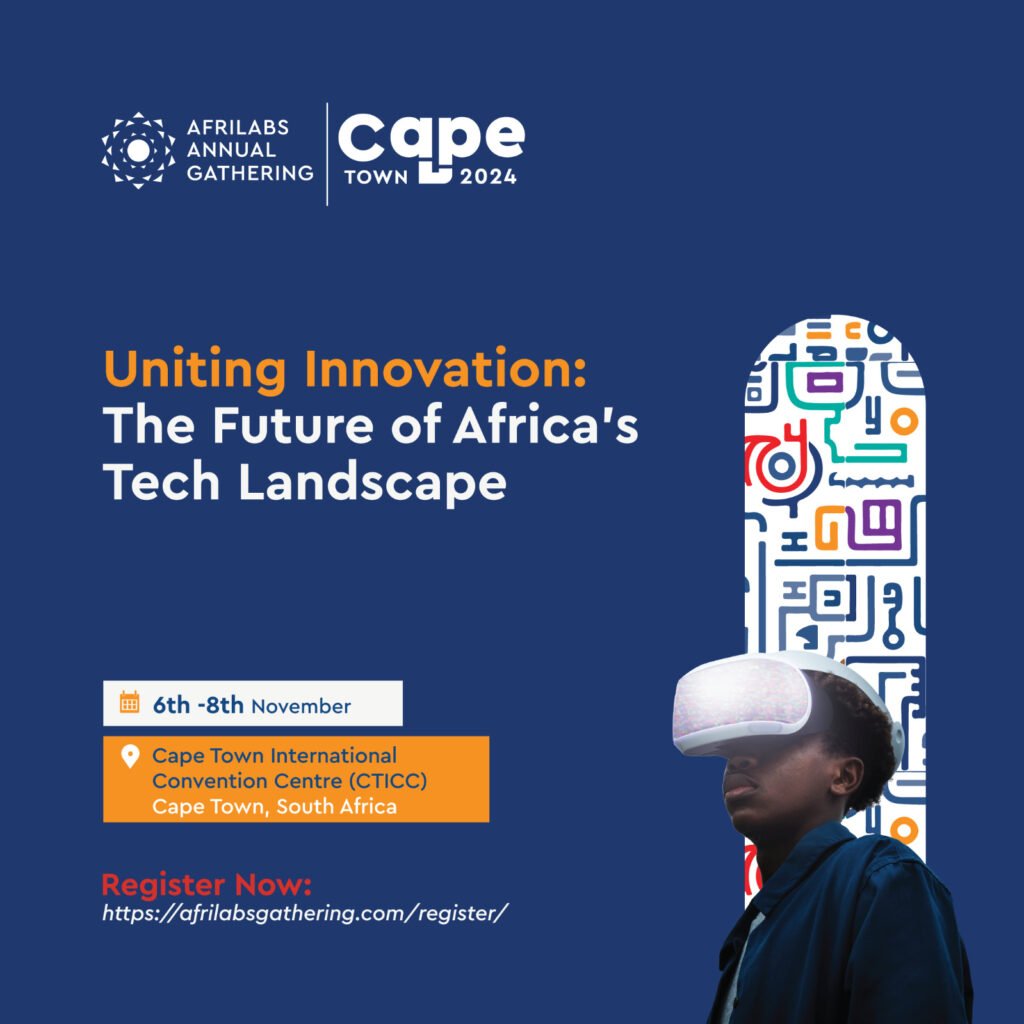
Uniting Innovation: The Future of Africa’s Tech Landscape As Africa’s tech ecosystem continues to evolve, the need for unity and collaboration has never been more pressing. The AfriLabs Annual Gathering 2024, which will take place from November 5th to 8th, 2024, under the theme “Uniting Innovation,” promises to bring together innovators, policymakers, and industry experts to shape the future of Africa’s tech landscape. According to a joint report by Google and the International Finance Corporation titled “e-Conomy Africa 2020”, the internet economy in Africa is projected to reach $180 billion by 2025, accounting for 5.2% of the continent’s GDP. This growth is driven by increased internet access, urbanization trends, and a vibrant startup ecosystem (IFC). At this year’s AfriLabs Annual Gathering (AAG), AI emerges as a pivotal theme. AI has the potential to dramatically enhance these projections. McKinsey & Company estimates that AI could boost Africa’s GDP by up to $1.2 trillion by 2030. Already, AI applications in healthcare, finance, and other sectors are demonstrating significant impacts, from improving diagnostic accuracy to enhancing financial inclusion. Discussions at AAG 2024 will focus on strategies to harness AI’s transformative power, aiming to accelerate economic growth and foster sustainable development across the continent (McKinsey & Company). Another critical track is sustainability, a theme that resonates deeply in Africa, where the impact of climate change is already being felt. Innovators and policymakers will come together to discuss how technology can be used to drive sustainable development and build resilient economies. For instance, renewable energy sources like solar and wind power have the potential to reduce carbon emissions by up to 70% in Africa, according to the United Nations. The future of work is another area of focus, as Africa grapples with the challenges of unemployment and skills development. The conversation at AfriLabs will center around how innovation and technology can create new opportunities for employment and entrepreneurship. The African Development Bank estimates that digital technology could create up to 230 million jobs in Africa by 2030, with a significant portion of the workforce engaged in the gig economy (Global Institute). Healthtech, fintech, and edtech are also on the agenda, as Africa’s innovators showcase solutions that are revolutionizing healthcare, finance, and education. For example, mobile health (mHealth) solutions have improved healthcare outcomes in Africa, with a study by the World Health Organization showing that mHealth interventions have increased vaccination rates by up to 20% in some countries. Beyond technology, the AfriLabs Annual Gathering emphasizes unity and collaboration. It seeks to unite diverse perspectives to drive innovation and sustainable development in Africa’s evolving tech ecosystem. Join us at the AfriLabs Annual Gathering 2024 and be part of the conversation that will shape the future of Africa’s tech landscape.