
Navigating the Future of Education in an AI-Driven World

Navigating the Future of Education in an AI-Driven World As we enter a new decade, it’s clear that the future of education is at a crossroads. The rapid advancement of artificial intelligence (AI) is reshaping industries across the globe, and education is no exception. AI’s growing influence in classrooms and beyond raises important questions about the role of human skills, the value of traditional education, and how we can best prepare for the future. The Power of AI in Education AI holds tremendous potential to revolutionize how we learn. With AI-powered systems, education can become more personalized than ever before. Adaptive learning technologies can tailor lessons to individual students’ needs, providing targeted feedback that helps them succeed. AI-driven analytics can highlight areas where students struggle, allowing educators to intervene early and improve outcomes. This technology promises a more efficient and customized learning experience, where each student can progress at their own pace, mastering concepts before moving on. It could help close learning gaps and provide support where it’s most needed. The Concerns We Must Address However, the rise of AI in education is not without its challenges. One major concern is the potential decline in the need for human educators. As machines take on more tasks, from grading to even teaching certain subjects, there’s a fear that the role of teachers could diminish. But education is not just about transmitting information; it’s about mentorship, emotional support, and inspiring students—roles that AI cannot replicate. There’s also the question of balance. As we emphasize STEM (Science, Technology, Engineering, and Mathematics) to keep up with AI-driven changes, we risk undervaluing the arts and humanities. These fields foster creativity, critical thinking, and ethical reasoning—skills that are crucial in an AI-augmented world. Additionally, AI systems can sometimes perpetuate biases present in the data they are trained on, potentially reinforcing inequalities in education. Why This Conversation Matters These issues underline the importance of ongoing dialogue about the future of education in an AI-driven world. This is where initiatives like the Candid Conversations come in. This initiative brings together experts, educators, policymakers, industry leaders, and students to explore the intersection of AI and education. On the 11th September, through a Twitter space, we’ll tackle these pressing questions. We’ll hear from those on the front lines of education, as well as those shaping the future with AI technology, to ensure that education remains relevant, inclusive, and empowering. A Call to Action This is not just a conversation about technology; it’s a conversation about people. It’s about making sure our education systems evolve to meet the needs of a world where AI and human skills must work together. It’s about preparing students not just to survive, but to thrive in a future where their unique human abilities complement technological advancements. So, we invite you to be a part of this crucial conversation. Tune in to our live session on X (formerly Twitter), engage in our online discussions, and share your thoughts. Together, we can shape an educational landscape that harnesses the power of AI while preserving the values that make education a key driver of social mobility, economic growth, and human development. Join the conversation, and let’s shape the future of education together. Standalone quotes from the blog. Quote 1: Education is not just about transmitting information; it’s about mentorship, emotional support, and inspiring students—roles that AI cannot replicate. Quote 2: The integration of AI into education is not just about technology; it’s about people and ensuring education remains empowering and inclusive. Quote 2: The future of education is at a crossroads as AI reshapes how we learn and teach.
The Imperative of AI Infrastructure Investment for Africa’s Digital Future
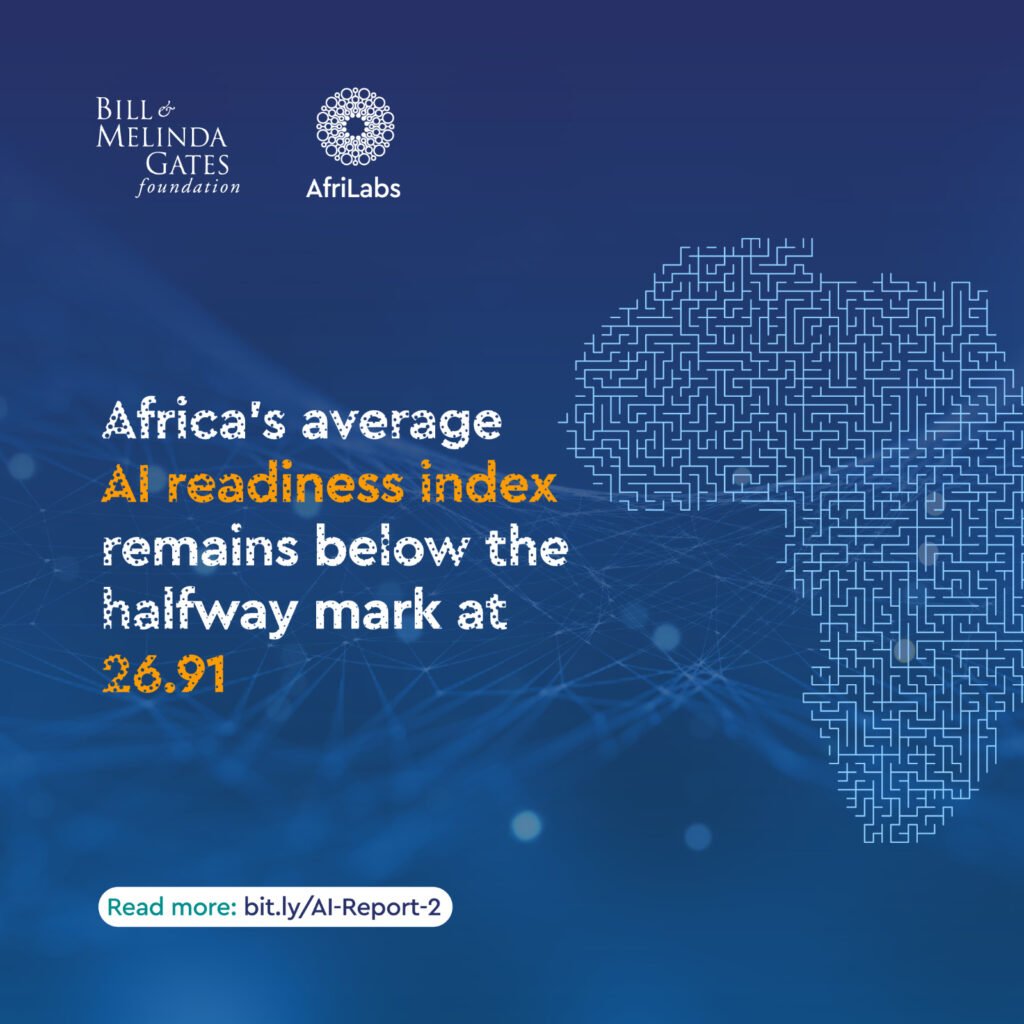
The Imperative of AI Infrastructure Investment for Africa’s Digital Future As we approach a new era powered by artificial intelligence (AI), the need for strong internet infrastructure in Africa has never been more important. The AI Startups Mapping in Africa report by AfriLabs, funded by the Gates Foundation provides a sobering but positive assessment of the continent’s AI readiness, with an average index of 26.91. This figure, which is far below the halfway point, emphasizes the vital need for further efforts and expenditures to boost AI activity across the continent. Bridging the AI Readiness Gap Despite Egypt, Kenya, South Africa, and Tunisia leading with index values above 40, none have achieved 50. This suggests that even the most advanced African countries are still in the early phases of AI development. Without substantial improvements in digital infrastructure, Africa risks falling further behind in the global AI race. The surge in AI applications necessitates an increase in high-performance computing (HPC) capabilities, such as GPUs and TPUs. These components are essential for developing and deploying complex AI models that rely on massive datasets and intricate computations. Over the past decade, global investments in digital infrastructure have soared, driven by factors like smartphone penetration and the rise of cloud computing. However, Africa must ramp up these investments to meet the evolving demands of AI. The Role of Digital Infrastructure Effective AI infrastructure is multifaceted, encompassing hardware and software elements that provide a broad range of capabilities. From data storage and cloud computing to robust communication networks and secure power connections, each component is crucial for unlocking AI’s full potential. For Africa, building this infrastructure is not just about technology; it’s about creating a foundation for innovation and socioeconomic development. Several initiatives are already underway, African countries are adopting digital strategies aimed at fostering an environment conducive to digitalization. Tech giants such as Amazon, Google, and Microsoft are investing in African data centers, rapidly expanding the continent’s hosting capacity. For instance, the establishment of the Tanzania National Internet Data Center (NIDC) exemplifies how government and private sector collaboration can enhance AI capabilities. By providing scalable storage and AI services, the NIDC is helping Tanzanian entities to leverage AI without the need to develop services from scratch. Specialization in AI Subfields African AI startups are showing remarkable focus in various AI subfields, which is crucial for addressing the continent’s unique challenges. The report highlights that 30% of AI startups in Africa specialize in Machine Learning, followed by Deep Learning (17%), Natural Language Processing (15%), Computer Vision (12%), Generative AI (10%), Reinforcement Learning (9%), and Robotics (7%). This specialization is pivotal for driving innovation in sectors like healthcare, finance, and agriculture, where AI can significantly improve outcomes. However, the growth in AI subfields also brings to light the urgent need for better infrastructure. As AI algorithms become more complex, the demand for computational power increases. Without the necessary digital backbone, these startups may struggle to scale their solutions and achieve their full potential. The Path Forward Africa’s digital infrastructure development requires a concerted effort to enhance digital infrastructure. This means investing in state-of-the-art data centers, expanding cloud computing capabilities, and ensuring reliable and fast communication networks. For instance, Tanzania’s licensing of public data centers from the private sector reflects a positive trend, but it must be scaled up to meet the high computing demands brought by AI. Governments across Africa must prioritize creating a safe and secure foundation for AI development. This involves not only building the physical infrastructure but also implementing policies that promote innovation, protect data privacy, and ensure cybersecurity. By doing so, Africa can create an ecosystem where AI can thrive, driving socioeconomic development and positioning the continent as a significant player in the global AI landscape. The future of AI in Africa holds immense promise, but realizing this potential hinges on the continent’s ability to build and sustain robust digital infrastructure. The AI Startups Mapping in Africa report serves as a clarion call for action. By addressing the current gaps and investing strategically in AI infrastructure, Africa can unlock unparalleled opportunities for innovation and development, ensuring that it does not just participate in the AI revolution but leads it. In the words of many experts, the time to act is now. The benefits of AI are too significant to be overlooked, and the costs of inaction are too high. Africa’s digital future depends on the steps we take today to build a foundation that can support the technologies of tomorrow. 📖 Read more in our report: bit.ly/AI-Report-2