
AfriLabs Secures $150,000 Unrestricted Donation from Airbnb Community Fund
AfriLabs Secures $150,000 Unrestricted Donation from Airbnb Community Fund AfriLabs, the largest pan-African network of innovation and technology hubs, is pleased to announce its approval for a generous donation of $150,000 from the Airbnb Community Fund. The Airbnb Community Fund is dedicated to supporting organizations that are making a tangible difference in key areas. These areas include environmental sustainability, economic empowerment, mental health, and the prevention of abuse and exploitation, all of which create meaningful impacts in local communities. By extending this donation to AfriLabs, Airbnb reinforces its belief in the transformative potential of innovation hubs to drive social and economic development on the continent. This unrestricted donation provides AfriLabs with the flexibility to channel funds where they are most needed, ensuring the organization’s continued ability to adapt to emerging challenges, foster collaboration, and scale its initiatives to support over 500 innovation hubs and thousands of entrepreneurs across 53 African countries. Anna Ekeledo, the Executive Director of AfriLabs, highlighted the importance of the partnership: “This generous donation from the Airbnb Community Fund is a testament to the power of collaboration and shared vision. With this funding, we can deepen our efforts to support innovation hubs that nurture entrepreneurs, accelerate solutions to pressing challenges, and drive sustainable impact across communities. Together, we are shaping an inclusive and innovative future for Africa.” AfriLabs’ partnership with Airbnb’s Community Fund underscores their shared commitment to being transformative forces for impactful change. Together, they serve as platforms for cultivating innovative solutions that address both local and global challenges. About AfriLabs: AfriLabs is a Pan-African network of over 500 innovation hubs across 53 African countries designed to drive sustainable economic growth across the continent through investment, innovation, technology, and entrepreneurship. About The Airbnb Community Fund: Created in 2020, the Airbnb Community Fund is a commitment to serve our stakeholders and give back in the places our Hosts call home. The Community Fund will distribute $100 million USD by the end of 2030 to strengthen communities around the world. We work closely with stakeholders, including Airbnb Hosts, to identify causes that are important to them and support organizations making a difference in those areas. These include issues like environmental sustainability, economic empowerment, mental health, and ending abuse and exploitation. For media inquiries, please contact pr@afrilabs.com & comms@afrilabs.com.
Intel Corporation Announces Winners of the 2024 Community Reach Program
Intel Corporation Announces Winners of the 2024 Community Reach Program Intel Corporation, through its Community Reach Program(CRP), has announced the selection of seven groundbreaking projects as the winners of its 2024 cohort. These projects represent innovative solutions that use AI and Broadband Connectivity to address real-world challenges in underserved communities across African Union member states. The Intel CRP attracted 436 applications from 35 African countries, encompassing diverse sectors such as education, digital skills readiness, agriculture, and healthcare. Women in technology was a key focus area, with 115 women-led applications received. Out of these, 30 women-led projects were selected by Entrogx to participate in the U.S. Department of State-sponsored Academy for Women Entrepreneurs (AWE). This program, facilitated by Muqbis from Egypt, provided training on business development and e-commerce strategies, empowering female entrepreneurs striving for social impact. The following standout projects were selected from the 436 applications: Tinydavid Limited (Ghana) – SnooCODERED: An AI-powered emergency healthcare logistics platform enhancing emergency response efficiency. Global Light Services Africa (Côte d’Ivoire) – Revolutionizing urban mobility through AI and IoT-powered electric vehicles. EXUUS Ltd (Rwanda) – SAVE & Pindo: Delivering financial literacy training through Voice AI in Kinyarwanda for rural communities. University of Embu (Kenya) – BESHTE: A chatbot raising awareness of HIV/AIDS and gender-based violence among adolescents. Nyansapo Foundation (Kenya) – Empowering teachers with AI tools to enhance foundational literacy and numeracy outcomes. Africa Edu Holdings (Maarifaeducation) – Establishing Learning Centres offering advanced education and skills training for vulnerable populations. Petabyte Esports Company Limited (Nigeria) – Ghetto to Glory: A video gaming initiative for underserved youth promoting positive change and quality of life. The selected projects were integrated into various Intel initiatives, including Intel® Liftoff for Startups and the Intel Skills for Innovation Program. Additionally, connections with stakeholders such as Prosper Africa and Modus Africa VC have positioned these innovators for growth, investment, and impactful community outcomes. “Intel is proud to support these innovative projects that leverage the power of AI and broadband connectivity to address critical challenges in underserved communities across Africa,” said Dr. Bienvenu Agbokponto Soglo, Director of Government Affairs Africa and IGA CTO Liaison at Intel Corporation. “The Community Reach Program is a clear reflection of our commitment to advancing technology that drives social impact. By collaborating with partners like Prosper Africa, AfriLabs, and Modus Africa VC, we are not only providing resources and support to these groundbreaking initiatives but also ensuring they can effectively scale and create lasting change. We are excited to see the positive outcomes these projects will bring to their local communities.” “We welcome the opportunity to partner with our Africa Tech for Trade Alliance member Intel on an important program which recognizes the potential that AI brings to innovation on the continent,” noted British Robinson, Coordinator, Prosper Africa. “Prosper Africa’s mission is to catalyze private sector investment, and with that goal, it was great seeing GLS at a recent Prosper Africa Investment Forum, where we introduced early-stage investors with promising startups on the continent.” Anna Ekeledo, Executive Director at AfriLabs, remarked: “At AfriLabs, we are committed to fostering innovation and empowering communities across Africa. The Intel Community Reach Program exemplifies the power of collaboration in addressing critical challenges through technology. By supporting these projects, we are not only driving sustainable solutions but also equipping innovators with the tools and networks they need to create lasting impact in underserved communities.” About AfriLabs: AfriLabs is a Pan-African network of over 500 innovation hubs across 53 African countries designed to drive sustainable economic growth across the continent through investment, innovation, technology, and entrepreneurship. About Intel Intel (Nasdaq: INTC) is an industry leader, creating world-changing technology that enables global progress and enriches lives. Inspired by Moore’s Law, we continuously work to advance the design and manufacturing of semiconductors to help address our customers’ greatest challenges. By embedding intelligence in the cloud, network, edge and every kind of computing device, we unleash the potential of data to transform business and society for the better. To learn more about Intel’s innovations, go to newsroom.intel.com and intel.com. To learn more about the program and AfriLabs participation contact Ruth on Ruth@afrilabs.com. For general information about AfriLabs visit www.afrilabs.com. For media inquiries, please contact pr@afrilabs.com & comms@afrilabs.com
The Imperative of AI Infrastructure Investment for Africa’s Digital Future
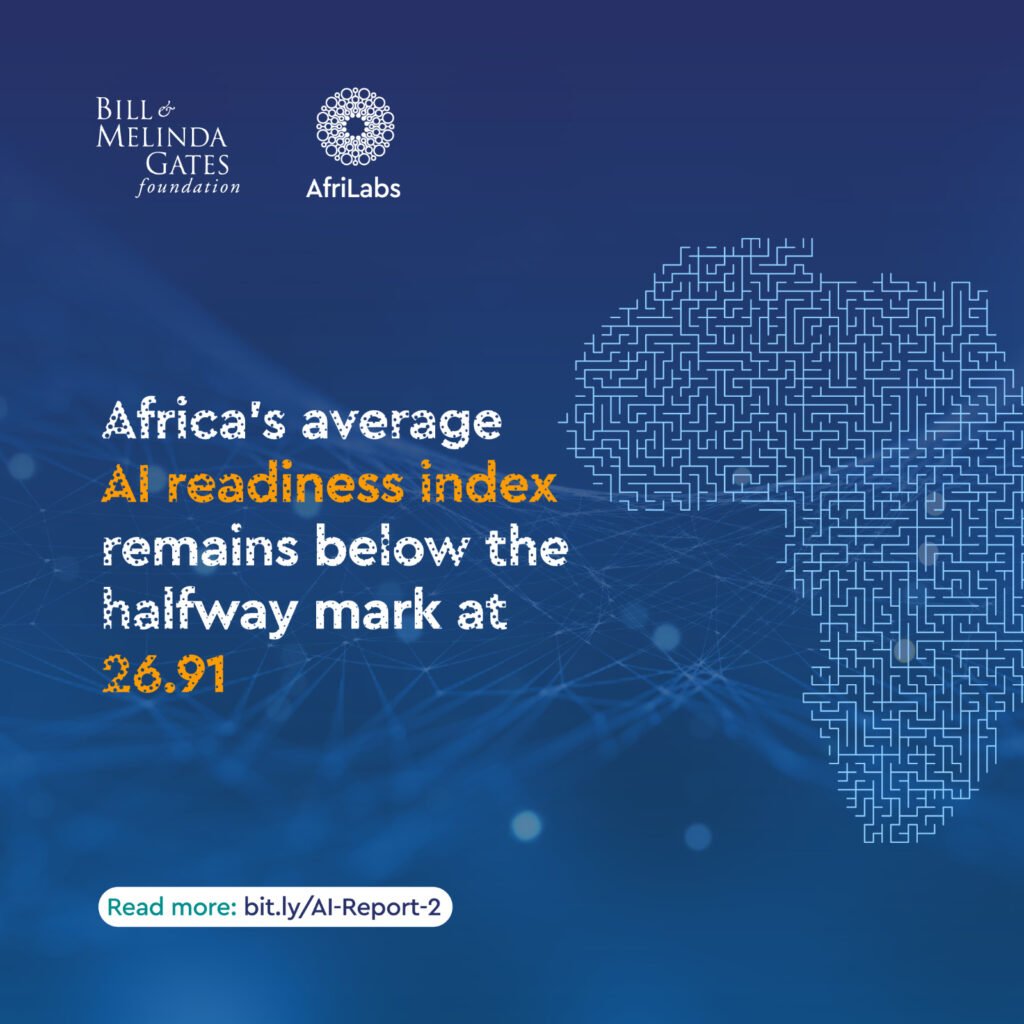
The Imperative of AI Infrastructure Investment for Africa’s Digital Future As we approach a new era powered by artificial intelligence (AI), the need for strong internet infrastructure in Africa has never been more important. The AI Startups Mapping in Africa report by AfriLabs, funded by the Gates Foundation provides a sobering but positive assessment of the continent’s AI readiness, with an average index of 26.91. This figure, which is far below the halfway point, emphasizes the vital need for further efforts and expenditures to boost AI activity across the continent. Bridging the AI Readiness Gap Despite Egypt, Kenya, South Africa, and Tunisia leading with index values above 40, none have achieved 50. This suggests that even the most advanced African countries are still in the early phases of AI development. Without substantial improvements in digital infrastructure, Africa risks falling further behind in the global AI race. The surge in AI applications necessitates an increase in high-performance computing (HPC) capabilities, such as GPUs and TPUs. These components are essential for developing and deploying complex AI models that rely on massive datasets and intricate computations. Over the past decade, global investments in digital infrastructure have soared, driven by factors like smartphone penetration and the rise of cloud computing. However, Africa must ramp up these investments to meet the evolving demands of AI. The Role of Digital Infrastructure Effective AI infrastructure is multifaceted, encompassing hardware and software elements that provide a broad range of capabilities. From data storage and cloud computing to robust communication networks and secure power connections, each component is crucial for unlocking AI’s full potential. For Africa, building this infrastructure is not just about technology; it’s about creating a foundation for innovation and socioeconomic development. Several initiatives are already underway, African countries are adopting digital strategies aimed at fostering an environment conducive to digitalization. Tech giants such as Amazon, Google, and Microsoft are investing in African data centers, rapidly expanding the continent’s hosting capacity. For instance, the establishment of the Tanzania National Internet Data Center (NIDC) exemplifies how government and private sector collaboration can enhance AI capabilities. By providing scalable storage and AI services, the NIDC is helping Tanzanian entities to leverage AI without the need to develop services from scratch. Specialization in AI Subfields African AI startups are showing remarkable focus in various AI subfields, which is crucial for addressing the continent’s unique challenges. The report highlights that 30% of AI startups in Africa specialize in Machine Learning, followed by Deep Learning (17%), Natural Language Processing (15%), Computer Vision (12%), Generative AI (10%), Reinforcement Learning (9%), and Robotics (7%). This specialization is pivotal for driving innovation in sectors like healthcare, finance, and agriculture, where AI can significantly improve outcomes. However, the growth in AI subfields also brings to light the urgent need for better infrastructure. As AI algorithms become more complex, the demand for computational power increases. Without the necessary digital backbone, these startups may struggle to scale their solutions and achieve their full potential. The Path Forward Africa’s digital infrastructure development requires a concerted effort to enhance digital infrastructure. This means investing in state-of-the-art data centers, expanding cloud computing capabilities, and ensuring reliable and fast communication networks. For instance, Tanzania’s licensing of public data centers from the private sector reflects a positive trend, but it must be scaled up to meet the high computing demands brought by AI. Governments across Africa must prioritize creating a safe and secure foundation for AI development. This involves not only building the physical infrastructure but also implementing policies that promote innovation, protect data privacy, and ensure cybersecurity. By doing so, Africa can create an ecosystem where AI can thrive, driving socioeconomic development and positioning the continent as a significant player in the global AI landscape. The future of AI in Africa holds immense promise, but realizing this potential hinges on the continent’s ability to build and sustain robust digital infrastructure. The AI Startups Mapping in Africa report serves as a clarion call for action. By addressing the current gaps and investing strategically in AI infrastructure, Africa can unlock unparalleled opportunities for innovation and development, ensuring that it does not just participate in the AI revolution but leads it. In the words of many experts, the time to act is now. The benefits of AI are too significant to be overlooked, and the costs of inaction are too high. Africa’s digital future depends on the steps we take today to build a foundation that can support the technologies of tomorrow. 📖 Read more in our report: bit.ly/AI-Report-2
Digital Entrepreneurship in Africa: Case Studies of Nigeria and South Sudan
The book Chapter ‘Digital Entrepreneurship in Africa: Case Studies of Nigeria and South Sudan’, based on the Female Entrepreneurs Support Program (FESP), has been published by Palmgrove, in the book titled Digital Service Delivery in Africa. FESP is a collaborative initiative by AfriLabs member hubs and AfriLabs Capacity Building Program (ACBP) award winners: ‘TechQuest STEM Academy’ (Nigeria) and ‘Junub Open Space’ (South Sudan). The book chapter written by the collaborating hubs aligns with one of the strategic pillars of Afrilabs on Research, Evidence and Learning. The book chapter provides an evidence base for entrepreneurs in 2 African countries and provides a pathway for insights into Africa. FESP funded by ACBP and AFD through the Digital Africa Seed fund, directly impacted over 700 female entrepreneurs from Nigeria and South Sudan and engaged over 90 experienced mentors across 13 countries. The program provided capacity building training, business support coaching and mentorship for females that intended to go into business, nascent female-led start-ups and entrepreneurs. It offered support and build capacities in terms of knowledge, skills and networks, to access markets and promote innovations through networking, mentorship and our business clinic. The initiative inspired, educated, empowered and supported female entrepreneurs. Get FREE access to the chapter here. In case you are interested in purchasing the whole book, click here.
AfriLabs launches its e-learning platform to support innovation across Africa
AfriLabs has successfully launched the AfriLabs Academy in a virtual ceremony on Wednesday, 18th May 2022 with major stakeholders and key players in the African Innovation Ecosystem present. Innovation hubs in Africa are key structures in enabling tech and entrepreneurship and are providing scalable solutions to Africa’s core economic and social problems. However, some of these hubs require support to help them function at full capacity. In 2020, AfriLabs under the AfriLabs Capacity Building Programme undertook a Needs Assessment to identify the needs of Enterprise Support Organisations (ESOs) and hubs. “The Needs Assessment report established a need for a comprehensive harmonized ESOs curriculum framework that addresses the skills and business development gaps as well as their financial sustainability. The AfriLabs Academy addresses the skills and knowledge gap” Nanko Madu, Director of Programmes, AfriLabs during the launch of the platform on Wednesday, 18th May 2022. AfriLabs Academy is an initiative of AfriLabs and a part of the AfriLabs Capacity Building Programme (carried out thanks to AFD’s support through the Digital Africa seed fund). It was designed to equip African Hub managers and staff, ESOs and other startup support structures with the training and management skills needed to improve their ability and capacity to support the growing number of startups and MSMEs in their communities. The content on the platform was co-created and certified by Strathmore University. “The AfriLabs Academy is a knowledge repository for innovation hubs and other stakeholders across Africa designed to equip startup ecosystem enablers with the needed skills and training to support African startups. I am proud of the team, partners, and community for making this happen.” Anna Ekeledo, Executive Director, AfriLabs said during the launch. The platform responds to demands from the innovation ecosystem for greater support in building successful tech- startups, and the critical need to build cadres of skilled and effective leaders by adapting best skills, practices and strategies unique to the African context. Moetaz Hemly, Board Chair, AfriLabs during his speech said “The AfriLabs Academy focuses on the realities and challenges of African hubs and startups, and its modules were developed by Africans and are very practical for the African Innovation Ecosystem. This is aligned with AfriLabs’ mission in building the capacity of hubs across the continent.” “The AfriLabs Academy is a reflection of our commitment to making better entrepreneurs for tomorrow. This is exciting because it tells us that together as a community, we can really achieve a lot together. There was a lot of effort put in, to make sure the content was not just educational but also very interactive.” Rebecca Enonchong, former Board Chair of AfriLabs also noted at the launch. Emmanuel Kweyu of Strathmore University said that the AfriLabs Academy courses are divided into GROWTH and SCALE-UP stages designed to continually improve, with quality assessment and certification from Strathmore University. Visit the platform today at www.academy.afrilabs.com to start your learning journey. For more information about the platform and to make enquiries, kindly send an email to funmilayo@afrilabs.com. and cc: adebambo@gmail.com.