
AfriLabs Partners with EYCONET to Expand AfriLabs Connect Deal Room (ACDR) Across Algeria and the Broader North African Region

AfriLabs Partners with EYCONET to Expand AfriLabs Connect Deal Room (ACDR) Across Algeria and the Broader North African Region AfriLabs has signed a Memorandum of Understanding (MoU) with the Algerian Ecosystem Network (EYCONET), an innovation ecosystem network focused on fostering entrepreneurship, startup development, and investment readiness in Algeria and the wider North African region. As Africa’s largest network of innovation and technology hubs, AfriLabs continues to expand platforms that connect startups to investors, partners, and growth opportunities. A key driver of this effort is the AfriLabs Connect Deal Room (ACDR), which facilitates structured deal sourcing, investment readiness, and partnership development. Through this strategic partnership, EYCONET will support the identification, verification, qualification, and validation of high-growth startups from Algeria and, progressively, across North Africa. These startups will be integrated into the ACDR pipeline, improving their visibility and access to pan-African and global investment opportunities. The partnership will also strengthen collaboration with business support organisations (BSOs) and other ecosystem stakeholders supporting startup growth and investment readiness across the region. In addition, the collaboration opens up new pathways for ecosystem engagement at the national level. With the support and facilitation of the Algerian Ministry of Knowledge Economy, Start-ups and Micro-Enterprises, selected startups from the ACDR pipeline may gain access to strategic platforms such as the upcoming African Startup Conference (ASC). This work is further reinforced by EYCONET’s engagement with the Algerian Startup Fund (ASF), reflecting strong institutional support for the internationalisation of Algerian startups and the development of the country’s startup ecosystem. This presents a unique opportunity for high-potential startups, particularly in DeepTech, to engage with investors, corporates, public institutions, and ecosystem leaders, while exploring partnerships, investment opportunities, and market expansion into Algeria and the broader North African region. By combining EYCONET’s ecosystem intelligence, startup sourcing capabilities, and local anchorage with AfriLabs’ continental reach, digital infrastructure, and investor network, both organizations aim to strengthen the quality, credibility, and diversity of startup deal flow across the region. A key focus of the partnership will be the development of a structured pipeline of investment-ready startups, supported by robust validation and due diligence processes that enhance investor confidence. This collaboration not only strengthens the AfriLabs Connect Deal Room as a trusted gateway for investment opportunities but also creates tangible pathways for African startups to access new markets, funding, and strategic partnerships. About AfriLabs AfriLabs is the largest pan-African network of innovation and technology hubs, dedicated to supporting innovation and entrepreneurship across the continent. Through its community, programs, and digital platforms, AfriLabs works to empower entrepreneurs, strengthen innovation ecosystems, and facilitate collaboration among stakeholders driving Africa’s digital transformation. About EYCONET EYCONET is an Algeria-based ecosystem network focused on advancing entrepreneurship, startup development, and innovation across the country. Through its work with founders, ecosystem enablers, and public and private sector stakeholders, EYCONET supports the growth of high-potential startups by strengthening ecosystem coordination, improving investment readiness, and enabling access to strategic opportunities within Algeria and beyond.
AfriLabs and AGX Consultant Studio Partner to Expand the AfriLabs Connect Deal Room Across North Africa and the GCC

AfriLabs Partners with AGX Consultant Studio to Expand AfriLabs Connect Deal Room Across North Africa, GCC AfriLabs has signed a Memorandum of Understanding (MOU) with AGX Consultant Studio, an Egypt-based accelerator and venture studio to support the expansion and adoption of the AfriLabs Connect Deal Room (ACDR) across Egypt, North Africa, and the Gulf Cooperation Council (GCC) region. As Africa’s largest network of innovation and technology hubs, AfriLabs continues to develop platforms and initiatives that enable entrepreneurs, startups, investors, corporates, development partners, and ecosystem enablers to connect, collaborate, and grow. The AfriLabs Connect Deal Room (ACDR) is one such initiative, designed to facilitate meaningful engagement between key ecosystem stakeholders by providing a structured platform for deal sourcing, investment facilitation, partnership development, and ecosystem collaboration. Through this strategic partnership, AGX Consultant Studio will support the introduction and promotion of ACDR within its extensive network of entrepreneurs, investors, venture builders, corporations, innovation support organizations, and ecosystem stakeholders across Egypt, North Africa, and the GCC. The collaboration is expected to create new pathways for startups and innovation actors to access opportunities beyond their immediate markets while strengthening regional connectivity between African and Middle Eastern innovation ecosystems. By combining AGX’s regional reach and venture-building experience with AfriLabs’ pan-African innovation network and digital ecosystem infrastructure, both organizations aim to create greater value for founders, investors, and ecosystem stakeholders operating across multiple markets. A central component of the partnership will be the expansion of the AfriLabs Connect Deal Room as a platform for facilitating investment readiness, deal flow generation, strategic partnerships, and business opportunities. The collaboration will also explore white-label deployment opportunities that enable accelerators, venture studios, innovation hubs, corporate innovation programs, and ecosystem builders to leverage customized versions of the platform to serve their communities and stakeholders. Commenting on the partnership, AfriLabs noted that expanding the reach of ACDR beyond Sub-Saharan Africa aligns with its broader vision of building an interconnected innovation ecosystem where entrepreneurs and innovators can access opportunities regardless of geography. Similarly, the collaboration reflects AGX Consultant Studio’s commitment to supporting innovation-driven growth and creating stronger connections between founders, investors, and ecosystem stakeholders across emerging markets. By leveraging the combined strengths of AfriLabs and AGX Consultant Studio, the AfriLabs Connect Deal Room is positioned to become an even more powerful gateway for investment, collaboration, and ecosystem engagement across Africa, North Africa, and the GCC. About AfriLabs AfriLabs is the largest pan-African network of innovation and technology hubs, dedicated to supporting innovation and entrepreneurship across the continent. Through its community, programs, and digital platforms, AfriLabs works to empower entrepreneurs, strengthen innovation ecosystems, and facilitate collaboration among stakeholders driving Africa’s digital transformation. About AGX Consultant Studio AGX Consultant Studio is an Egypt-based accelerator, venture studio, and early-stage venture capital platform that brings together talent, strategic resources, venture-building expertise, and financing to nurture and develop innovative ventures. Through its ecosystem and regional network, AGX supports founders, startups, and innovation-driven businesses across Egypt, North Africa, and the GCC.
Bridging the Gap: AfriLabs at the DCO General Assembly on Africa’s AI and Digital Future
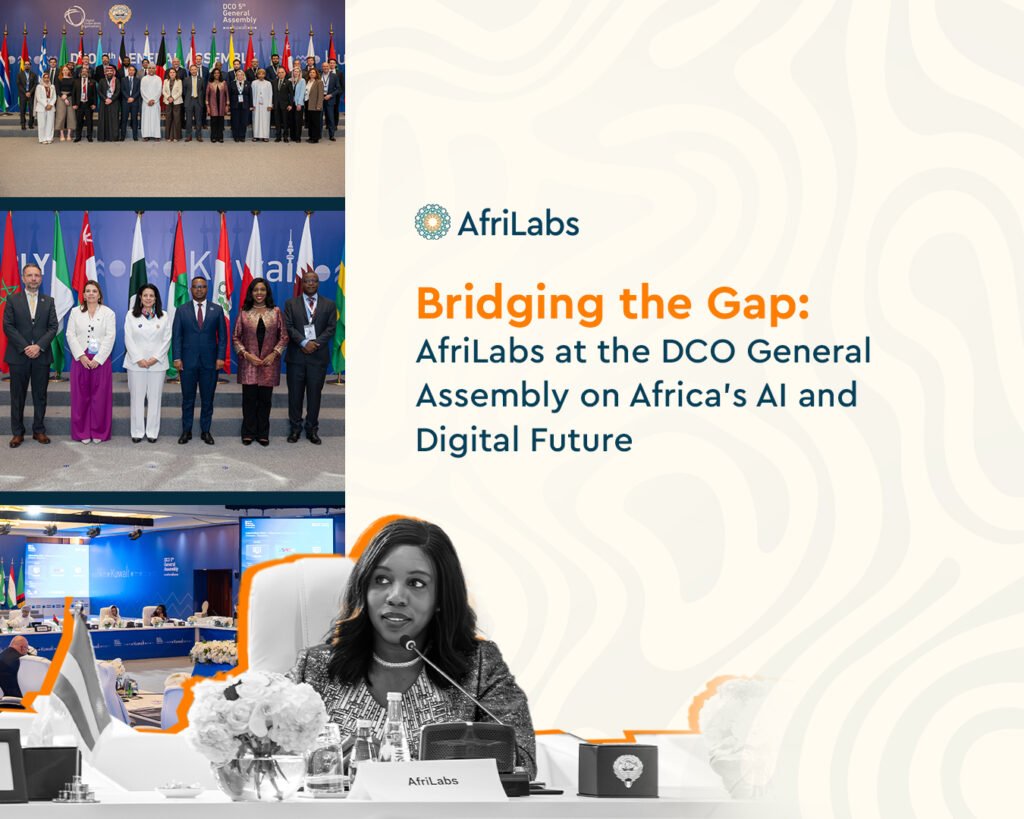
Bridging the Gap: AfriLabs at the DCO General Assembly on Africa’s AI and Digital Future Across Africa and the Arab world, national AI strategies are being written, ministerial portfolios are being restructured, and digital cooperation frameworks are being signed. Inside the continent’s universities, the picture is more complicated. The question is no longer whether AI matters for the continent’s economic future. It is whether the institutions responsible for producing that future’s workforce are equipped to keep pace. At the 5th DCO General Assembly in Kuwait, AfriLabs joined a high-level side-event co-hosted with the Kingdom of Morocco on “Strengthening African-Arab Partnerships for Artificial Intelligence and Data-Driven Development.” Our Executive Director, Anna Ekeledo, participated alongside H.E. Dr. Amal El Fallah Seghrouchni, Morocco’s Minister of Digital Transition and Administrative Reform, and H.E. Yves N. Iradukunda, Rwanda’s Minister of State for ICT and Innovation, in a session moderated by Ms. Emma Morley, UNDP Resident Representative in Kuwait. The discussion was focused on a unified digital transformation agenda across both regions. AfriLabs came to that table with something specific: evidence. What the Data Actually Shows In November 2025, AfriLabs, WISE (Qatar Foundation), Mohammed VI Polytechnic University (UM6P), and The Education Collaborative at Ashesi University published “Harnessing AI for Higher Education in Africa,” a study drawing on responses from 3,875 stakeholders across 47 African HEIs and 199 edtech companies. It is one of the most comprehensive examinations of AI adoption in African higher education produced to date. The findings reveal a sector caught between recognition and readiness. Most institutions understand the direction of travel. Few have built the internal conditions to move confidently in that direction. 62% of all AI usage across surveyed institutions occurs within AI-enabled Learning Management Systems. Adoption beyond that is scattered. Six in ten institutions have no AI policy. The same proportion operate without ethical guidelines for responsible AI use. Respondents widely described their institutions as being at an early or developing stage of AI integration, even where individual staff reported intermediate competency levels. The gap is not in awareness. It is in institutional architecture. This matters because the absence of governance frameworks does not simply slow adoption. It creates the conditions under which adoption, when it does happen, is fragmented, inconsistent, and difficult to build on. A Market That Has Not Caught Up The edtech investment landscape reflects the same structural imbalance. Of 414 active post-secondary edtech startups operating in Africa, only 45 specifically target HEIs. Fewer than 2% are building AI-powered solutions for the tertiary level. 64% of edtech activity remains concentrated at K–12. This is a rational market response to a set of structural disincentives. HEIs involve complex procurement processes, longer sales cycles, limited dedicated budgets in public institutions, and significant content adaptation requirements. Startups building for universities carry more risk for slower returns. Meanwhile, over 83% of AI startup funding in early 2025 flowed to just four countries: Kenya, Nigeria, South Africa, and Egypt, concentrating capital in ecosystems that are already better resourced and leaving HEI-focused innovation largely unfunded across the rest of the continent. 41% of edtech startups in our study cited funding and revenue generation as their primary obstacle. Without capital structures designed for the complexity of higher education markets, AI solutions for African universities will continue to be built by too few players, at too small a scale, to drive systemic change. Infrastructure Is the Starting Point, Not the Backdrop None of the above can be addressed without confronting the infrastructure reality directly. Africa holds less than 1% of global data centre capacity despite representing 18% of the world’s population, and the continent needs an estimated 700 new data centres to meet medium-term connectivity and storage requirements. No African country has yet reached 20% AI adoption, a figure shaped by five compounding deficits: electricity, data infrastructure, internet access, skills, and language. For African HEIs, these deficits are not abstract. They determine whether a faculty member can reliably use an AI tool in a classroom, whether an institution can afford to run cloud-based administrative systems, and whether students in under-resourced regions have any meaningful access to the tools their urban counterparts are beginning to use. Our study found that lack of affordable internet access and adequate hardware consistently ranked among the top barriers to AI adoption in universities. AI policy frameworks and faculty training programs are necessary investments. But they operate on top of a connectivity and compute layer that, in much of the continent, is not yet stable enough to carry them. What Implementation Actually Looks Like Our research does not only identify gaps. It documents what structured, intentional implementation looks like when conditions align. The case study we conducted with UM6P in Morocco, currently ranked first in Morocco and North Africa and fourth across the continent in the 2026 Times Higher Education rankings, offers the clearest available model for African HEI-led AI integration. UM6P approached AI not as a set of tools to adopt, but as a design challenge. Its Digital Ecosystem Office coordinates all AI and digital initiatives campus-wide, ensuring that technology adoption is grounded in pedagogy rather than novelty. The outcomes are measurable. Course development timelines fell from 8–12 weeks to 2–3. Instructional video production costs dropped by up to 70%. In 2025, UM6P became the first African HEI to deploy ChatGPT Edu institution-wide, giving more than 2,000 students and faculty access within a policy-controlled environment and generating institutional learnings now shared beyond Morocco. UM6P is a well-resourced institution, and our report acknowledges that directly. But its approach is transferable: identify a specific problem, ground the solution in pedagogy, design for scale from the start, and build human capacity alongside every tool deployed. These are principles, not budgets. The UM6P model demonstrates that the constraints facing African HEIs are real but not deterministic. Policy Is Moving. Implementation Needs to Follow. Rwanda’s 2023 National AI Policy and Kenya’s National Artificial Intelligence Strategy 2025–2030 both place higher education institutions at the center of national AI implementation, calling for expanded curricula, postgraduate training, and structured research-industry partnerships. These frameworks signal a shift from aspiration to architecture at the national level. The DCO General Assembly
6 Strategic Reasons to Join the Africa Manufacturing and Innovation Pavilion at WAM Saudi 2026
1. Africa Is Entering a Forced Industrialization Phase Africa’s manufacturing shift is no longer aspirational. It is defensive and strategic. Currency volatility, rising import costs, and fragile global supply chains have made import dependence economically unsustainable. Across the continent, manufacturers and governments are being pushed to localize production, assembly, and value addition faster than planned. The Africa Manufacturing and Innovation Mission provide a coordinated platform to present this new industrial reality to global buyers, investors, and partners who are actively restructuring their supply chains. This is where Africa signals that it is open for manufacturing partnerships, not just trade. 2. Saudi Arabia Is a Capital and Market Gateway, Not Just a Host WAM Saudi is not a conventional exhibition. It sits at the centre of one of the fastest expanding industrial and logistics markets globally. Saudi Arabia is deploying hundreds of billions of dollars into advanced manufacturing, logistics, industrial zones, energy, and supply chain infrastructure. For African manufacturers and governments, this creates direct pathways to buyers, capital, joint ventures, and long term off take agreements. Participating in the Pavilion positions African stakeholders where industrial capital is actively being deployed, not where it is being discussed. 3. The Mission Is Designed for Deal Making, Not Visibility Most exhibitions optimize for footfall. This Pavilion is structured for transactions. Participants gain access to curated B2B, B2G, and G2G matchmaking, an investor and deal making lounge, and structured engagements with buyers, investors, procurement teams, and government delegations. – For manufacturers, this shortens sales and partnership cycles. – For governments, it enables targeted industrial diplomacy. – For investors, it improves deal quality and reduces sourcing noise. This is a working platform for outcomes. 4. Africa’s Future OEMs Are Emerging Now African innovators are no longer only assembling imported technologies. They are designing machinery, components, automation tools, industrial software, and energy systems tailored to local and regional markets. These future OEMs are building solutions across manufacturing technology, logistics, energy, and industrial AI. The Mission curates and amplifies these actors, giving them exposure to global buyers, distributors, and partners who can accelerate scale and internationalization. This is where Africa’s next industrial champions are introduced to the world. 5. Governments and Institutions Gain Strategic Industrial Visibility For governments, visibility at WAM Saudi is no longer optional. Global manufacturers and investors increasingly assess countries based on industrial readiness, regulatory clarity, infrastructure quality, and energy reliability. The Pavilion allows governments and agencies to present SEZs, PPP pipelines, investment incentives, and industrial strategies directly to decision makers shaping global manufacturing flows.t This is industrial diplomacy executed in a commercial environment. 6. The Mission Is a Continental Play, Not an Isolated Booth Africa’s competitiveness will be driven by regional value chains, not isolated national efforts. The Mission presents a unified African industrial narrative, while still allowing countries, hubs, and companies to showcase their unique strengths. This continental framing increases credibility, scale perception, and bargaining power in global negotiations. It positions Africa as a serious manufacturing partner capable of supporting diversified, resilient, and scalable production. Bottom Line The Africa Manufacturing and Innovation Pavilion at WAM Saudi 2026 is not about presence. It is about positioning Africa within the next reconfiguration of global manufacturing, logistics, and industrial value chains. Those who participate help shape that positioning. Those who do not will adapt to it later. Join the Africa Manufacturing and Innovation Pavilion at WAM Saudi 2026. Register your Interest Now: wamafricapavilion@afrilabs.com
AfriLabs Announces Leadership Transition as It Prepares for Its Next Decade of Continental Impact

AfriLabs Announces Leadership Transition as It Prepares for Its Next Decade of Continental Impact AfriLabs today announced the launch of a leadership transition process to appoint its next Executive Director, marking a defining moment in the organisation’s evolution and its mission to advance Africa’s innovation and technology ecosystems at scale. This transition comes at a time of unprecedented growth and influence for AfriLabs. The appointment of the next Executive Director will play a critical role in shaping the organisation’s strategic direction, continental relevance, and global impact over the next decade. Guided by its core values of integrity, inclusiveness, collaboration, and shared ownership, AfriLabs has designed a transition process that reflects both the strength of its governance and the depth of its community. Honouring a Legacy of Visionary Leadership This moment also provides an opportunity to celebrate the extraordinary leadership of AfriLabs’ outgoing Executive Director, Anna Ekeledo, whose tenure has been instrumental in transforming AfriLabs into the continent’s most expansive and influential innovation network. Under her stewardship, AfriLabs has: Grown from just over 40 member hubs to more than 520 innovation hubs across 53 African countries, establishing itself as the largest pan-African innovation network. Strengthened governance systems and institutional frameworks to support long-term sustainability, transparency, and accountability. Built strategic partnerships with governments, development and multilateral institutions, academia, and the private sector. Elevated AfriLabs’ global profile as a thought leader shaping Africa’s innovation narrative on international stages. Launched flagship programmes, platforms, and convenings that empower entrepreneurs, hubs, and innovation ecosystems across the continent. Catalysed startup investment and financing for innovation-driven development. Contributed to policy dialogue and influenced the adoption of enabling startup and innovation policies across Africa. Driven the development of AfriLabs’ long-term moonshot: a bold vision for the network’s role in catalyzing a contribution of a trillion dollars to Africa’s digital economy. In recognition of her enduring contributions and to ensure continuity during this transition, Anna Ekeledo will continue to support AfriLabs through its Advisory Council, providing strategic guidance and institutional memory. A Governance-Led, Community-Anchored Transition The selection of AfriLabs’ next Executive Director is being guided by a Transition Committee, working in close collaboration with the AfriLabs Board. The Committee comprises trustees, current and former board members, and community representatives reflecting AfriLabs’ long-standing commitment to shared leadership and collective stewardship. Together, the Board and Transition Committee are overseeing a structured, credible, and values-driven process designed to identify a leader who can build on AfriLabs’ strong foundation while boldly advancing its future ambitions. Rather than focusing solely on continuity, this transition is intentionally forward-looking. AfriLabs is seeking leadership that can: Deepen the organisation’s continental impact, Strengthen its global partnerships and influence, Champion African innovation on the world stage, and Steward the organisation toward its long-term moonshot for inclusive, innovation-led development across Africa. Looking Ahead The Executive Director recruitment process is expected to commence in the coming weeks, with AfriLabs committed to transparent communication as key milestones are reached. The organisation views this transition not simply as a leadership change, but as a collective step toward its next chapter of growth, relevance, and impact. “This transition represents both continuity and renewal,” AfriLabs noted. “It is an opportunity to honour what has been built, while inviting the leadership that will carry AfriLabsand Africa’s innovation ecosystems into the future.” AfriLabs thanks its members, partners, and ecosystem leaders for their continued trust and engagement and looks forward to shaping the next chapter together. About AfriLabs AfriLabs is the largest pan-African network of innovation hubs, supporting entrepreneurs and innovators across Africa through capacity building, partnerships, policy engagement, and ecosystem development. SUMMARY FOR MEDIA PICK UP AfriLabs Announces Leadership Transition as It Prepares for Its Next Decade of Impact AfriLabs has announced the launch of a leadership transition process to appoint its next Executive Director, marking a pivotal moment in the organisation’s growth and long-term mission to advance Africa’s innovation and technology ecosystems. The appointment will shape AfriLabs’ strategic direction and continental influence over the next decade. The transition process is being guided by the AfriLabs Board, working alongside a dedicated Transition Committee comprising trustees, current and former board members, and community representatives, reflecting the organisation’s commitment to strong governance, transparency, and shared ownership. This moment also celebrates the remarkable legacy of Anna Ekeledo, AfriLabs’ outgoing Executive Director, whose leadership has transformed the organisation into the continent’s most expansive innovation network. Under her stewardship, AfriLabs grew from just over 40 member hubs to more than 520 hubs across 53 African countries, strengthened its governance and institutional frameworks, driven the development of AfriLabs’ long-term moonshot: a bold vision for the network’s role in catalyzing a contribution of a trillion dollars to Africa’s digital economy, expanded strategic partnerships with governments and global institutions, elevated Africa’s innovation voice on the world stage, and launched flagship programmes, platforms, and convenings that empower entrepreneurs and innovation ecosystems across the continent. To ensure continuity, Anna Ekeledo will continue to support AfriLabs through its Advisory Council, providing strategic guidance and institutional memory during the transition. Looking ahead, AfriLabs is seeking visionary, values-driven leadership capable of scaling impact, deepening continental relevance, and advancing the organisation’s long-term ambition for inclusive, innovation-led development across Africa. The Executive Director recruitment process is expected to commence in the coming weeks, with updates shared transparently as milestones are reached. “This transition represents both continuity and renewal,” AfriLabs stated. “It is about honouring what has been built while positioning AfriLabs and Africa’s innovation ecosystems for an even more ambitious future”.
Beyond Capital: How African Startups Are Keeping Control While Growing
In recent years, Africa’s innovation ecosystem has transformed, emerging as a vibrant hub of entrepreneurial energy, technological growth, and socio‑economic opportunity. Across the continent, startups are finding creative ways to grow while keeping control over their businesses, showing that success does not have to come at the expense of independence. Many African startups once relied heavily on seed funding and angel investments. Today, there is growing use of alternative funding models. One of the most notable trends is the rise of venture debt, a form of financing that gives founders access to capital without significant dilution of ownership. This route enables startups to scale quickly while retaining operational autonomy, a crucial advantage especially in sectors like fintech. The shift is visible in funding statistics. According to data referenced by AfriLabs, while equity funding remains the most common form of investment, its dominance is receding. In 2023, equity funding dropped from 94.8% in 2022, even as total funding across the continent dipped. Meanwhile, debt financing rose, accounting for 10.6% of total funding in 2023, a significant increase compared with previous years. More broadly, 2024 and 2025 funding reports show a mixed picture but underline that debt financing and other non‑traditional investments are gaining traction. For instance, a 2025 report covering first eight months shows that startups across Africa raised about US$2.8 billion in funding, although this marked a 28% decline compared with similar periods previously. Crucially, debt financing surpassed US$1 billion for the first time, reflecting growing confidence in asset-backed and revenue-generating models rather than just equity. This shift toward debt and hybrid funding reflects how founders are adapting to changing investor sentiment, global economic headwinds, and the need to preserve control while scaling. Innovation activity is concentrated in dynamic regional hubs where talent, infrastructure, investors, and supportive regulation intersect. Countries such as Kenya, Nigeria, South Africa, Egypt, and Rwanda continue to lead fundraising across the continent. Within these hubs, startups have benefited from diversified funding approaches. Equity remains important, especially for early‑stage growth, but increasing numbers of ventures, especially more mature ones are turning to debt or hybrid financing to expand. This strategy allows them to grow while avoiding excessive equity dilution. Across Africa, investors are also adapting. There is growing interest from non‑traditional funders: impact investors, corporate investors, and funds offering structured debt or revenue‑based financing. These forms of capital are shaping a more mature, strategic investment landscape, one where long‑term growth, measurable social impact, and sustainability matter just as much as rapid expansion. Africa’s innovation narrative is no longer defined solely by challenges and funding scarcity. Instead, evolving financing mechanisms, increasing investor confidence, and the rise of regional hubs demonstrate a continent ready for transformative growth. Entrepreneurs, investors, and policymakers who align their strategies with these trends stand to contribute meaningfully to Africa’s dynamic startup landscape. By leveraging local insights, nurturing strategic partnerships, and applying diversified funding strategies, African startups are setting new standards in technology‑driven development. Their journey shows that control and growth can coexist harmoniously, offering a blueprint for inclusive, sustainable innovation across the continent.
NASENI Launches InnovateNaija ₦250 Million Challenge, Nigeria’s Biggest Innovation Challenge to Empower Youth Innovation in Nigeria, Backed by Presidential Support, NASENI Innovation Hub and AfriLabs.
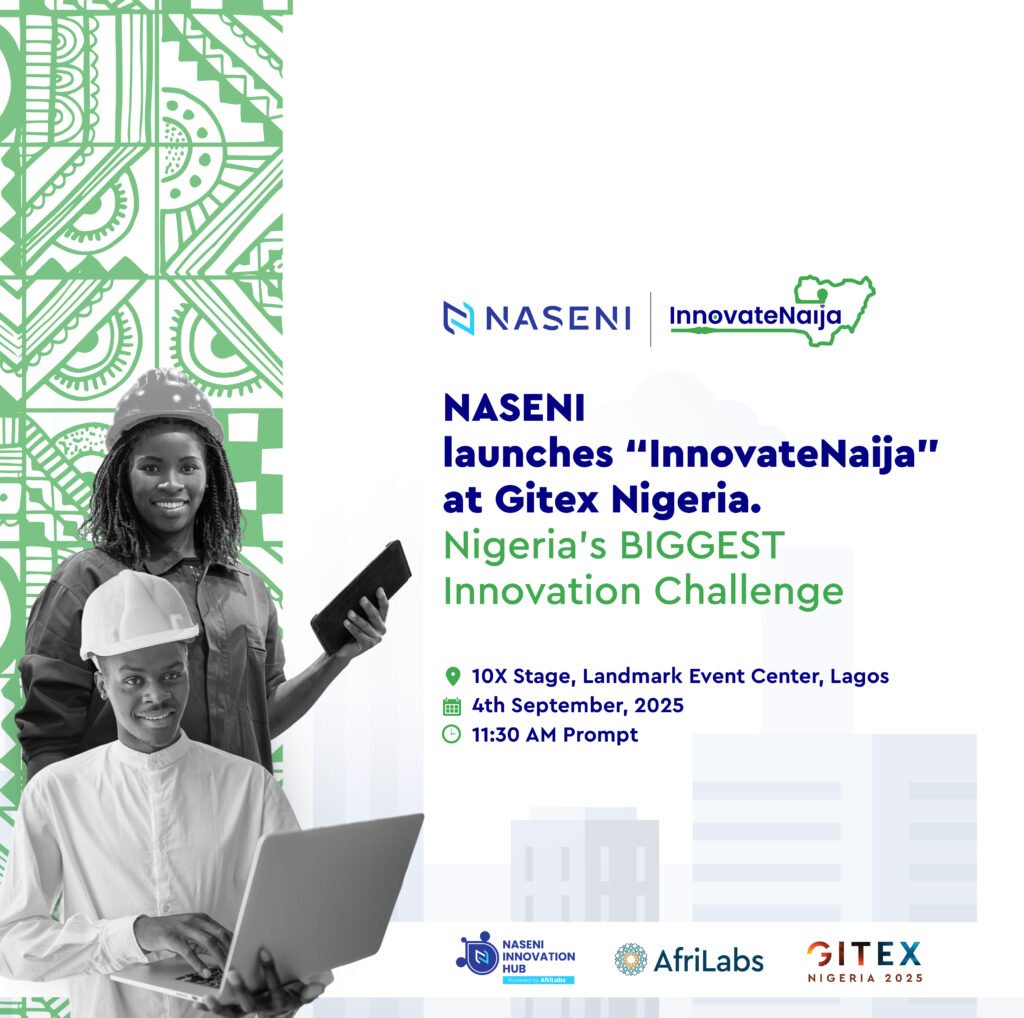
NASENI Launches InnovateNaija ₦250 Million Challenge, Nigeria’s Biggest Innovation Challenge to Empower Youth Innovation in Nigeria, Backed by Presidential Support, NASENI Innovation Hub and AfriLabs. Nigeria is on the brink of an innovation revolution, and it all starts with InnovateNaija! Designed to inspire, empower, and showcase the nation’s brightest minds, the InnovateNaija competition is not just a challenge; it’s a movement! This initiative seeks to identify, empower, and support homegrown, game- changing innovations in science, engineering, or manufacturing across Nigeria. To achieve this, the competition offers a total prize pool of ₦250 million, with the grand prize winner receiving ₦100 million to help bring their innovation to life. Launching on September 4, 2025, at GITEX Nigeria on the 10x Stage at Landmark Event Center, Lagos, InnovateNaija aims to drive innovation across all 36 states and the Federal Capital Territory (FCT) of Nigeria by inviting young Nigerians to submit their most creative inventions and products through engaging video entries. The competition will unfold over three exciting months and will consist of two phases. In the first phase, the top 37 innovators, —one from each state and the FCT,—will be selected through a dynamic process that includes public voting. Each of these 37 winners will receive a grant of ₦2.5 million to help further develop their innovations. The excitement does not end there. The top 15 innovators from the state-level competitions will advance to the grand finale pitch event at the NASENI Invention Fest in Abuja in February 2026. Here, they will showcase their products to a panel of expert judges and key stakeholders. The stakes will be incredibly high as the top three national winners are determined. The grand prize winner will receive a ₦100 million grant, providing a fantastic opportunity to elevate their innovation to the next level. InnovateNaija also marks the pre-launch of the NASENI Innovation Hub, designed to bridge the support gap for innovators, enhance collaboration, and accelerate the development of market-ready products in Nigeria’s tech and entrepreneurial landscape. The Innovation Hub will provide critical infrastructure, mentorship, capacity building, and funding opportunities, serving as a launchpad for Nigerian innovators to transform ideas into scalable businesses. “As we gear up towards the launch of the InnovateNaija Challenge, which is set to identify, empower, and support Nigeria’s most promising young innovators in science, engineering, and manufacturing, we at NASENI are committed to fostering an environment where these innovations can thrive. The InnovateNaija Challenge is an incredible opportunity, offering funding to 37 outstanding youths, to bring their ideas to life. To complement this national movement, NASENI has established an Innovation Hub in Abuja,Nigeria to serve as a breeding ground for transformative ideas and technologies, ensuring that the spark ignited by the InnovateNaija Challenge is nurtured into scalable and real-world solutions. The NASENI Innovation Hub strengthens research and development across key scientific and engineering disciplines, with a clear focus on advancing Nigeria’s technological capabilities and promoting homegrown solutions to our unique challenges, not just in Nigeria but across Africa.”- Khalil Sulaiman Halilu, Executive Vice Chairman/CEO of NASENI. “At AfriLabs, we believe in the power of homegrown innovation to drive Africa’s development, and InnovateNaija is a testament to this belief. By empowering innovators across all states in Nigeria, this competition not only fuels creativity but also strengthens the innovation ecosystem. We are excited to support NASENI in this groundbreaking initiative that will spotlight Nigerian ingenuity and provide the resources needed to scale impactful solutions.” – Anna Ekeledo, Executive Director at AfriLabs. The official InnovateNaija launch will be held on Thursday, September 4 where stakeholders, media professionals, and key partners will gather to discuss the vision and impact of this transformative competition. We invite you to attend and cover this exciting event as we unveil more details about the competition and how Nigerians can participate. Join the movement. Ignite innovation. This is InnovateNaija! About NASENI The National Agency for Science and Engineering Infrastructure (NASENI) is the only on-purpose built intervention agency of the Federal Government under the Presidency whose mandate include nurturing an appropriate and dynamic Science and Engineering infrastructure base for achieving home initiated and home sustained industrialization for Nigeria. The mandate of the Agency includes the development of relevant processes, capital goods and equipment necessary for job creation, national economic well- being, and progress. The Agency took deliberate interest in key areas of science and engineering development because any nation that aspires to attain socio-economic transformation must definitely invest in them in order to engender competition. Find out more about NASENI and the InnovateNaija Challenge here. About AfriLabs AfriLabs is the largest network of technology and innovation hubs across Africa, driving the growth of Africa’s innovation ecosystem. With a mission to support the development of the African technology and innovation ecosystem, AfriLabs connects hubs and other stakeholders to facilitate collaboration, resource sharing, and knowledge transfer. Find out more about AfriLabs here. For media inquiries and interview requests, please contact Info@naseni.gov.ng. for further details on the InnovateNaija Challenge, send an email to innovatenaija@naseni.gov.ng.
WFP Innovation Challenge drives home-grown food systems transformation in South Sudan

WFP Innovation Challenge drives home-grown food systems transformation in South Sudan Juba, SOUTH SUDAN – Eleven ventures in South Sudan have been awarded a total of USD 320,000 in this year’s WFP IGNITE Food Systems Innovation Challenge and an opportunity to contribute towards transforming the country’s food system. Launched earlier this year, the challenge, supported by the Danish International Development Agency (DANIDA) and German Development Bank, KfW is the second edition, following its inaugural event in 2021. Winners receive grant funding ranging from USD 15,000 to USD 40,000, alongside access to expert mentorship, business acceleration, and the chance to establish strategic partnerships. “Building sustainable food systems is the cornerstone of South Sudan’s path to food security, economic sovereignty, and climate resilience,” affirmed Dr. John Ogoto Kanisio, Undersecretary for Agriculture at the Ministry of Agriculture and Food Security. “By investing in young, innovative entrepreneurs, we are not only creating jobs, but we are also unlocking rural potential, driving inclusive agribusiness growth, and cultivating a new generation of leaders who will position South Sudan competitively in regional and global markets. The Ministry is fully committed to this vision, and we call on all partners to join us in empowering youth to lead the transformation of our food systems.” The top two winners are Africa Cornerstone General Trading and Dream Farm Agribusiness Cooperative. Both companies are proudly women-led and have demonstrated remarkable commitment to environmental sustainability. Africa Cornerstone General Trading’s innovation centres on bio-degradable and recyclable packaging solutions designed to reduce food waste and lower carbon emissions. Meanwhile, Dream Farm Agribusiness Cooperative has excelled in recycling poultry manure as organic fertiliser, developing sustainable feed solutions, and employing efficient water-saving housing. “The IGNITE Food Systems Challenge shows the power of homegrown solutions by local entrepreneurs,” said Dr. Björn Niere, German Head of Cooperation.“Sustainable food systems need exactly these innovations. They also require strong partnerships, clear standards, and a safe and free environment for ideas to grow. Germany is proud to work with WFP, DANIDA, and local partners to ensure that promising ventures can thrive and have lasting impact on communities.” “Lack of access to finance and technical support is suffocating innovations of South Sudanese young entrepreneurs,” said Adham Effendi, WFP’s Acting Country Director in South Sudan. “Through generous support by DANIDA and KFW, we are reaching bright and talented entrepreneurs to unlock their potential and provide solutions to food systems challenges.” Following a rigorous selection process from over 200 entries received nationwide, the winners represent a diverse range of sectors. These include agri-tech, post-harvest management, livestock production, and sustainable food distribution. The full list of winners is as follows; AgriSmart Farm & Urban Gardens, Golden Farm South Sudan Ltd, Hope and Care for Development, Long Puou Cooperative Society, Lulu Bakes, Mading Chan Young Network Economic Development, Magwi College of Agribusiness & Management Science, National Star Investment Co. Ltd and Tropical Wet Organics Ltd. “This is more than just a recognition of entrepreneurial excellence – it’s a turning point for inclusive, homegrown innovation in South Sudan,” said Nanko Madu, Director of Programmes at AfriLabs. “By backing visionary local businesses, we are not only fuelling sustainable economic growth but also proving that transformative change can and must come from within. These entrepreneurs are the architects of a more food-secure, climate-resilient future for South Sudan.” The challenge is a brainchild of the IGNITE Innovation Hub of the United Nations World Food Programme (WFP) and implemented through its partners AfriLabs and Seed Grow South Sudan in collaboration with the Ministry of Agriculture and Food Security. IGNITE Food Systems Challenge seeks to find and promote locally driven solutions to food systems challenges. Past winners include Hagana Agro Processing Company, which has since grown into a household brand in South Sudan and competes favourably on regional markets. About WFP: The United Nations World Food Programme is the world’s largest humanitarian organization, saving lives in emergencies and using food assistance to build a pathway to peace, stability and prosperity for people recovering from conflict, disasters and the impact of climate change. Follow us on Twitter @wfp_SouthSudan About AfriLabs: AfriLabs is the largest network of technology and innovation hubs across Africa, committed to driving inclusive innovation, entrepreneurship, and sustainable development. Through community, capacity building, and collaboration, AfriLabs empowers local hubs to scale impact and shape the continent’s innovation future. Learn more: www.afrilabs.com. For more information, please contact: For WFP – Tomson Phiri, tomson.phiri@wfp.org, +211 928 008 037.
AfriLabs et Konza Technopolis Development Authority (KoTDA) signent un accord de collaboration stratégique pour stimuler l’innovation et la croissance de l’écosystème à travers l’Afrique
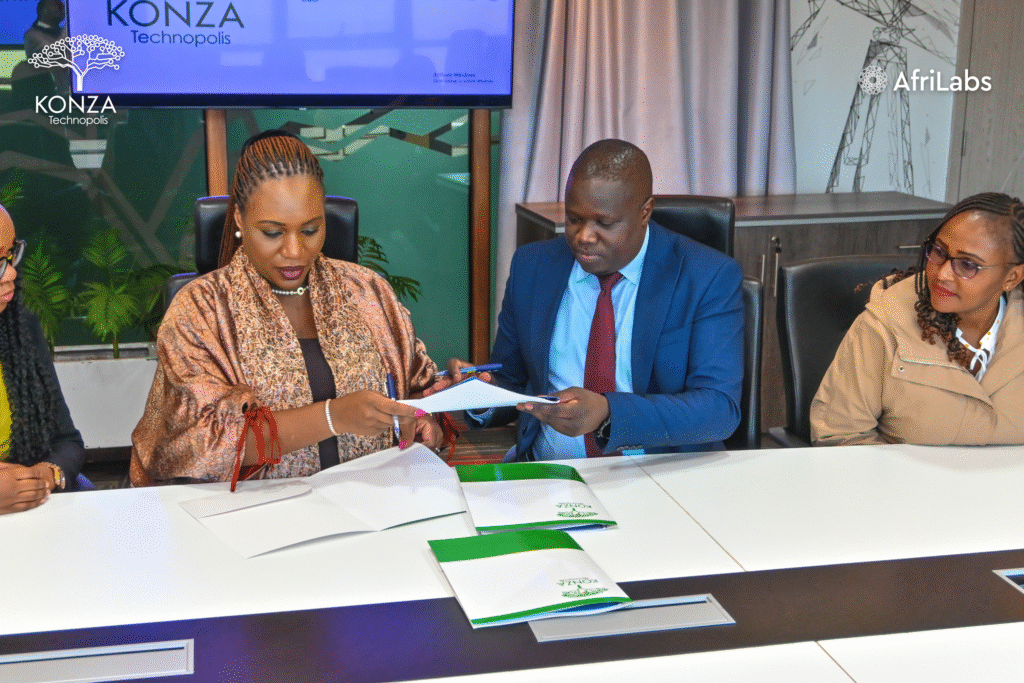
AfriLabs et Konza Technopolis Development Authority (KoTDA) signent un accord de collaboration stratégique pour stimuler l’innovation et la croissance de l’écosystème à travers l’Afrique Nairobi, Kenya | 18 Juillet 2025 – À l’approche de la 10ᵉ édition de la Rencontre Annuelle d’AfriLabs (AAG2025), AfriLabs — le plus grand réseau panafricain de hubs d’innovation — et la Konza Technopolis Development Authority (KoTDA) ont signé un accord de collaboration stratégique visant à catalyser l’innovation, encourager l’entrepreneuriat et promouvoir un développement technologique inclusif à travers l’Afrique. Ce partenariat réunit deux institutions de référence opérant à l’intersection de l’innovation, des politiques publiques et du développement durable. Ensemble, elles concevront et mettront en œuvre une série de programmes et d’initiatives visant à soutenir les startups, renforcer les capacités, accélérer le partage des connaissances et ouvrir de nouvelles opportunités d’investissement au Kenya et au-delà. La Rencontre Annuelle d’AfriLabs 2025, qui se tiendra à Nairobi du 7 au 9 Octobre, sera l’une des premières grandes initiatives conjointes découlant de cet accord, avec Konza Technopolis en tant que partenaire gouvernemental stratégique.Dans ce rôle, Konza facilitera la mobilisation des parties prenantes nationales, accueillera des vitrines thématiques et encouragera une participation de haut niveau, contribuant ainsi à la réalisation de l’objectif de l’événement : « L’avenir de l’innovation en Afrique : politiques publiques , partenariats et progrès. » Parmi les axes clés de collaboration définis dans l’accord figurent : Soutien aux plateformes de startups et d’innovation : Lancement de programmes d’atterrissage en douceur et de mentorat sur mesure pour les startups, initiatives de co-création et vitrines d’innovation ; Propriété intellectuelle et commercialisation : Accompagnement des innovateurs dans l’enregistrement de brevets, les transferts technologiques et la mise sur le marché ; Recherche et développement & défis d’innovation : Conduite de recherches conjointes sur des technologies émergentes telles que l’IA, les technologies propres, les technologies de santé et les infrastructures intelligentes ; Renforcement des capacités et développement des talents : Organisation de formations, bootcamps et échanges de connaissances à destination des innovateurs, décideurs politiques et acteurs de l’écosystème ; Accès au financement et à l’investissement : Mise en relation des startups basées à Konza avec les réseaux d’AfriLabs, dont le fonds Catalytic Africa et les communautés d’investisseurs ; Liens transfrontaliers : Facilitation des échanges de startups, des programmes d’incubation partagés et de la collaboration entre les hubs de Konza et les 53 pays membres d’AfriLabs ; Collaboration sur les villes intelligentes : Utilisation des infrastructures de Konza comme terrain d’expérimentation pour les solutions africaines de villes intelligentes et de l’Internet des objets (IoT). John Paul Okwiri, Directeur Général de Konza Technopolis, déclare : « Nous sommes fiers d’être le partenaire gouvernemental stratégique du AfriLabs Annual Gathering 2025 à Nairobi. Ce protocole d’accord reflète l’engagement de Konza Technopolis à renforcer l’écosystème de l’innovation en Afrique et à positionner le Kenya comme un pôle de croissance technologique. Nous avons hâte d’accueillir les meilleurs innovateurs du continent et de favoriser une collaboration porteuse pour une Afrique plus intelligente et numérique. » Anna Ekeledo, Directrice Exécutive d’AfriLabs, ajoute : « Ce partenariat reflète notre volonté commune de faire progresser l’innovation africaine à travers une infrastructure collaborative, l’échange de talents et le partage des connaissances. Nous sommes ravis de travailler aux côtés de Konza Technopolis pour élargir notre mission : autonomiser la prochaine génération d’innovateurs africains. » Ce partenariat stratégique marque le début d’une collaboration multidimensionnelle à long terme, visant à bâtir des écosystèmes d’innovation résilients et inclusifs, capables de répondre aux défis les plus pressants de l’Afrique tout en tirant parti de ses opportunités de croissance. À propos de Konza Technopolis Konza Technopolis est un projet phare de ville intelligente inscrit dans le cadre de Vision 2030, le plan directeur de développement à long terme du Kenya, qui vise à transformer le pays en une économie industrialisée émergente et à revenu intermédiaire. Également surnommée la Silicon Savannah d’Afrique, Konza est une ville planifiée de 5 000 acres, conçue pour stimuler la croissance économique à travers la science, la technologie, l’innovation et les industries basées sur la connaissance. Stratégiquement située à 60 kilomètres au sud-est de Nairobi, la ville est développée comme un parc scientifique de référence et une zone d’innovation dotée d’infrastructures de classe mondiale, axée sur la durabilité et la transformation numérique — un espace où l’on peut vivre, travailler et se divertir. Konza Technopolis est appelée à contribuer à hauteur d’au moins 2 % au PIB national du Kenya, positionnant le pays comme un pôle technologique et d’innovation de premier plan sur le continent. La ville intelligente est administrée par la Konza Technopolis Development Authority (KoTDA), sous l’égide du Ministère de l’Information, de la Communication et de l’Économie Numérique. En savoir plus : www.konza.go.kePour toute demande d’information, veuillez contacter :Département Marketing & Communication InstitutionnelleEmail : konza@konza.go.ke À propos d’AfriLabs AfriLabs est un réseau panafricain de premier plan regroupant plus de 500 hubs d’innovation et de technologie répartis dans 53 pays africains. Créé pour soutenir le développement de l’écosystème africain de l’innovation et de l’entrepreneuriat, AfriLabs accompagne les hubs et leurs communautés à travers des programmes de renforcement de capacités, des partenariats stratégiques, des opportunités de financement, ainsi qu’un plaidoyer en faveur de politiques publiques favorables à l’innovation. En favorisant la collaboration entre les parties prenantes clés — gouvernements, secteur privé, milieu universitaire et partenaires au développement — AfriLabs catalyse des solutions durables portées par le talent, la technologie et l’innovation africaine. Grâce à ses actions, AfriLabs joue un rôle central dans l’accélération de la transformation numérique, la création d’emplois et la croissance économique inclusive à l’échelle du continent. En savoir plus : www.afrilabs.comPour toute demande d’information, veuillez contacter :Emails : pr@afrilabs.com & comms@afrilabs.com
AfriLabs and Konza Technopolis Development Authority (KoTDA) Sign Strategic Collaboration Agreement to Drive Innovation and Ecosystem Growth Across Africa
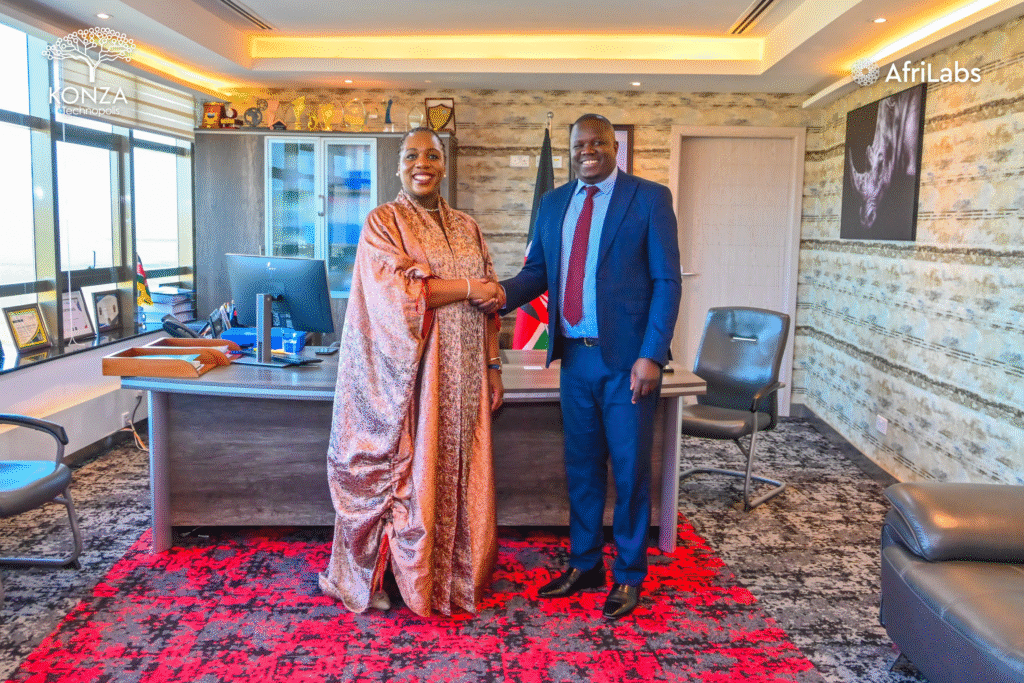
AfriLabs and Konza Technopolis Development Authority (KoTDA) Sign Strategic Collaboration Agreement to Drive Innovation and Ecosystem Growth Across Africa Nairobi, Kenya | July 18, 2025 – As anticipation builds for the 10th edition of the AfriLabs Annual Gathering (AAG2025), AfriLabs, the largest pan-African network of innovation hubs and Konza Technopolis Development Authority (KoTDA) has signed a strategic Collaboration Agreement to catalyze innovation, foster entrepreneurship, and promote inclusive technology development across Africa. The partnership brings together two powerhouse institutions working at the intersection of innovation, policy, and sustainable development, and will see the two institutions jointly design and implement a broad range of programs and initiatives that support startups, build capacity, accelerate knowledge exchange, and unlock investment opportunities within and beyond Kenya. The AfriLabs Annual Gathering 2025, taking place in Nairobi from October 7–9, will be one of the first major joint initiatives under this agreement, where Konza Technopolis will serve as the Strategic Government Partner. Through this role, Konza will help mobilize national stakeholders, host thematic showcases, and facilitate high-level participation, contributing to the event’s goal of shaping “Africa’s Innovation Future: Policy, Partnerships, and Progress.” Among other key areas outlined in the agreement are: Startup & Innovation Platform Support: Launching tailored soft-landing and mentorship programs for startups, joint venture-building initiatives, and innovation showcases; IP & Commercialization: Supporting innovators in intellectual property registration, technology transfer, and commercialization efforts; R&D and Innovation Challenges: Collaborating on joint research in emerging tech areas including AI, clean tech, health tech, and smart infrastructure; Capacity Building & Talent Development: Offering training, bootcamps, and knowledge exchange for innovators, policymakers, and ecosystem builders; Funding & Investment Access: Connecting Konza-based startups to AfriLabs’ networks, including the Catalytic Africa fund and investor communities; Cross-border Linkages: Facilitating startup exchanges, shared incubation programs, and ecosystem collaboration between Konza and AfriLabs’ hubs in 53 African countries; Smart City Collaboration: Using Konza’s infrastructure as a sandbox for piloting African-led smart city and IoT solutions. Konza Technopolis CEO, John Paul Okwiri adds, “We are proud to be the strategic government partner for the 2025 AfriLabs Annual Gathering in Nairobi. This MoU reflects the commitment of Konza Technopolis in strengthening Africa’s innovation ecosystem and positioning Kenya as a hub for tech-driven growth. We look forward to hosting the continent’s top innovators and fostering meaningful collaboration for a smarter, digital Africa.” “This partnership represents our shared commitment to scaling African innovation through collaborative infrastructure, talent exchange, and knowledge networks. We’re proud to work alongside Konza Technopolis as we expand our mission to empower Africa’s next generation of innovators,” said Anna Ekeledo, Executive Director, AfriLabs. This collaboration marks the beginning of a long-term, multidimensional partnership aimed at building resilient, inclusive innovation ecosystems that respond to Africa’s most pressing challenges and growth opportunities. – ENDS- About Konza Technopolis Konza Technopolis is a flagship Smart City project under Kenya’s Vision 2030, the country’s long-term development blueprint aimed at transforming Kenya into a newly industrializing, middle-income economy. Also known as, Africa’s Silicon Savannah, Konza is a 5,000-acre, master-planned city designed to drive economic growth through science, technology, innovation, and knowledge-based industries. Strategically located 60 kilometres southeast of Nairobi, the city is being developed as a leading Science Park and Area of Innovation with world-class infrastructure and a focus on sustainability and digital transformation where people can live, work and play. Konza Technopolis is envisioned to contribute at least 2% to Kenya’s national GDP, positioning the country as a premier technology and innovation hub on the continent. The Smart City is managed by the Konza Technopolis Development Authority (KoTDA) under the Ministry of Information, Communications and the Digital Economy. Learn more: W: www.konza.go.ke For further enquiries, contact: Marketing & Corporate Communications department E: konza@konza.go.ke About AfriLabs AfriLabs is a leading pan-African network of over 500 innovation and technology hubs across 53 African countries. Established to support the growth of Africa’s innovation and entrepreneurship ecosystem, AfriLabs empowers hubs and their communities by providing capacity-building programs, strategic partnerships, funding opportunities, and advocacy for enabling policy environments. By fostering collaboration among key stakeholders, governments, the private sector, academia, and development partners, AfriLabs is catalyzing sustainable solutions driven by African talent, technology, and innovation. Through its work, AfriLabs plays a pivotal role in accelerating digital transformation, job creation, and inclusive economic growth across the continent. Learn more: W: www.afrilabs.com. For further enquires, contact: E: pr@afrilabs.com & comms@afrilabs.com