
AfriLabs Annual Gathering 2025: Celebrating a Decade of Innovation Excellence in Nairobi, Kenya
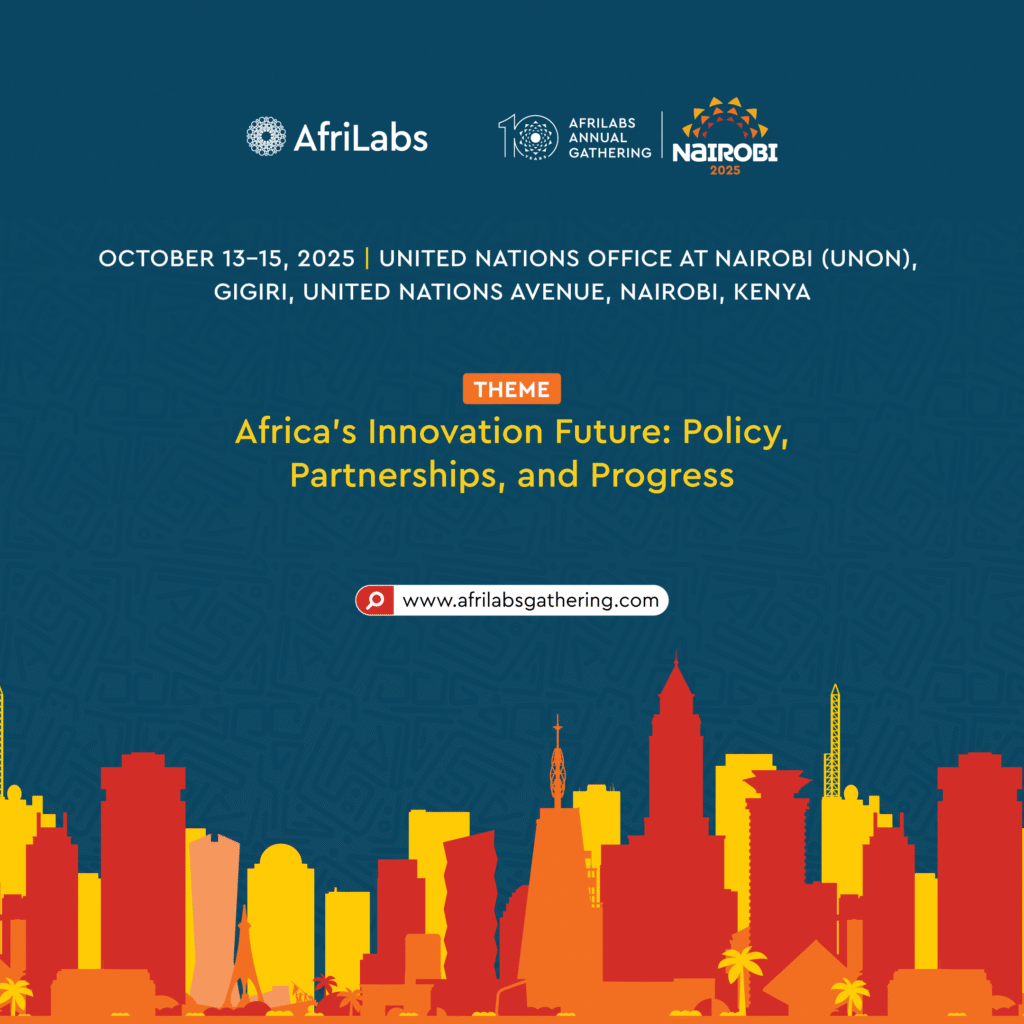
AfriLabs Annual Gathering 2025: Celebrating a Decade of Innovation Excellence in Nairobi, Kenya The AfriLabs Annual Gathering returns for its 10th edition, a milestone celebration of innovation, collaboration, and progress in Africa’s tech ecosystem. From 13-15 October 2025, Nairobi, Kenya, will host this premier event under the theme, “Africa’s Innovation Future: Policy, Partnerships, and Progress.” As AfriLabs’ flagship event, the Annual Gathering brings together key stakeholders from across Africa’s technology and innovation landscape—hub leaders, startup founders, investors, corporates, policymakers, development agencies, academia, and media—providing a platform to network, exchange ideas, and forge lasting partnerships. The 10th Annual Gathering promises to be transformative and the 2025 theme emphasizes the urgent need for robust policies, strategic partnerships, and measurable progress to unlock Africa’s innovation potential. The event will explore how aligned efforts between governments, private sector players, and development partners can drive socio-economic growth and position Africa as a key player on the global innovation stage. Attendees will have the opportunity to discuss policy frameworks that enable startups and innovation hubs to thrive, explore successful public-private partnerships driving impactful solutions, develop actionable roadmaps for inclusive socio-economic growth, and engage with cutting-edge insights and innovations showcasing Africa’s competitive edge. The Gathering will feature dedicated tracks tailored to address the critical needs of Africa’s innovation ecosystem, expect dynamic keynote sessions, panel discussions, workshops, and masterclasses led by global and regional thought leaders. The showcase and exhibitions will spotlight groundbreaking solutions from startups and tech hubs, while pitch competitions will offer innovators the chance to secure funding and scale their solutions. “This milestone edition of the AfriLabs Annual Gathering is a testament to the incredible growth and impact of the African innovation ecosystem over the last decade,” said Anna Ekeledo, Executive Director at AfriLabs. “As we look to the future, the Gathering will be a critical platform for driving the policies, partnerships, and progress necessary to position Africa at the forefront of global innovation. Together, we will cultivate the collaborations and solutions needed to address Africa’s challenges and seize its opportunities on a global scale.” Join us in Nairobi as we celebrate a decade of innovation excellence and chart a new course for Africa’s technology and innovation ecosystems. Whether you’re an entrepreneur, investor, policymaker, or innovation enthusiast, the AfriLabs Annual Gathering 2025 is your platform to contribute to Africa’s innovation journey. About AfriLabs AfriLabs is the largest network of technology and innovation hubs across Africa, driving the growth of Africa’s innovation ecosystem. With a mission to support the development of the African technology and innovation ecosystem, AfriLabs connects hubs and other stakeholders to facilitate collaboration, resource sharing, and knowledge transfer. For more information about the AfriLabs Annual Gathering 2025 and AfriLabs, visit www.afrilabsgathering.com and www.afrilabs.com. For media inquiries, please contact pr@afrilabs.com & comms@afrilabs.com
AfriLabs Annual Gathering 2024 Welcomes RLabs, Ethiopian Airlines, and Southern Sun Hotels as Key Partners

AfriLabs Annual Gathering 2024 Welcomes RLabs, Ethiopian Airlines, and Southern Sun Hotels as Key Partners The AfriLabs Annual Gathering 2024, set to take place from November 6th to 8th at the Cape Town International Convention Centre (CTICC), is thrilled to announce key sponsorships and partnerships with RLabs, Ethiopian Airlines, and Southern Sun Hotels. This year’s event, themed “Uniting Innovation,” will bring together innovators, entrepreneurs, and thought leaders from across the continent and beyond for an unparalleled experience of collaboration and inspiration. We are thrilled to announce that RLabs is not only one of our sponsors but also our Host Hub for this year’s event. With a remarkable history of fostering entrepreneurial spirit and technological advancement, RLabs brings a wealth of experience and expertise to the gathering. Their involvement will greatly enhance the impact of the event and the engagement of the South African Ecosystem. We are delighted to have them on board. Ethiopian Airlines is proudly offering a 12% discount on flights to Cape Town for attendees of the AfriLabs Annual Gathering 2024. As the official airline partner for the AfriLabs Annual Gathering over the past years, Ethiopian Airlines has ensured that travel to and from this pivotal event is more accessible for participants coming from across Africa and beyond. Southern Sun Hotels, a leading name in hospitality, is offering attendees up to 30% off on room rates during the AfriLabs Annual Gathering. With its premium accommodation options and exceptional service, Southern Sun Hotels is committed to providing a comfortable and convenient stay for all guests. We look forward to a transformative event as we come together under the theme “Uniting Innovation” to drive progress and foster meaningful connections within Africa’s vibrant innovation ecosystem. With the support of RLabs, Ethiopian Airlines, and Southern Sun Hotels, the AfriLabs Annual Gathering 2024 promises to be an impactful experience for all participants. As we prepare for this landmark event, we invite additional sponsors to join us in making the AfriLabs Annual Gathering 2024 a resounding success. Sponsors will enjoy a range of exclusive benefits, including: A keynote address slot and the opportunity to own a panel or give a presentation. Hosting side events such as workshops, masterclasses, parallel panels, and meet-and-greet sessions. Branding opportunities at the AfriLabs General Meeting Soiree, dedicated to AfriLabs Hub Members, and throughout the conference. Extensive media exposure in associated PR coverage, both pre and post-event. A prominent feature in the AfriLabs Annual Magazine, distributed to hubs and ecosystem partners across Africa (subject to a separate sponsorship package). Recognition in all conference materials and communication channels, including the agenda, gift bags, backdrops, roll-up banners, newsletters, social media, press releases, and websites. Join us in showcasing your commitment to the development of the African technology and innovation ecosystem by becoming a sponsor of the AfriLabs Annual Gathering 2024. For more details on sponsorship opportunities, please visit our website at www.afrilabsgathering.com. Register today at AfriLabs Annual Gathering & secure your tickets here. About AfriLabs AfriLabs is the largest network of technology and innovation hubs across Africa, driving the growth of Africa’s innovation ecosystem. With a mission to support the development of the African technology and innovation ecosystem, AfriLabs connects hubs and other stakeholders to facilitate collaboration, resource sharing, and knowledge transfer. For more information about the AfriLabs Annual Gathering 2024 and AfriLabs, visit www.afrilabsgathering.com and www.afrilabs.com. For media inquiries, please contact pr@afrilabs.com & comms@afrilabs.com
AfriLabs Announces Track Leads and Champions for Annual Gathering 2024
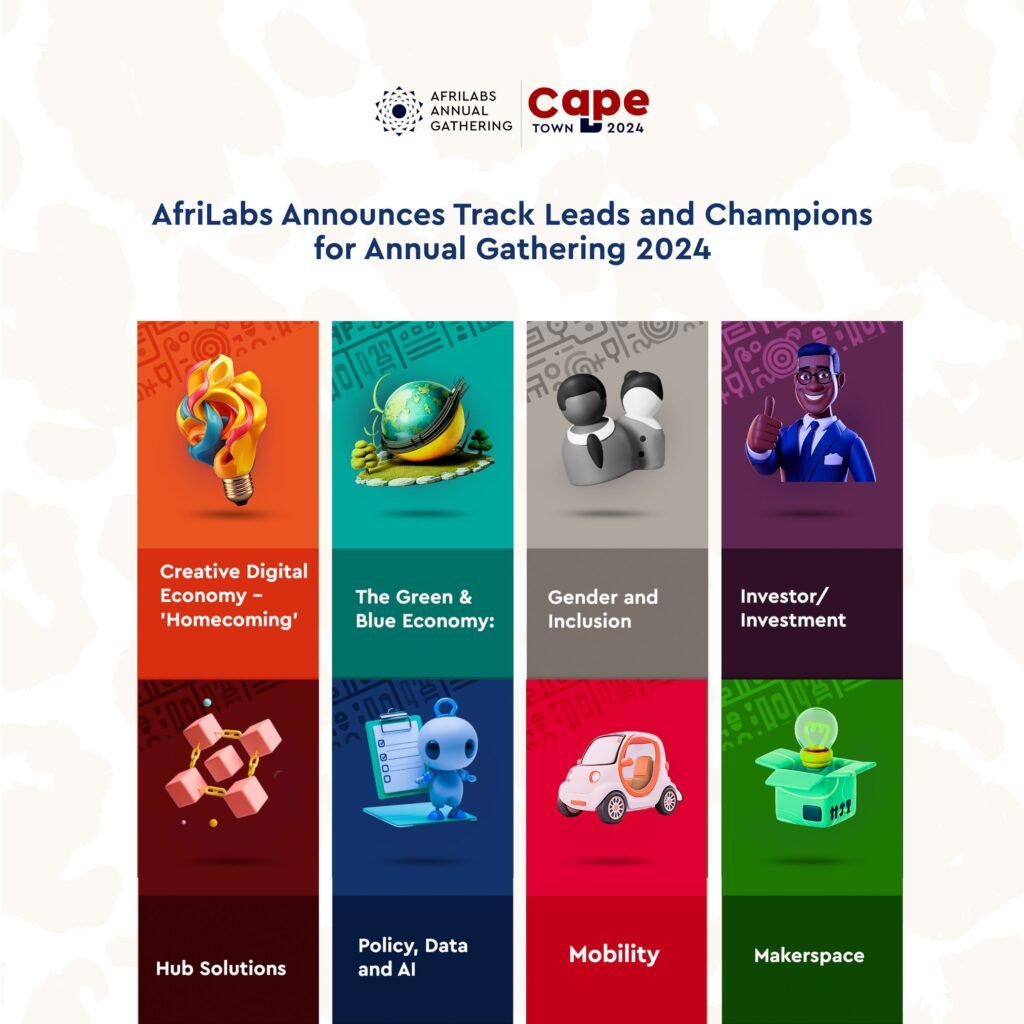
AfriLabs Announces Track Leads and Champions for Annual Gathering 2024 Abuja, Nigeria – 7th August 2024 – AfriLabs, the largest network organization of African technology and innovation hubs, is proud to announce the track leads and champions for the AfriLabs Annual Gathering (AAG) 2024. This year’s gathering, themed “Uniting Innovation,” will take place from November 6th to 8th at the Cape Town International Convention Center (CTICC), South Africa. The Annual Gathering aims to foster collaboration, knowledge exchange, and enhance transformative initiatives across Africa’s technological landscape. The event will feature a series of tracks focusing on key areas critical to the development and growth of Africa’s tech ecosystem. Track Leads and Champions AAG2024 track leads and champions are visionary leaders and hubs poised to redefine the African innovation and technology ecosystem. At the gathering, they will spearhead a series of impactful activities, including panel discussions, master classes, workshops, focus group discussions, training sessions, best practices showcases, and co-creation sessions, enriching the event with their expertise and foresight. They are supported by AfriLabs and the AAG2024 Host Hub, RLabs. The following individuals and hubs have been selected as track leads and champions for their exemplary contributions and leadership in the African tech and innovation sectors: The Green and Blue Economy Track: Led by OceanHub Africa from South Africa represented by Managing Director Herland Cerveaux. Supporting champions include; Sote Hub from Kenya, Mountain Hub from Cameroon, CUBE Zanzibar from Tanzania, Vertex Ecosystem, ALX Ventures, and SmartXChange. Gender and Inclusion Track: Led by WomHub from South Africa, represented by Calvin Board, Head of Spaces. Supporting champions include Eden Venture Group, Nigeria and Centre d’Innovation de Lubumbashi (CINOLU), DRC Congo. Investor/Investment Track: Guided by Fie_Labs Innovation Hub from Kenya. Supporting champions include Uplifting Youth and Social Development Aid Initiative (UYSDA) in Nigeria, Five35 Ventures from South Africa, Impacc Social Ventures from Kenya, and Big Geeks Egypt. Hub Solutions Track: Led by Christine Nicola Taphel, CEO of RLabs South Africa, and supported by TVC Labs in Nigeria, HiiL Justice from Kenya and Entrepreneurial Planning Institute from South Africa. Policy, Data, and AI Track: Led by the Programmes Department at AfriLabs. Championing the track are the National Information Technology Development Agency (NITDA) from Nigeria, TechQuest STEM from Nigeria, Ubulu Africa from Nigeria, and Sector B5 from Egypt. Creative Digital Economy Track: Guiding the track is Snake Nation from South Africa, supported by 360 Creative Hub from Nigeria, Industry Nite from Nigeria, and Maliyo from Nigeria. Mobility Track: Led by the Ministry of Mobility, South Africa, focusing on sustainable transportation solutions in Africa. Makerspace Track: Championing the track is the Africa Makerspace Network, promoting maker culture and innovation through hands-on learning and collaboration. The AfriLabs Annual Gathering 2024 promises to be a landmark event with insightful sessions, networking opportunities, and much more. Seize the chance to be part of this remarkable event. Register today at AfriLabs Annual Gathering and secure your tickets here. About AfriLabs AfriLabs is the largest network of technology and innovation hubs across Africa, driving the growth of Africa’s innovation ecosystem. With a mission to support the development of the African technology and innovation ecosystem, AfriLabs connects hubs and other stakeholders to facilitate collaboration, resource sharing, and knowledge transfer. Follow AfriLabs on social media at @afrilabs and visit our website, www.afrilabsgathering.com and www.afrilabs.com for updates on additional track leads and champions joining the AfriLabs Annual Gathering this year, along with other exciting developments. For media inquiries, please contact pr@afrilabs.com & comms@afrilabs.com
The Green and Blue Economy in Africa: Navigating the Path to Sustainable Industrialization

The Green and Blue Economy in Africa: Navigating the Path to Sustainable Industrialization The Dual Challenge: Clean Energy Transition vs. Industrialization Africa stands at a crucial juncture in its development trajectory, grappling with the dual challenge of transitioning to clean energy to mitigate environmental impacts while simultaneously ramping up energy production to fuel much-needed industrialization. This tension arises from the continent’s pressing need for economic growth and development, which requires reliable and affordable energy, juxtaposed with the global imperative to combat climate change by reducing greenhouse gas emissions. Contribution to Global Emissions Historically and currently, Africa’s contribution to global greenhouse gas emissions has been minimal. Despite accounting for approximately 17% of the world’s population, the continent contributes less than 5% of global emissions. This is in stark contrast to major industrialized nations, which have historically been the largest emitters and continue to dominate current emissions levels. However, Africa’s role as a major oil producer complicates this narrative. Countries like Nigeria, Angola, and Algeria are key players in the global oil market, generating significant revenue from fossil fuel exports. This reliance on fossil fuels creates a dilemma: while Africa’s per capita emissions are low, its economic dependence on fossil fuels poses challenges for transitioning to greener alternatives. The Cost of Transitioning to Green Energy Transitioning to a green and blue economy is an expensive proposition, particularly for African countries. The technologies required for this transition, such as nuclear plants, windmills, and solar panels, are predominantly produced in post-industrial economies. The cost of importing these technologies, combined with the infrastructure investments needed, presents a significant financial burden. Moreover, many African nations face fiscal constraints, limiting their capacity to invest in new technologies and infrastructure without jeopardizing other critical areas like healthcare, education, and poverty alleviation. Africa’s Responsibility and Global Support There is a growing discourse on the responsibilities of different regions in addressing climate change. Given Africa’s minimal historical contribution to global emissions, many argue that the continent should not bear the same burden as more industrialized regions in reducing emissions. Instead, there is a call for a more equitable global strategy that acknowledges the different levels of responsibility and capacity. One proposed solution is for wealthier nations to financially support Africa’s transition to green energy. This could involve direct investment in renewable energy projects, technology transfer, and capacity-building initiatives. Another innovative idea is the concept of “buying out” Africa’s fossil fuel reserves. This would involve wealthier countries purchasing these reserves to keep them untapped, effectively compensating African nations for the lost revenue while encouraging a shift towards greener alternatives. A Call for a Global Strategy To ensure Africa can industrialize without sacrificing environmental sustainability, a comprehensive global strategy is essential. Such a strategy should include: 1. Financial Support: Developed countries should provide financial assistance to help African nations invest in green technologies and infrastructure. This could be through grants, concessional loans, or other financial instruments that reduce the burden on African economies. 2. Technology Transfer: There should be increased efforts to transfer green technologies to Africa. This includes not only the hardware but also the knowledge and expertise needed to implement and maintain these technologies. 3. Capacity Building: Developing local expertise in renewable energy and sustainable practices is crucial. This can be achieved through education, training, and partnerships with global institutions. 4. Policy and Regulatory Frameworks: Supporting the development of robust policy and regulatory frameworks in African countries can encourage private sector investment in green projects and ensure that these initiatives are sustainable and effective. 5. Debt Relief and Restructuring: For heavily indebted African countries, debt relief or restructuring could free up resources for investment in green and sustainable development. Conclusion Africa’s journey towards a green and blue economy must be supported by a global partnership that recognizes the unique challenges and opportunities the continent faces. By working together, the international community can help Africa industrialize sustainably, ensuring that economic growth does not come at the expense of environmental health. This approach not only benefits Africa but the entire planet, as we collectively strive to combat climate change and create a more sustainable future.
AfriLabs Joins International Telecommunication Union (ITU) as an ITU-D Sector Member
AfriLabs Joins International Telecommunication Union (ITU) as an ITU-D Sector Member AfriLabs is pleased to announce its official admission as an ITU Development (ITU-D) Sector Member. The International Telecommunication Union (ITU) Council, during its 2024 session held from June 4-14, 2024, welcomed AfriLabs into the ITU family. The ITU is a specialized agency of the United Nations responsible for issues related to information and communication technologies. The ITU-D Sector is dedicated to fostering international cooperation and promoting equitable access to telecommunication and information technologies. AfriLabs’ membership to ITU-D represents a major turning point in its mission to support innovation, entrepreneurship, and technology development across Africa. This partnership will enable AfriLabs to contribute to global conversations and initiatives aimed at driving digital transformation and sustainable development in Africa. Anna Ekeledo, Executive Director of AfriLabs, expressed her enthusiasm for this new partnership, stating “We are thrilled to join the ITU as an ITU-D Sector Member. This membership not only validates the efforts of AfriLabs in fostering innovation and technology growth in Africa but also provides us with a unique opportunity to collaborate on a global scale. We look forward to leveraging ITU’s vast resources and network to further our mission of empowering African tech hubs and startups, ultimately driving socio-economic development across the continent.” “I am pleased to welcome AfriLabs as a new ITU-D Sector Member,” said Dr Cosmas Luckyson Zavazava, Director of the ITU Telecommunication Development Bureau. “The AfriLabs’ vast network of technology and innovation hubs is aligned with ITU-D’s efforts in building capabilities in innovation and entrepreneurship for its members and will support the development of the African technology and innovation ecosystem.” The inclusion of AfriLabs in the ITU-D Sector underscores the importance of supporting technology and innovation ecosystems in emerging markets. AfriLabs’ extensive network, comprising over 450 innovation centers across 53 African countries, will bring valuable insights and perspectives to ITU’s initiatives and programs. About AfriLabs AfriLabs is the largest network of technology and innovation hubs across Africa, driving the growth of Africa’s innovation ecosystem. With a mission to support the development of the African technology and innovation ecosystem, AfriLabs connects hubs and other stakeholders to facilitate collaboration, resource sharing, and knowledge transfer. About International Telecommunication Union The International Telecommunication Union (ITU) is the United Nations specialized agency for information and communication technologies (ICTs), driving innovation in ICTs together with 193 Member States and a membership of over 1,000 companies, universities, and international and regional organizations.
Intel AI Programme Propels African DeepTech Ecosystem Forward: A Collaborative Success
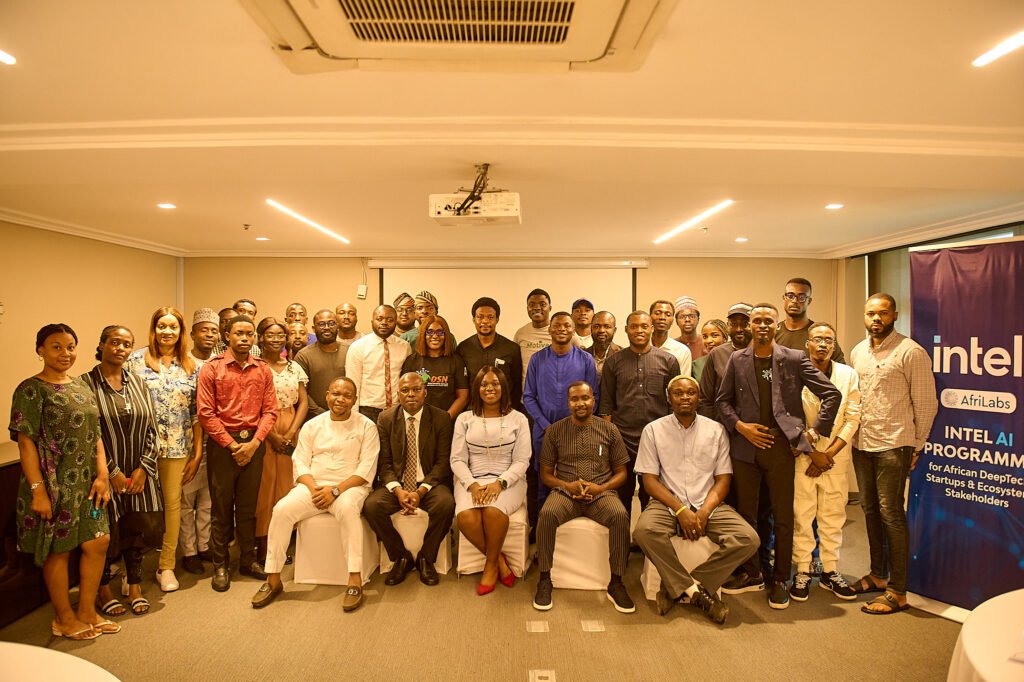
Intel AI Programme Propels African DeepTech Ecosystem Forward: A Collaborative Success The Fraser Suites in Abuja, Nigeria, witnessed an exciting convergence of Africa’s brightest minds and innovative spirit as Intel and AfriLabs successfully concluded the Intel AI Programme for African DeepTech Startups & Ecosystem Stakeholders. From March 5th to 7th, 2024, attendees immersed themselves in a three-day journey of enlightenment, collaboration, and empowerment. The event, organized by AfriLabs in collaboration with Intel, aimed to propel growth and innovation in Nigeria’s DeepTech ecosystem. Participants from diverse backgrounds including government officials, industry experts, startups, developers, and ecosystem stakeholders convened to explore the challenges, opportunities, and prospects of DeepTech in Africa. The event commenced with opening remarks from esteemed government officials and representatives from Intel and AfriLabs. Dr. Bienvenu Agbokponto Soglo, Director of Government Affairs Africa and IGA CTO Liaison at Intel set the stage with an insightful presentation on the socio-economic and policy implications of DeepTech in Africa. This was followed by a thought-provoking panel discussion featuring high-level representatives from the National Information Technology Development Agency (NITDA), the Nigerian Communications Commission (NCC), Intel, and other industry partners, moderated by Jennifer Okeke-Ojiudu, Senior Ecosystem Engagements Manager at AfriLabs. The session provided valuable insights into the challenges and opportunities facing the DeepTech ecosystem in Africa. Finally, day one culminated with a High-Level Roundtable Discussion on AI Policy, facilitated by Dr. Bienvenu Agbokponto Soglo of Intel, engaging the Director-General of the National Centre for Technology Management, other Government Officials and AI Ecosystem Stakeholders. Day two of the event focused on empowering startups, developers, and innovation hubs with the tools and resources needed to thrive in the AI landscape. Highlights included an introduction to the Intel® Liftoff for AI Startups Program, presentations on the Intel Developer Cloud and OneAPI initiative, and valuable lessons learned from industry experts. The day concluded with presentations from leading innovation hubs, further enriching the discourse on DeepTech entrepreneurship and innovation in Nigeria. The final day of the event centered on building vibrant startup communities and fostering collaboration among ecosystem stakeholders. Keynote addresses by notable figures such as Ajibola Odukoya, Chief Operating Officer at AfriLabs, and Dr. Kashifu Inuwa Abdullahi, Director-General of NITDA, set the tone for engaging discussions on the role of government in driving innovation in Africa. Presentations from various innovation hubs underscored the importance of community-building and collaboration in nurturing Africa’s burgeoning DeepTech ecosystem. Dr. Kashifu Inuwa Abdullahi, Director-General of NITDA, emphasized the importance of collaboration and shared vision in his address: “When I learned of the aims and objectives of this workshop, my enthusiasm for our ecosystem was truly ignited. At NITDA, we firmly believe that no single entity can navigate this landscape alone; collective effort is imperative. Our vision for Nigeria is one of digital empowerment, innovation-driven prosperity, and inclusive economic growth fostered by technology. The global AI race has commenced, and the nation’s leading it will shape the future. Africa, with its abundant talent and youthful population, is poised to play a significant role. In Nigeria, our path is clear: AI is our journey, our goals are defined, and our determination is unwavering.” Reflecting on the event’s success, Anna Ekeledo, Executive Director at AfriLabs, remarked, “This collaboration has provided a platform for meaningful engagement, knowledge-sharing, and collaboration, laying the groundwork for future innovation and growth across Africa.” As the curtains close on the Intel AI Programme for African DeepTech Startups & Ecosystem Stakeholders, the legacy of collaboration, innovation, and empowerment lives on. Looking ahead, the journey continues as Africa’s DeepTech community embarks on a path of growth, resilience, and boundless possibilities. To learn more about the program and AfriLabs’ participation, contact Jonathan at jonathan@afrilabs.com. For general information about AfriLabs, visit www.afrilabs.com. For media inquiries, please contact pr@afrilabs.com & comms@afrilabs.com.
AfriLabs and UNICEF Office of Innovation Team Up for Digital Public Goods Webinar Series

AfriLabs and UNICEF Office of Innovation Team Up for Digital Public Goods Webinar Series To unlock the potential of Digital Public Goods (DPGs) in Africa, AfriLabs and the UNICEF Office of Innovation are teaming up for a DPGs Webinar Series. This initiative aims to equip stakeholders with the knowledge and insights needed to unlock the immense potential of DPGs in shaping a brighter future for Africa. The webinar series promises to be a valuable platform for exploring the current DPG landscape, identifying key challenges and opportunities, and ultimately fostering a collaborative environment for driving positive change across the continent. With the big shift happening in the African tech ecosystem, startups are becoming more aware of what solutions they create or need to create and how they translate into meaningful impact. This pushes traditional profit seeking startup accelerators to rethink their focus areas so to include the criteria of startups they support, thematic programmes they want to run, and impact ROI in their investment thesis. Incubators and accelerator programmes focus on success indicators such as sustainability of startups post-programme, follow-on investments received, and of course, the potential scale of the startups that have graduated from their programmes. This is where open innovation plays a role. Combining the scale of implementation opportunities and impact with user growth, more entrepreneurs are embracing open source in their business, a mandatory indicator for what makes DPGs. What are digital public goods? “Digital public goods are open-source software, open data, open AI models, open standards and open content that adhere to privacy and other applicable laws and best practices. DPGs do no harm by design and help attain the Sustainable Development Goals (SDGs). This definition is drawn from the UN-Secretary General’s Roadmap for Digital Cooperation.” – Digital Public Goods Alliance Becoming recognized as a Digital Public Good (DPG) opens doors for startups to grow faster. They can: Connect with global networks: This allows them to reach a wider audience and collaborate with other organizations. Work with governments and major organizations: They can partner with governments, UN agencies, and development partners to deploy their solutions on a larger scale. Addressing the Open-Source Revenue Question: You might wonder how startups can make money if their solutions are open-source. The UNICEF Venture Fund is a great example of how this can work. They, and other organizations like UNICEF StartupLab, support startups in developing DPGs. Here’s some evidence of success: The UNICEF Venture Fund has invested $7.09 million in 81 startups across 37 countries. They provided seed and growth funding to help these startups get started and grow. 68% of these companies were able to secure additional funding from other investors, which is better than average for startups at this stage. The value of the initial investments in these companies has increased 2.6 times on average. 7 companies have been acquired by other companies or have successfully exited the startup stage. Startup accelerators and other organizations supporting early stage innovations are powerful entities that provide critical support to startups in their development. If they can create an enabling environment in building DPGs, the by-product of these efforts can ultimately lead to making these digital solutions more discoverable and accelerate the attainment of the SDGs and impact at scale. We invite you to delve deeper into the world of DPGs and discover their importance for Africa’s future. Register for our first webinar here to learn more. Register
AfriLabs to Spearhead African Tech Delegation at LEAP 2024 in Riyadh, Saudi Arabia

AfriLabs to Spearhead African Tech Delegation at LEAP 2024 in Riyadh, Saudi Arabia AfriLabs, the largest network of technology and innovation hubs across Africa, is excited to announce its participation in LEAP 2024, one of the most prestigious tech events globally, to be held in Riyadh, Saudi Arabia, from March 3rd to 7th, 2024. LEAP, organized and hosted by Saudi Arabia, brings together tech entrepreneurs, startups, corporates, governments, investors, and other innovation players from around the world. The organization’s delegation to LEAP 2024 marks a noteworthy milestone in fostering collaboration and mutual growth in the technology and innovation sectors between Africa and Saudi Arabia. Members from the AfriLabs network, representing over 25 African countries will be present at LEAP. The delegation includes hub managers, entrepreneurs, innovators, mentors, and investors, who are all passionate about advancing the African innovation agenda. The primary objective of this delegation is to establish a direct investment pipeline, creating opportunities for innovation enablers, investors, and startups seeking to scale, invest in, or raise investments in both regions. “We are excited to lead a delegation representing the vibrant and dynamic innovations emerging from the African technology ecosystem at LEAP 2024,” said Anna Ekeledo, Executive Director at AfriLabs. “With this delegation we envision forging strong ties between Africa and Saudi Arabia in the realm of technology and innovation, this collaboration underscores our commitment to fostering meaningful partnerships, and driving innovation-led growth.” AfriLabs is collaborating with key organizations in Saudi Arabia, including The Garage, the largest Innovation Hub in the region, the Ministry of Investment, and the Digital Cooperation Organisation (DCO), to facilitate meetings, investment conversations and showcase the continent’s vibrant tech ecosystem and its potential for innovation and growth. Moreover, the organization is pleased to announce that it will also be signing a Memorandum of Understanding (MOU) with the Ministry of Investment, Saudi Arabia, further solidifying our commitment to collaboration and mutual growth. LEAP 2024 presents a unique opportunity for AfriLabs and its delegation to gain insights into Saudi Arabia’s initiatives and strategies, fostering closer collaboration between the two regions and driving sustainable growth through technology and innovation. About AfriLabs AfriLabs is the largest network of technology and innovation hubs across Africa, driving the growth of Africa’s innovation ecosystem. With a mission to support the development of the African technology and innovation ecosystem, AfriLabs connects hubs and other stakeholders to facilitate collaboration, resource sharing, and knowledge transfer. For more information about AfriLabs, visit www.afrilabs.com and to learn more about LEAP 2024, visit LEAP 2024 For media inquiries, please contact pr@afrilabs.com & comms@afrilabs.com
GCA YouthADAPT Webinar: Building Climate-Resilient Supply Chains in Adaptation Businesses

GCA YouthADAPT Webinar: Building Climate-Resilient Supply Chains in Adaptation Businesses Climate change adaptation is an urgent and pressing issue demanding immediate attention. As the consequences of climate change become increasingly apparent, we are confronted with numerous challenges in effectively adapting to these shifts. Africa, home to the world’s youngest population, with approximately 60% of its inhabitants under the age of 25, presents a unique demographic landscape filled with both opportunities and obstacles. While the youth possess boundless energy, creativity, and a desire to contribute positively to their communities, they are also the most susceptible to the adverse effects of climate change. Engaging African youth actively in climate adaptation endeavors is imperative. By harnessing their vigor, ingenuity, and zeal, they can serve as formidable catalysts for change, championing sustainable practices, advocating for climate resilience, and implementing innovative solutions. Empowering the youth not only unlocks their potential but also fosters a collective commitment to address the formidable challenges posed by climate change in Africa. Aligned with this crucial need, the African Youth Adaptation Solutions Challenge (YouthADAPT Challenge) presents an insightful webinar titled “Building Climate-Resilient Supply Chains in Adaptation Businesses.” Scheduled for February 29th, 2024, at 2PM (WAT), 4PM (EAT) and 10AM (EST), the webinar will provide a unique opportunity for entrepreneurs, innovators, and stakeholders across Africa to explore the critical nexus between climate resilience and supply chain management. Organized by the Global Center on Adaptation and the African Development Bank, the YouthADAPT Challenge is an annual competition and awards program aimed at fostering sustainable job creation, entrepreneurship, and innovation in climate change adaptation and resilience. This initiative invites young entrepreneurs and Micro, Small, and Medium-sized Enterprises (MSMEs) in Africa to submit innovative solutions and business ideas that can drive adaptation and resilience efforts across the continent. The upcoming webinar highlights the indispensable role of climate-resilient supply chains in adaptation businesses. Speakers will delve into strategies, challenges, and best practices for enhancing supply chain resilience amidst the impacts of climate change. Participants can expect to gain valuable insights into navigating the complexities of supply chain management in an evolving climate landscape. As stated by Nanko Madu, the Director of Programs at AfriLabs, “This webinar provides a vital platform for stakeholders to deepen their understanding of the intersection between climate resilience and supply chain management. By fostering dialogue and sharing expertise, we can collectively work towards building more resilient businesses and communities in the face of climate change.” Join us on February 29th to engage in meaningful discussions, share experiences, and explore collaborative opportunities in building climate-resilient supply chains for adaptation businesses. Apply now before registration ends on the 28th of February. To learn more about the webinar contact Lisa on lisa@afrilabs.com. For general information about AfriLabs visit www.afrilabs.com. About the African Youth Adaptation Solutions Challenge The African Youth Adaptation Solutions Challenge (YouthADAPT Challenge) is an annual competition and awards program for youth-led enterprises jointly organized by the Global Center on Adaptation and the African Development Bank as part of the Africa Adaptation Acceleration Program YouthADAPT flagship pillar. The challenge seeks to boost sustainable job creation through support for entrepreneurship and youth-led innovation in climate change adaptation and resilience across Africa. The competition invites young entrepreneurs and Micro, Small, and Medium-sized Enterprises in Africa to submit innovative solutions and business ideas that can drive climate change adaptation and resilience.
Navigating the DeepTech Landscape: Challenges and Opportunities of DeepTech in Nigeria – Socio-Economic and Policy Implications

Navigating the DeepTech Landscape: Challenges and Opportunities of DeepTech in Nigeria – Socio-Economic and Policy Implications By Dr. Bienvenu Agbokponto Soglo, Director of Government Affairs Africa & IGA CTO Liaison, Intel, and Anna Ekeledo, Executive Director, AfriLabs With its diverse cultures, landscapes, and challenges, Africa stands at the edge of a technological revolution. DeepTech, an intersection of cutting-edge technology and scientific research, offers immense potential to reshape the socio-economic landscape of the continent, particularly in countries like Nigeria. However, amidst the promises of the region lie significant challenges and the need for carefully crafted policies to harness the opportunities effectively. DeepTech innovations such as artificial intelligence (AI), machine learning (ML), and blockchain have the potential to bridge information gaps and provide essential services to remote and underserved communities. For instance, AI-powered healthcare platforms can offer diagnostics and treatment recommendations, improving healthcare access even in rural areas. However, in Africa, particularly Nigeria, the adoption of DeepTech encounters various hurdles despite its potential advantages. Insufficient digital infrastructure poses a barrier to deploying DeepTech solutions, while a shortage of skilled professionals capable of developing and overseeing such technologies intensifies the challenge. Additionally, restricted access to funding presents obstacles to innovation and the expansion of DeepTech startups, compounded by the lack of clear regulatory frameworks, which introduces uncertainty for both DeepTech enterprises and investors. Given the challenges, policymakers must prioritize creating an enabling environment for DeepTech by investing in digital infrastructure to facilitate its deployment, emphasizing STEM education and training programs to equip the workforce with necessary skills, providing funding and incentives to stimulate innovation among DeepTech startups, and establishing clear regulatory frameworks that protect consumers and businesses while fostering innovation. In line with the imperative of embracing DeepTech and fostering technological innovation, Intel, a global leader in computing innovation, is spearheading an AI Programme scheduled to take place from the 5th to the 7th of March 2024 at Fraser Suites in Abuja, Nigeria. This initiative, aimed at empowering African communities with the transformative potential of artificial intelligence, aligns perfectly with the discourse on DeepTech’s challenges and opportunities in Africa. Partnering with AfriLabs, a network organization of innovation hubs across Africa, Intel’s AI Programme for African DeepTech Startups & Ecosystem Stakeholders underscores the importance of collaborative efforts in driving technological advancement on the continent. By bringing together stakeholders from government, academia, industry, and civil society, this programme seeks to showcase the latest advancements in AI technology and facilitate discussions on policy frameworks, skills development, and infrastructure investment necessary to harness the full potential of DeepTech in Africa. The journey ahead may be filled with challenges, but with concerted efforts and strategic partnerships, Africa can emerge as a global leader in DeepTech innovation, unlocking new opportunities and shaping a brighter future for generations to come.